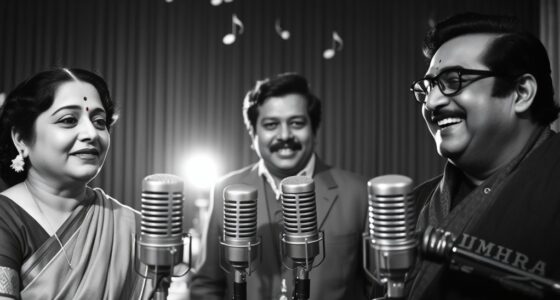
In playback singing, you record vocals separately from the actors’ scenes, allowing you to focus entirely on delivering perfect, emotionally charged performances. Your skills include mastering voice modulation, pitch control, and matching your tone to the scene’s mood, whether soft and vulnerable or energetic and vibrant. You deeply connect with the character’s feelings to convey the story behind each song. If you want to discover more about this fascinating art form, keep exploring how it transforms films and performances.
Key Takeaways
- Playback singers record songs separately, focusing solely on vocal performance to match the actor’s lip movements and expressions.
- They utilize voice modulation techniques to convey specific emotions and enhance the scene’s mood.
- Precise synchronization of vocals with visual gestures creates a seamless illusion of singing onscreen.
- Singers immerse themselves emotionally to authentically express the story behind the song.
- The process elevates the film’s storytelling, making performances more memorable and emotionally impactful.

Have you ever wondered how your favorite actors deliver such convincing musical performances on screen? The secret often lies in playback singing, a fascinating art where singers record songs separately from the actors’ acting scenes. This process allows performers to focus solely on delivering perfect vocals, which are later synchronized with the actor’s lip movements and expressions. It’s a skill that requires more than just singing ability; it demands mastery of voice modulation and emotional expression. When you watch a musical scene, and the singer’s voice perfectly captures the mood—whether joy, longing, or heartbreak—you’re witnessing the result of meticulous craft. The singer adjusts their voice modulation to match the scene’s tone, using subtle shifts in pitch, tone, and dynamics to evoke specific feelings. This careful control helps bring the character’s emotions to life, making the performance more engaging and enthralling. Vocal adaptability is essential for seamlessly aligning the singer’s voice with the actor’s performance and scene context. Voice modulation plays a vital role in playback singing. Singers consciously alter their vocal tone, intensity, and pitch to align with the scene’s emotional core. For a tender love song, they might soften their voice, adding gentle vibrato to convey vulnerability. For a high-energy dance number, they might employ a brighter, more forceful tone to match the scene’s exuberance. These adjustments aren’t accidental; they’re deliberate choices that heighten the emotional impact. When the actor’s expressions and gestures are perfectly synchronized with the singer’s voice, it creates a seamless illusion that the character is singing. This harmony between visual and vocal performance hinges on the singer’s ability to modulate their voice skillfully and express genuine emotion through their singing. Emotional expression is what makes playback singing truly remarkable. It’s not just about hitting the right notes but about conveying the story behind the song. A skilled playback singer immerses themselves in the character’s feelings, translating those emotions into their voice. They might sing with a trembling voice to express heartbreak or with a soaring tone to depict hope and triumph. The singer’s ability to connect emotionally with the song makes it resonate deeply with audiences. When you watch a scene and feel the raw emotion in the song, it’s because the singer has effectively used voice modulation and emotional expression to breathe life into the performance. This artistry elevates the entire film experience, turning simple melodies into powerful storytelling tools that stay with you long after the credits roll.
Frequently Asked Questions
How Do Playback Singers Choose Their Songs?
You choose your songs based on your music selection skills and how well you can express emotion. You consider the mood of the scene, the character’s feelings, and the song’s lyrics. You listen for melodies that resonate with your voice and fit the emotional tone of the film. Your goal is to connect with the audience deeply, so you select songs that allow you to showcase your emotional expression effectively.
What Equipment Is Used During Recording Sessions?
During recording sessions, you use high-quality microphones to capture your voice clearly and accurately. The recording studio is equipped with professional soundproofing and advanced audio gear to guarantee ideal sound quality. You might also use headphones for precise listening, and mixing consoles to control sound levels. Good microphone quality and a well-equipped studio help produce the best possible playback, letting your voice shine through the final track.
How Do Singers Match Their Voice to On-Screen Actors?
Matching your voice to on-screen actors is like fitting puzzle pieces perfectly. You use voice modulation to mirror their tone and emotional expression to convey their feelings authentically. By listening carefully and adjusting pitch, tempo, and intensity, you create seamless harmony between voice and performance. This synchronization makes the song feel like an extension of the actor’s emotions, immersing viewers completely in the story.
What Are Common Challenges Faced During Playback Recording?
During playback recording, you often face challenges like maintaining lip sync accuracy, ensuring your voice perfectly matches the actor’s lips and movements. You also need to convey the right emotional expression, which can be tough under studio conditions. Distractions, technical issues, or tight schedules add pressure, making it essential to stay focused. Overcoming these hurdles requires practice, concentration, and a deep understanding of the scene’s emotional tone.
How Has Technology Evolved in Playback Singing?
Technology has transformed playback singing through digital enhancement and remote recording. You now use advanced software to improve sound quality, add effects, and guarantee perfect pitch, making the process more efficient. Remote recording allows you to record vocals from any location, giving you flexibility and convenience. These innovations help you deliver polished performances quickly, maintaining high standards while adapting to modern production demands.
Conclusion
Remember, a song is only as good as the passion behind it. As you listen to the magic of playback singing, appreciate the skill and dedication singers pour into each note. Their voices bring stories to life on screen, mesmerizing audiences worldwide. Like the saying goes, “A picture is worth a thousand words,” a great song can speak volumes without uttering a single word. So, cherish the art that makes movies truly memorable.