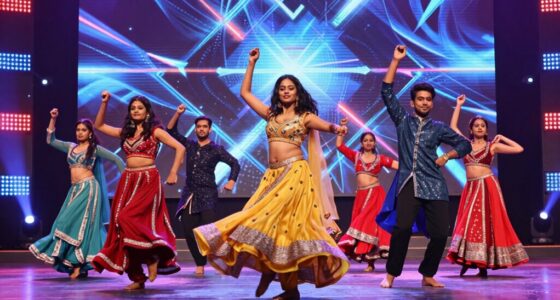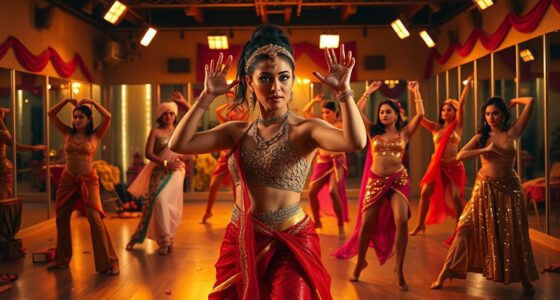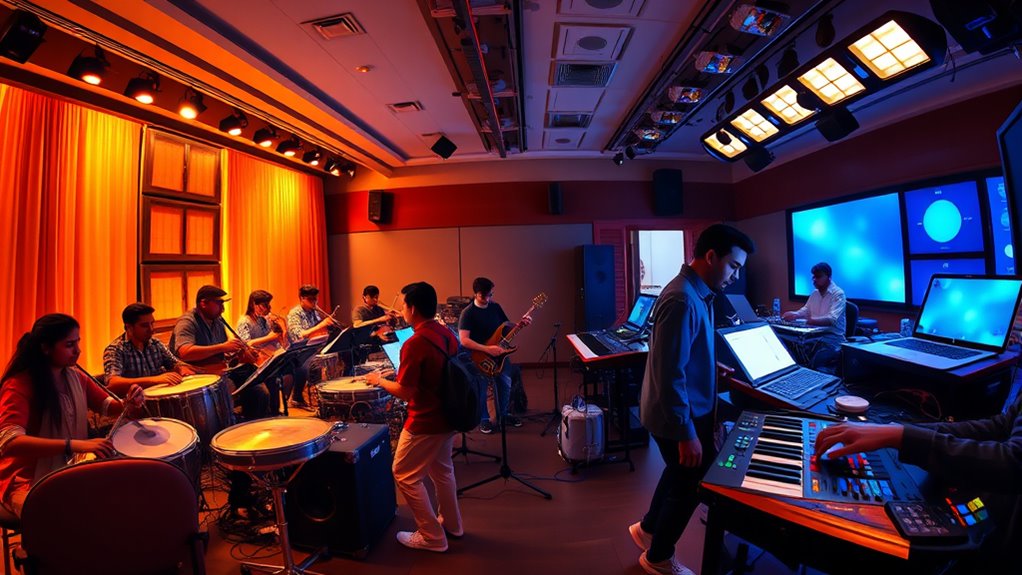

The evolution of Bollywood music takes you from the lush orchestral sounds of the early era rooted in classical and folk traditions to modern tracks packed with electronic beats and global influences. Over time, composers incorporated jazz, pop, and digital technology, transforming the soundscape into a vibrant fusion. From live musicians to digital studios, new tools keep pushing creative boundaries. Keep exploring to discover how these changes continue shaping Bollywood’s musical landscape.

Get movie nights delivered free with Prime
- Fast, free delivery on millions of items
- Prime Video, Amazon Music and more included
- Member-only deals all year
Key Takeaways
- Bollywood music evolved from classical and folk influences to incorporate jazz, pop, and international genres.
- The orchestra era featured live musicians and detailed arrangements, shaping early Bollywood sound.
- Technological advancements, like digital recording and synthesizers, transformed production and sound textures.
- The digital revolution enabled online streaming, electronic beats, and collaborations, broadening global reach.
- Modern Bollywood music blends traditional melodies with electronic, hip-hop, and EDM influences, reflecting ongoing innovation.
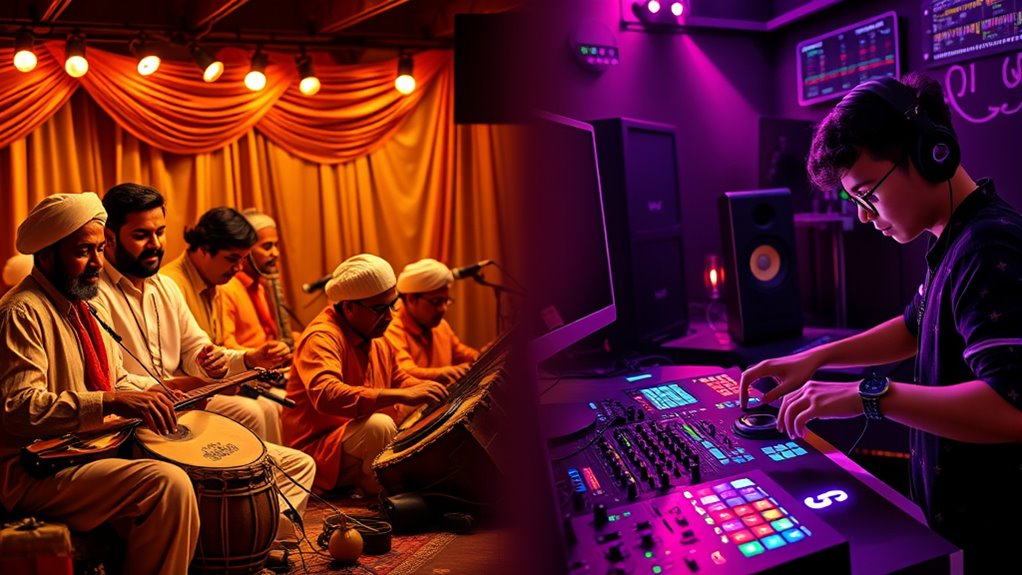
Bollywood music has undergone a remarkable transformation over the decades, reflecting changes in society, technology, and musical tastes. As you explore its evolution, you’ll notice how historical influences have shaped the soundscapes of Hindi cinema. In the early days, Bollywood songs drew heavily from classical Indian music and traditional folk melodies, blending them with the Western musical styles brought by colonial influences. These historical influences created a rich tapestry that defined the genre’s foundational sound, often emphasizing melody and lyrical depth. Over time, composers began integrating elements from jazz, pop, and international genres, which broadened the musical palette and made Bollywood music more accessible and appealing to a wider audience.
Bollywood music evolved from classical and folk roots to incorporate jazz, pop, and modern international sounds.
Technological advancements have played a pivotal role in transforming Bollywood music from its origins to the digital age. During the orchestra era, live musicians and orchestras were the backbone of song production, requiring meticulous arrangements and extensive recording sessions. As recording technology improved, especially with the advent of magnetic tape and later digital recording, composers gained greater control and flexibility in crafting their sound. This shift allowed for more complex arrangements, layered instrumentation, and nuanced vocal performances. The introduction of electronic instruments and synthesizers in the late 20th century further revolutionized the sound, enabling artists to experiment with new textures and beats that weren’t possible with traditional instruments alone.
The digital revolution, particularly in the 2000s, has transformed Bollywood music into a global phenomenon. Software-based production tools, digital audio workstations, and online streaming platforms have made it easier than ever to produce, distribute, and access music. This technological leap has democratized music creation, allowing independent artists to produce chart-topping hits without the need for expensive studio setups. You now see a seamless blend of traditional tunes with electronic beats, hip-hop influences, and even EDM, reflecting a more modern and diverse musical landscape. Additionally, the rise of digital platforms has expanded Bollywood’s reach to international audiences, fostering more cross-cultural collaborations and innovations.
Throughout its evolution, Bollywood music has continuously adapted to technological innovations, shaping its sound to match contemporary tastes while honoring its rich, historical influences. From the grandeur of orchestras to the intimacy of digital beats, each phase has pushed the boundaries of creativity. As you listen to today’s Bollywood hits, you can appreciate this ongoing journey of innovation, where nostalgia and modernity collide, creating a vibrant and ever-evolving musical genre that resonates worldwide.
Frequently Asked Questions
How Did Bollywood Music Influence Global Music Trends?
Bollywood music influences global trends by inspiring fusion genres and encouraging cross-cultural collaborations. You see it in how Western artists incorporate Bollywood rhythms and melodies, blending them into their own sounds. This cross-pollination fosters new musical styles, making Bollywood a global phenomenon. Your favorite artists often draw from Bollywood’s vibrant rhythms, creating innovative tracks that connect diverse audiences worldwide, showcasing how Bollywood’s rich musical heritage shapes contemporary global music trends.
What Role Did Technology Play in Changing Bollywood Music Production?
Technology revolutionized Bollywood music production by enabling you to use digital sampling and synthesize innovative sounds. These tools make it easier for you to experiment with new melodies, blend genres, and create richer arrangements. Synthesizer innovation allows you to craft unique textures, while digital sampling lets you incorporate diverse musical elements effortlessly. As a result, Bollywood music evolves faster, appealing to modern audiences and pushing creative boundaries with greater ease.
Who Are the Most Influential Composers in Bollywood History?
You’ll find that composers like S.D. Burman, R.D. Burman, A.R. Rahman, and Laxmikant-Pyarelal stand out for their lyrical mastery and orchestral innovation. They shaped Bollywood’s soundscape, blending traditional melodies with modern techniques. Their influence is evident in the timeless appeal of their music, inspiring generations. By pushing musical boundaries, they transformed Bollywood music into a vibrant, evolving art form that continues to captivate audiences worldwide.
How Has Bollywood Music Impacted Indian Culture Over Decades?
You see how Bollywood music has deeply impacted Indian culture by fostering cultural integration and shaping dance evolution. It brings diverse communities together through memorable songs and dance styles, reflecting India’s rich traditions and modern trends. Over decades, its infectious rhythms and melodies have influenced fashion, celebrations, and social values, making music a essential part of everyday life. This cultural synergy continues to evolve, uniting people across generations and regions.
What Are the Future Trends Predicted for Bollywood Music?
You’ll see future innovations like AI-generated compositions shaping Bollywood music, making it more personalized. Genre diversification will continue, blending traditional sounds with hip-hop, EDM, and world music to attract global audiences. Currently, over 60% of songs on streaming platforms are experimental, hinting at exciting changes. You can expect more immersive experiences, like virtual reality concerts, and artists pushing creative boundaries to redefine Bollywood’s musical landscape.
Conclusion
You might think Bollywood music is just about catchy tunes, but it’s so much more—an evolving art form that reflects changing times. While some miss the grandeur of orchestras, digital beats bring fresh energy and global influence. Embracing both traditions and innovations keeps Bollywood music vibrant and exciting. So, don’t dismiss the modern sound; it’s just another chapter in a rich, ongoing musical journey that continues to inspire millions worldwide.
Halloween Picks
halloween
As an affiliate, we earn on qualifying purchases.