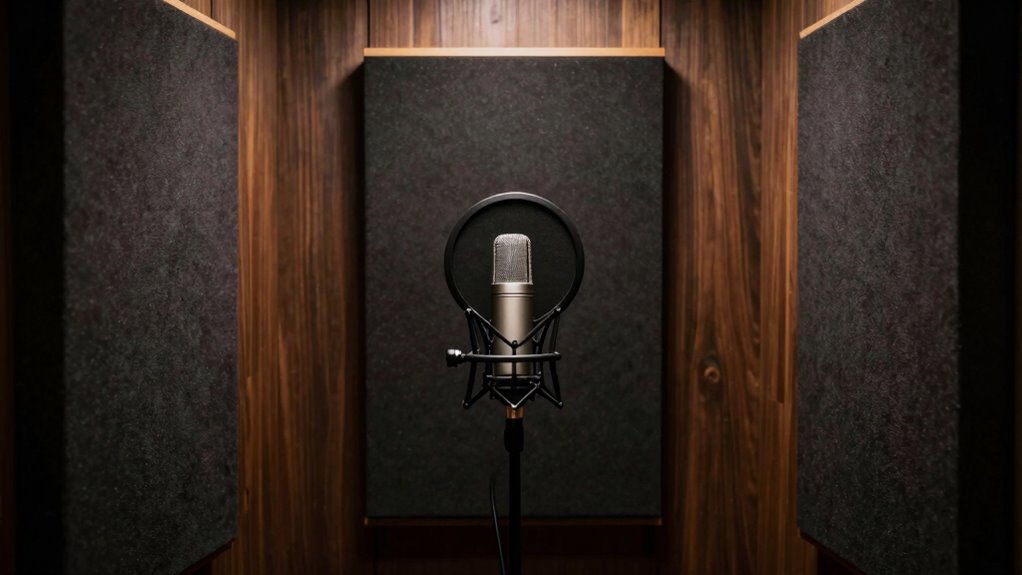

You don’t need foam covering every surface to create an effective home vocal booth. Focus on key reflection points, like behind your microphone and opposite walls, and use household items like blankets, heavy quilts, or soundproof curtains. Seal gaps around doors and windows to prevent noise leaks. By strategically placing these easy, budget-friendly materials, you’ll greatly improve your sound quality without full foam coverage. Keep exploring to discover more simple tips for a professional sound environment.

Get movie nights delivered free with Prime
- Fast, free delivery on millions of items
- Prime Video, Amazon Music and more included
- Member-only deals all year
Key Takeaways
- Soundproof curtains and household items can effectively reduce noise without extensive foam coverage.
- Strategic placement of curtains and DIY materials targets primary reflection points for better acoustics.
- Sealing gaps and using draft stoppers minimizes sound leaks, enhancing overall sound isolation.
- Combining soft materials with placement strategies improves sound absorption without full foam coverage.
- Creating semi-enclosed spaces with curtains and DIY solutions offers effective sound control on a budget.
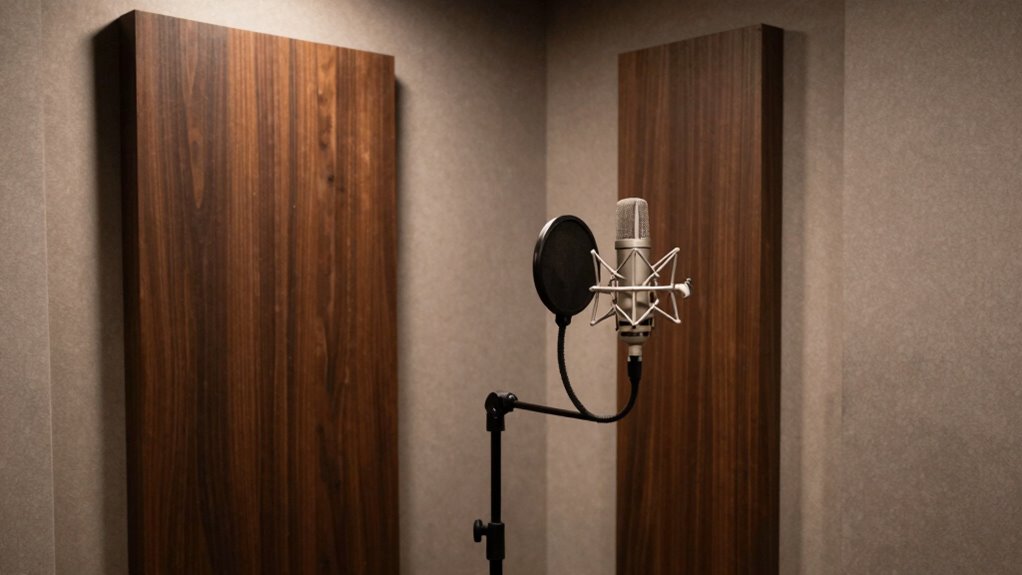
Creating a home vocal booth doesn’t mean you have to cover every inch with foam panels. In fact, you can achieve excellent sound isolation without turning your space into a foam-covered cave. One of the simplest and most effective methods is to incorporate soundproof curtains. These curtains are designed to absorb sound waves and prevent noise from escaping or entering your recording area. They’re easy to install—just hang them over windows, doorways, or even along walls—and they don’t require any permanent modifications. Soundproof curtains are a versatile, cost-effective solution that can considerably improve your acoustics, especially when combined with other DIY construction techniques.
Soundproof curtains are an easy, affordable way to improve your home vocal booth’s acoustics.
When you’re considering building a home vocal booth, you might think that professional-grade soundproofing involves complex, expensive materials. But DIY construction allows you to create an effective environment using common household items and smart design choices. For example, instead of filling your entire room with foam panels, focus on treating the primary sound reflection points—such as behind your microphone or along the wall opposite your recording spot. You can use blankets, heavy quilts, or even thick curtains as makeshift sound absorbers. These materials help reduce echo and background noise without the need for professional-grade foam. Keep in mind that sealing gaps around doors and windows is equally important; draft stoppers and weatherstripping can prevent sound leaks and improve overall soundproofing.
You don’t need a fully enclosed, studio-like space to get great vocal recordings. Sometimes, strategic placement of soundproof curtains and DIY soundproofing materials makes all the difference. For example, hanging soundproof curtains along open walls or windows can block external noise and dampen sound reflections within your space. When combined with basic DIY construction—like building a simple frame to hang curtains or attaching acoustic panels—you create a semi-enclosed environment that’s both functional and affordable. This approach allows you to control your room’s acoustics without the hassle or expense of full construction. Incorporating sound absorption techniques, such as using soft materials and strategic placement, can further enhance your recording environment.
Additionally, understanding and implementing effective soundproofing strategies can help optimize your setup, especially when considering soundproofing on a budget. Ultimately, creating a home vocal booth isn’t about perfection—it’s about making smart, practical choices that improve your sound quality. Soundproof curtains and DIY construction methods let you customize your space without breaking the bank or sacrificing comfort. For those interested in expanding their skills, exploring AI training jobs can offer opportunities to learn new technologies that might even assist in smart soundproofing solutions. With a little effort, you’ll have a dedicated, effective recording area that captures your voice clearly, without the need for foam everywhere.
soundproof curtains for home studio
As an affiliate, we earn on qualifying purchases.
As an affiliate, we earn on qualifying purchases.
Frequently Asked Questions
Can I Build a Vocal Booth Without Professional Tools?
Yes, you can build a vocal booth without professional tools. Focus on simple soundproofing techniques like sealing gaps with weatherstripping and using thick curtains or blankets. For acoustic treatment options, consider DIY panels made from inexpensive materials like mineral wool or recycled denim, and position furniture strategically to absorb sound. These approaches can effectively improve your booth’s sound quality without requiring specialized tools or equipment.
How Long Does It Take to Set up a Home Vocal Booth?
Setting up your home vocal booth is like planting a garden—it takes patience and care. Usually, it takes a few hours to a day, depending on your soundproofing techniques and acoustic treatment. Start by assembling the structure, then add soundproofing materials and acoustic panels. If you stay organized, you can have your booth ready in a weekend, creating an ideal space for recording without rushing.
Is a Portable Booth Effective for Professional Recordings?
A portable booth can be effective for professional recordings if you use soundproof curtains and acoustic panels. These materials help block external noise and reduce echo, improving sound quality. While portable booths aren’t as soundproof as permanent setups, they’re convenient and versatile. By strategically placing soundproof curtains around the booth and adding acoustic panels inside, you can achieve a professional sound environment without a permanent studio.
What Are the Cost Differences Between Foam and Alternative Materials?
Imagine pouring your savings into sound absorption and durable materials. Foam is typically cheaper upfront, but lower in durability and effectiveness over time. Alternatives like mineral wool or fiberglass insulation cost more initially but offer better sound absorption and last longer. You’ll spend less on replacements and get superior acoustic quality, making the investment worthwhile. So, while foam might seem cheaper now, durable materials save you money in the long run.
Can I Customize the Size of My Vocal Booth Easily?
Yes, you can customize the size of your vocal booth easily by using DIY soundproofing methods like soundproof curtains and modular panels. These options let you expand or reduce your booth without much hassle, giving you flexibility in shaping your space. Incorporating soundproof curtains can also help with noise control while maintaining an adaptable setup, making it straightforward to tailor your booth to your specific needs and available space.
As an affiliate, we earn on qualifying purchases.
Conclusion
You don’t need foam covering every inch of your home vocal booth to get great sound. In fact, studies show that even minimal acoustic treatment can reduce echo by up to 60%. By strategically placing a few panels and focusing on key reflection points, you can create an effective space without breaking the bank or sacrificing style. So, don’t feel pressured to fill every corner—smart, targeted solutions work just as well.
As an affiliate, we earn on qualifying purchases.
As an affiliate, we earn on qualifying purchases.
Halloween Picks
halloween
As an affiliate, we earn on qualifying purchases.