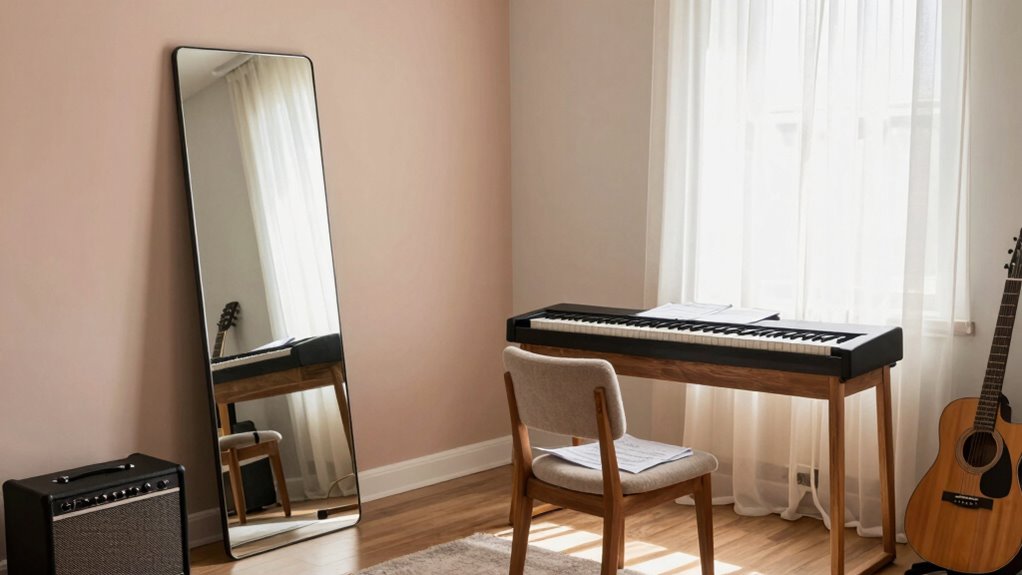
You can turn a spare room into a mini practice studio faster than you think by focusing on simple, strategic steps. Start with essential gear like a guitar, microphone, or keyboard, and keep everything organized and accessible. Add soundproofing with rugs, curtains, or foam panels to reduce noise. Personalize the space with artwork or posters for inspiration. With a little planning, you’ll create a functional, motivating environment in no time—there’s more to discover to make it perfect.

Get movie nights delivered free with Prime
- Fast, free delivery on millions of items
- Prime Video, Amazon Music and more included
- Member-only deals all year
Key Takeaways
- Prioritize essential gear and digital tools for quick setup and versatile practice options.
- Use soundproofing strategies like foam panels and sealing gaps to minimize noise disruptions.
- Organize instruments and accessories with wall mounts and storage to maximize space efficiency.
- Personalize the space with inspiring decor and artwork to boost motivation and creativity.
- Plan a simple, functional layout focusing on practicality and quick transformation.

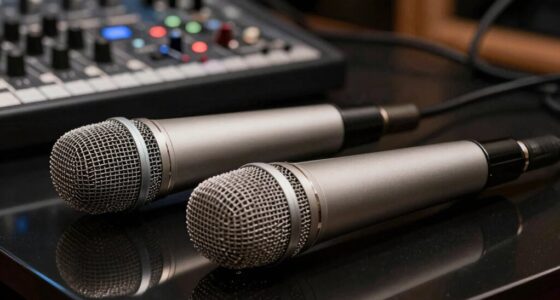
Transforming a spare room into a practice studio can be a game-changer for your musical journey. With a little planning, you can create a space that fuels your creativity and keeps your neighbors happy. The first step is to gather the right music gear. Think about what instruments and equipment you’ll need—guitar amps, microphones, headphones, or even a keyboard. Don’t overbuy at first; start with essentials and add as you go. Quality gear makes a notable difference in your practice sessions, helping you stay motivated and improving your sound. Portable and versatile gear can make setup easier and more flexible, especially if your space isn’t huge. Additionally, exploring different digital concepts can help you integrate technology into your practice routine, making your setup more efficient and inspiring.
Create a dedicated space with essential, quality gear to boost your musical inspiration and practice efficiency.
Once you’ve sorted your gear, soundproofing considerations should be next on your list. You want to enjoy practicing without disturbing others or being distracted by external noise. Soundproofing doesn’t mean turning your room into a recording studio, but simple modifications can make a big difference. Basic soundproofing options include adding thick rugs, heavy curtains, or foam panels to absorb sound. Seal gaps around doors and windows with weatherstripping or draft stoppers to reduce noise leakage. If you want a more professional setup, consider installing acoustic panels or even constructing a DIY isolation booth. Remember, the goal is to control sound so your practice remains private and doesn’t create a noise nuisance. Incorporating holistic approaches like mindful listening can also help you improve your skills more effectively.
Organizing your space is essential once you’ve addressed gear and soundproofing. Keep your instruments, cables, and accessories neatly stored to maximize your available space. Use wall mounts or stands to keep equipment accessible and off the floor. A clutter-free environment helps you focus on your playing rather than searching for gear or dealing with distractions. Also, consider adding a comfortable chair or stool, and perhaps a small desk for music sheets or a tablet. Lighting is another important aspect; good lighting can boost your mood and help you see your music clearly.
Finally, personalize your studio to make it inspiring. Hang posters of your favorite artists, add plants, or incorporate artwork that fuels your passion. As you set up, keep in mind that your practice space should reflect your style and motivate you to improve. With some effort, your spare room can transform into a dedicated mini practice studio faster than you think, offering a perfect environment tailored to your musical growth.
acoustic foam panels for soundproofing
As an affiliate, we earn on qualifying purchases.
As an affiliate, we earn on qualifying purchases.
Frequently Asked Questions
How Do I Soundproof a Small Practice Space Effectively?
To soundproof your small practice space effectively, focus on soundproofing techniques like adding mass to walls with drywall or mass-loaded vinyl. Use noise reduction methods such as sealing gaps with acoustic caulk and installing weatherstripping on doors and windows. You can also place rugs and acoustic panels inside to absorb sound. Combining these strategies creates a barrier that minimizes noise escape and keeps external sounds out, enhancing your practice environment.
What Affordable Equipment Is Essential for a Beginner Studio?
You might be surprised how budget upgrades and portable gear can transform your beginner studio. Start with a decent microphone, headphones, and a small audio interface—these essentials won’t break the bank. Look for secondhand options or compact, portable equipment that fits your space and budget. With these affordable tools, you’ll be ready to record and practice without feeling overwhelmed, turning your spare room into a functional studio faster than you think.
How Much Space Is Needed to Accommodate Different Instruments?
You’ll need about 20-30 square feet for smaller instruments like ukuleles or keyboards, focusing on space efficiency. Larger instruments, such as guitars or drums, require at least 50-100 square feet to comfortably play and store. Consider instrument size and room layout, opting for multi-purpose furniture or wall mounts to maximize space efficiency. This way, you create a functional, comfortable practice area without sacrificing too much space.
Can a Spare Room Double as a Recording Studio?
Yes, your spare room can double as a recording studio, surprisingly quick! With the right setup, you can tailor it to your music genre and install recording software easily. Ironically, that cluttered space might be your best asset, absorbing sound and reducing noise. Just add some acoustic treatment and a good microphone, and you’re ready to record professional-sounding tracks right at home.
How Do I Optimize Lighting and Acoustics in a Small Room?
You optimize lighting and acoustics by adding decorative lighting that creates a warm, inviting atmosphere, and maximizing natural sunlight during the day. Use soft, layered lighting to reduce harsh shadows, and incorporate sound-absorbing materials like rugs, curtains, or foam panels to improve acoustics. Position your desk or equipment near windows to take advantage of natural light, and consider adjustable lighting for different moods and times of day.
As an affiliate, we earn on qualifying purchases.
Conclusion
Imagine turning that empty spare room into your personal practice studio. With a little planning, you can set up your instruments, soundproof the space, and create a dedicated environment for daily practice. Like Sarah, who transformed her guest bedroom into a music haven in just a weekend, you too can quickly turn an unused room into a motivating space. Before you know it, you’ll be making progress and enjoying your music more than ever.
compact digital keyboard for practice
As an affiliate, we earn on qualifying purchases.
As an affiliate, we earn on qualifying purchases.
As an affiliate, we earn on qualifying purchases.
Halloween Picks
halloween
As an affiliate, we earn on qualifying purchases.