
End-credit songs are more impactful than you might realize because they shape your emotional experience and leave a lasting impression beyond the story. They reinforce themes, connect culturally, and turn into memorable moments that influence fashion, language, and social movements. These songs also boost artists’ exposure and success through licensing and distribution. If you keep exploring, you’ll uncover how these tunes influence society and the entertainment industry in ways you hadn’t considered.
Key Takeaways
- End-credit songs enhance emotional resonance and leave a lasting impression beyond the visual story.
- They serve as a final message, reinforcing themes and deepening audience connection.
- Licensing and legal agreements ensure proper use, boosting artist exposure and preventing infringement issues.
- These songs can influence cultural trends, fashion, and societal values beyond the film’s context.
- Strategic song choices impact a film’s financial success through increased streaming, sales, and broader reach.
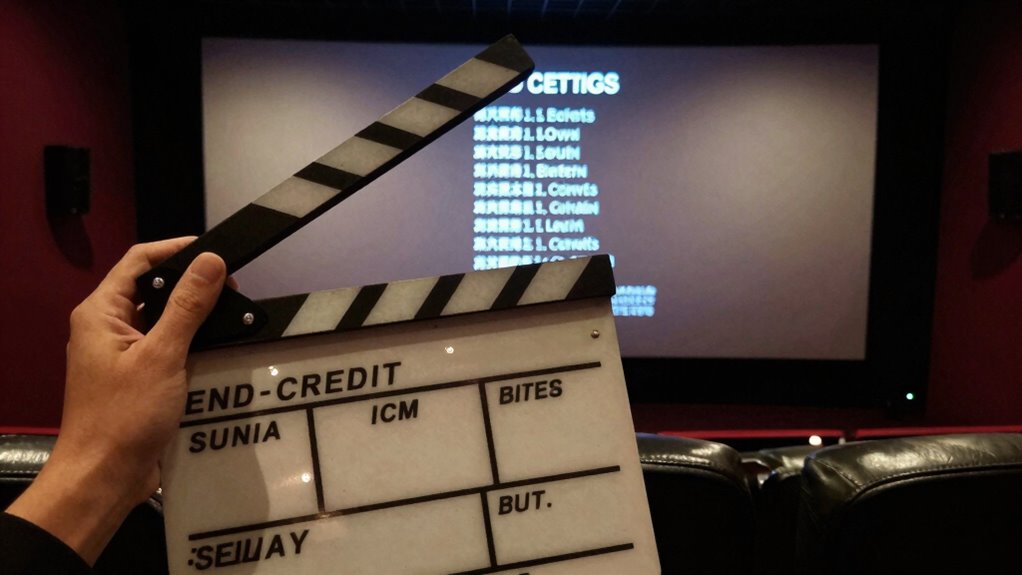
End-credit songs may seem like a small detail, but they play an essential role in shaping your overall viewing experience. When you watch a movie or a TV show, the music played during the credits isn’t just background noise; it’s a carefully chosen element that leaves a lasting impression. These songs often serve as a final message, tying together the story’s emotional journey and reinforcing its themes. Beyond the entertainment, end-credit songs also have a significant impact on the music industry itself, especially through aspects like music licensing and cultural influence.
Music licensing is a critical process behind the scenes that allows these songs to be part of your viewing experience. It involves legal agreements between filmmakers and artists or record labels, ensuring that the right permissions are in place for the song’s use. This process can be complex and costly, but it’s essential for respecting artists’ rights and for the film or show to feature the music legally. When a memorable song plays during credits, it often boosts the song’s popularity, leading to increased streaming, sales, and radio play. This symbiotic relationship benefits both the entertainment industry and musicians, highlighting how carefully curated end-credit songs are more than just a musical choice—they’re a strategic decision with financial and legal implications.
Music licensing ensures legal use of songs, boosting artist exposure and creating strategic benefits for the entertainment industry.
Culturally, end-credit songs also shape and reflect societal trends, values, and emotions. When a song resonates deeply with audiences, it can become an anthem associated with the film or the era it represents. Think about how some movies introduce songs that become cultural touchstones, influencing fashion, language, or social movements. These songs can amplify the movie’s message, making it more memorable and meaningful for viewers. They also help forge a connection between the audience and the story, extending the emotional resonance long after the credits roll. Many fans discover new artists or genres through these songs, broadening cultural horizons and fostering a shared musical identity rooted in cinematic moments. Additionally, the legal process involved in licensing these songs ensures that both artists and creators are fairly compensated, which encourages continued artistic collaboration. Furthermore, the cultural influence of these songs can extend beyond the film itself, shaping trends and shared experiences across different communities. Recognizing the importance of music licensing underscores the necessity of legal frameworks that protect intellectual property rights in the entertainment industry. Proper audio technology in the production of these songs can also enhance their emotional impact and sound quality, making them even more memorable. Moreover, advancements in digital distribution have made it easier for these songs to reach global audiences quickly, amplifying their cultural impact.
In essence, end-credit songs are more than just a musical afterthought. They’re a powerful blend of legal strategy, cultural expression, and emotional storytelling. You might not always realize their importance during your first viewing, but their impact lingers—shaping how you remember the story, influencing the music industry, and contributing to cultural dialogue. When you appreciate the thought and effort behind these songs, you gain a deeper understanding of how integral they are to both your entertainment and the broader cultural landscape.
As an affiliate, we earn on qualifying purchases.
Frequently Asked Questions
How Do End-Credit Songs Influence a Movie’s Marketing?
End-credit songs influence a movie’s marketing by boosting audience nostalgia and reinforcing visual storytelling. When you hear a song that resonates emotionally, it creates a lasting impression, encouraging you to revisit the film or share it with others. These songs often become associated with key moments, enhancing marketing through memorable experiences and social sharing. They also attract fans of the music, expanding the film’s reach beyond its initial audience.
Who Typically Chooses the End-Credit Song for a Film?
You’ll find that the end-credit song is usually chosen through a collaboration between the film’s director and music supervisors. They consider the song’s lyrical significance and how it complements the movie’s themes. Sometimes, artists or record labels are involved in the process, but the director’s vision remains central. This collaborative effort guarantees the song enhances the emotional impact, leaving a lasting impression on the audience long after the credits roll.
Can End-Credit Songs Impact the Song’s Chart Success?
Like a well-placed verse in a classic ballad, end-credit songs can boost a track’s chart success by tapping into audience nostalgia and emotional resonance. When fans leave a movie humming that song, they’re more likely to stream or buy it. This emotional connection turns a fleeting moment into lasting engagement, making the song a chart contender. So, yes, end-credit songs can profoundly impact a song’s popularity.
Are End-Credit Songs More Popular in Certain Film Genres?
Yes, end-credit songs tend to be more popular in certain film genres like musicals, romantic dramas, and animated movies. These genres have a genre-specific appeal that enhances audience retention, making viewers more likely to stay through the credits for the song. This strategic placement helps boost song popularity and creates a memorable connection between the film and its soundtrack, reinforcing the emotional impact and overall audience engagement.
How Do Artists Get Their Songs Featured in End Credits?
To get your songs featured in end credits, artists typically work through song licensing deals, which involve negotiations with film producers or music supervisors. Building relationships and collaborating with other artists or industry professionals can also open doors. By showcasing your music’s fit for a film’s tone and style, you increase your chances of being selected for end-credit placement, making licensing and artist collaboration essential steps in the process.
As an affiliate, we earn on qualifying purchases.
Conclusion
So, next time you stay through the credits, remember there’s more at stake than just a few extra scenes. That song isn’t just background noise; it’s a secret message, a hint at what’s to come, or a tribute lingering in the shadows. The true power of end-credit songs lies in what they leave unsaid, waiting for you to uncover. Are you ready to listen closely and discover what’s truly hidden?
As an affiliate, we earn on qualifying purchases.
As an affiliate, we earn on qualifying purchases.