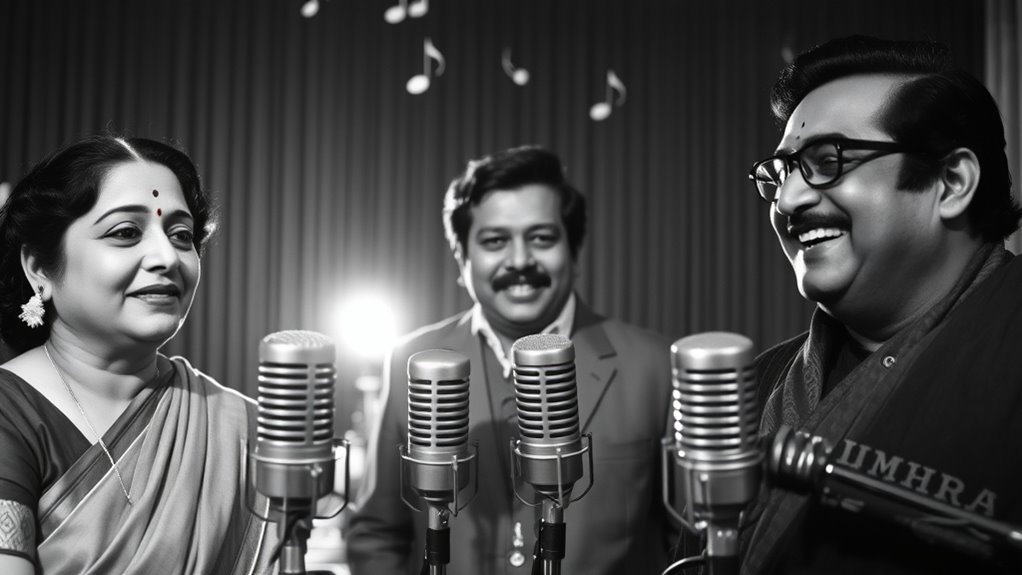

The legends of playback singing, like Lata Mangeshkar, Mohammed Rafi, and Kishore Kumar, have set timeless standards with their exceptional vocal mastery and emotional depth. Their voices blend diverse musical influences—from classical, folk, to Western styles—creating unforgettable performances. Their technical skills and expressive artistry continue to inspire generations of singers. By exploring their journeys, you’ll discover the secrets behind their iconic voices and how they revolutionized Indian music forever.
Key Takeaways
- Legendary playback singers like Lata, Rafi, and Kishore combined innate talent with diverse musical influences to create timeless voices.
- Their mastery of vocal techniques such as modulation, vibrato, and expression set new standards in Indian music.
- Their performances evoke deep emotions, storytelling, and connect with audiences across generations.
- Their unique styles, shaped by classical, folk, and Western music, inspired future generations of singers.
- Their enduring legacy transformed Hindi film music, establishing a timeless benchmark for vocal artistry.
Have you ever wondered what makes a playback singer truly legendary? It’s a blend of innate talent, passion, and the ability to connect with audiences on a profound level. But behind that enchanting voice are often the musical influences and vocal techniques that shape their artistry. When you listen to icons like Lata Mangeshkar or Mohammed Rafi, you’re not just hearing a voice; you’re experiencing years of musical exposure and mastery. These singers drew inspiration from a variety of sources—classical ragas, folk traditions, and Western music—that enriched their vocal palette. For example, Rafi’s singing was influenced by classical Indian music, which is evident in his precise pitch and emotive phrasing. Similarly, Kishore Kumar’s style reflected a diverse array of musical influences, blending Western jazz, pop, and Indian melodies to create a unique, versatile sound. Their exposure to different musical styles allowed them to develop distinct vocal techniques that set them apart. Rafi’s ability to modulate his voice effortlessly between high and low notes, along with his impeccable control, made his singing versatile and emotionally compelling. Lata, on the other hand, mastered the art of nuanced expression, using subtle vibrato and breath control to convey deep feelings. Their mastery of vocal techniques wasn’t just about technical prowess; it was about storytelling through song. They knew how to breathe life into lyrics, making each note resonate with genuine emotion. You can hear this mastery in their phrasing, dynamics, and ornamentation, which elevate their performances beyond mere singing. Their influence extended beyond their immediate musical surroundings, inspiring generations of singers who sought to emulate their technical precision and expressive depth. These legends set standards for vocal excellence, combining their unique influences with rigorous practice and innovation. They understood that a singer’s voice must not only sound beautiful but also evoke emotion and tell a story. Their mastery of vocal techniques allowed them to adapt to different genres and styles, making their voices timeless. As you listen to their songs, you realize that their musical influences and technical skills are the foundation of their legendary status. They transformed Hindi film music and Indian singing forever, leaving behind a legacy that continues to inspire singers today. In essence, a truly legendary playback singer is someone who has harmonized their musical influences with refined vocal techniques, creating a voice that’s both technically brilliant and emotionally unforgettable.
Frequently Asked Questions
Who Were the First Playback Singers in Indian Cinema?
You’d be interested to know that the first playback singers in Indian cinema emerged during the silent film era, where live singing accompanied silent films. These singers provided the vocals while actors performed silently on screen. As sound was introduced, playback singing became more prominent, allowing singers to lend their voices to actors, creating the rich musical tradition we see today. This evolution marked the beginning of Indian cinema’s iconic musical legacy.
How Did Playback Singing Evolve Over Decades?
Imagine a river of sound flowing through decades, constantly changing course. You see how playback singing evolved with musical innovations, blending classical, folk, and Western styles. Cultural influences shaped voices, making them reflect society’s heartbeat. Over time, singers became storytellers, capturing emotions with every note. You witness this transformation, where technology and artistry intertwine, creating a vibrant mosaic of sound that continues to inspire generations.
What Are the Unique Vocal Styles of Lata, Rafi, and Kishore?
You notice that Lata’s voice features intricate vocal ornamentation, making her emotional expression deeply touching. Rafi’s style blends versatility with soulful emotional expression, often using subtle vocal nuances. Kishore’s unique vocal style is characterized by spontaneous improvisations and heartfelt emotion, driven by his ability to connect with listeners. Each singer’s distinct approach to vocal ornamentation and emotional expression defines their timeless appeal and continues to inspire generations.
Which Singers Influenced the Next Generation of Playback Artists?
You see, the next generation of playback artists were influenced by singers who embraced modern vocal techniques and explored crossover genres. They drew inspiration from the versatility of singers like Kishore, Rafi, and Lata, blending traditional melodies with contemporary styles. These pioneers pushed boundaries, shaping a new sound that encourages experimentation and innovation, inspiring young artists to develop their unique voices while respecting the roots of classic playback singing.
How Has Technology Changed Playback Singing Practices?
Technology has transformed playback singing by making digital recording the norm, allowing you to perfect your vocals with ease. Auto-tuning trends help correct pitch issues effortlessly, giving you a polished sound. You can now experiment with effects and edits more freely, enabling creative expression. This shift means you can focus more on artistry while relying on advanced tools to enhance your performance, making singing more accessible and innovative.
Conclusion
So, you see, amidst all their timeless songs, it’s funny how these legends—Lata, Rafi, Kishore—are still whispering through the ages. Their voices, once so fleeting, now echo eternal, yet it’s almost ironic how their fame depends on us forgetting the singers behind the scenes. In the end, you realize it’s their voices that truly outlive us all—proof that sometimes, the silence after the song is what truly lingers.