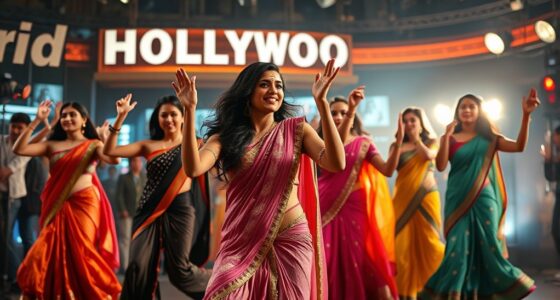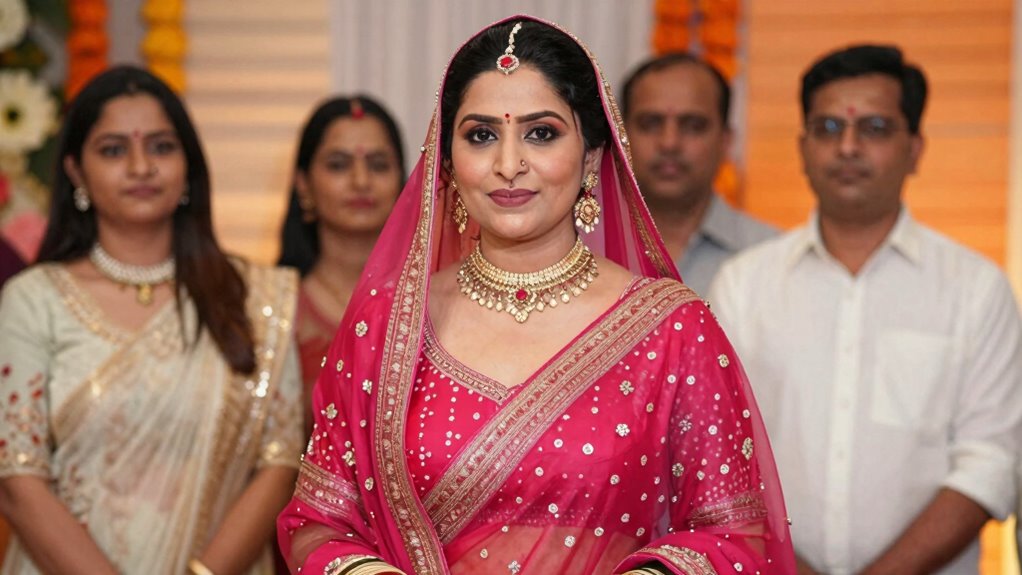

In Hindi cinema, the art of the heroine’s solo journey has evolved into a celebration of strength, independence, and resilience. You’ll notice heroines now own their stories, challenge stereotypes, and display complex personalities that reflect societal shifts. Films focus on their personal growth and choices, showing women as active drivers of their destinies rather than passive characters. If you keep exploring, you’ll discover how these stories continue to reshape Indian cinematic narratives and societal perceptions.
Key Takeaways
- The heroine’s solo journey highlights independence, resilience, and decision-making, redefining traditional gender roles in Hindi cinema.
- Films focus on her personal growth, conflicts, and empowerment, shifting narrative emphasis from supporting roles to protagonist stories.
- Representation of women with complex personalities and agency challenges stereotypes, showcasing strength beyond physical or emotional traits.
- Societal shifts towards gender equality influence storytelling, promoting authentic, empowering portrayals of female characters.
- The art emphasizes storytelling from the heroine’s perspective, celebrating her resilience and self-reliance as central to the narrative.

Have you ever noticed how Hindi cinema has evolved to showcase heroines standing strong on their own? In recent years, filmmakers have shifted away from the traditional damsel-in-distress narrative, instead highlighting heroines who assert their agency and shape their own destinies. This change reflects a broader cultural movement towards female empowerment, where women are no longer passive characters but active participants in their stories. You see this shift vividly in the way heroines are now given narrative independence, allowing them to drive the plot rather than merely reacting to male leads.
Hindi cinema now champions heroines with agency, transforming passive roles into empowered, independent protagonists driving their own stories.
This newfound focus on female empowerment transforms the way heroines are portrayed. They’re no longer confined to romantic subplots or background roles; instead, they take center stage with complex personalities, ambitions, and struggles. You get to witness women making tough decisions, challenging societal norms, and standing up for themselves. Films like “Pink” and “Lipstick Under My Burkha” exemplify this trend, presenting women as multi-dimensional characters who assert their rights and voice their opinions unapologetically. This evolution is also supported by a shift in storytelling techniques, where narratives focus more on the heroine’s perspective and personal journey. Additionally, this shift is reinforced by the increasing representation of women in lead roles, which further encourages filmmakers to explore diverse and empowered female characters.
Moreover, this evolution in Hindi cinema reflects a shift in storytelling techniques. Directors now craft narratives that revolve around the heroine’s journey, emphasizing her growth, resilience, and independence. She’s no longer a mere supporting character but a protagonist with her own arcs, conflicts, and resolutions. This change is also influenced by the growing awareness of gender equality in India, which has inspired filmmakers to create more authentic and empowered female characters. This approach allows audiences to connect deeply with her experiences, making her triumphs and failures feel personal. It’s a celebration of individual agency, where her choices are central to the story’s progression, not just background noise or motivation for the hero. The rise of female-centric stories signifies this significant change in cinematic representation.
In this landscape, heroines are redefining what it means to be strong. Their strength isn’t just physical or emotional; it’s rooted in their ability to think, decide, and act for themselves. You see characters like Kangana Ranaut’s strong-willed women or Taapsee Pannu’s fearless roles, embodying a new era of female independence. They challenge stereotypes and demonstrate that a woman’s value isn’t determined by her relationship to a man but by her own resolve and voice.
Additionally, this shift is supported by the changing societal attitudes and increasing female empowerment in India, which influences the narratives filmmakers choose to tell. Ultimately, the art of the heroine solo in Hindi cinema is about celebrating women’s stories—stories of empowerment, resilience, and narrative independence. It’s a reflection of changing societal attitudes and a step toward more inclusive, realistic portrayals of women. As you watch these films, you’re not just entertained; you’re witnessing a powerful shift in cinematic storytelling that champions women standing tall on their own.
Hindi cinema heroine empowerment books
As an affiliate, we earn on qualifying purchases.
As an affiliate, we earn on qualifying purchases.
Frequently Asked Questions
How Has Heroine Solo Representation Evolved Over Decades?
You’ve seen how heroine solo representation has evolved, reflecting female empowerment and narrative diversity. Earlier films often portrayed heroines as secondary characters, but now, you witness strong, independent women leading stories. Filmmakers highlight their struggles, ambitions, and resilience, shifting away from stereotypical roles. This evolution allows you to see heroines as complex, multi-dimensional figures, inspiring greater respect and recognition for women’s roles in Hindi cinema’s rich storytelling landscape.
Which Heroines Have Most Influenced Hindi Cinema Solo Roles?
You’ll notice that actresses like Nargis, Sridevi, and Kangana Ranaut have profoundly influenced Hindi cinema with their powerful solo roles. They embody Bollywood empowerment and female protagonism, breaking stereotypes and showcasing women’s strength and independence. Their performances inspire audiences and filmmakers alike, paving the way for more nuanced, strong heroines. Their impact highlights the evolution of solo heroine roles, making them central to storytelling and cultural shifts in Indian cinema.
Are There Cultural Challenges Faced by Heroines in Solo Roles?
You face cultural stigmas and societal expectations that often challenge heroines in solo roles. These norms can pressure you to conform to traditional gender roles, making it harder to portray strong, independent characters. You might encounter skepticism or criticism from audiences who expect women to fit certain stereotypes. Overcoming these barriers requires resilience, but it also helps push Hindi cinema toward more diverse and empowering female narratives.
How Do Solo Heroine Roles Impact Gender Stereotypes?
Think of solo heroine roles as a mirror reflecting empowerment narratives, challenging traditional norms. You see, by stepping into these roles, women flip the script on gender stereotypes, showcasing strength and independence. This gender role reversal inspires change, encouraging audiences to rethink societal expectations. When heroines stand solo, they become symbols of resilience, transforming cinematic storytelling into a powerful platform for gender equality and inspiring real-world shifts.
What Future Trends Are Emerging for Heroines in Hindi Cinema?
You’ll see future trends in Hindi cinema where heroines challenge traditional gender portrayals, embracing more complex roles that break stereotypes. Audiences are increasingly receptive to empowered women leading stories, which encourages filmmakers to craft diverse, nuanced characters. This shift promotes gender equality and influences societal perceptions, fostering a broader acceptance of women as protagonists. As a result, heroines will continue to play pivotal roles, shaping the evolution of Hindi cinema’s portrayal of gender.
female protagonist movies on DVD
As an affiliate, we earn on qualifying purchases.
As an affiliate, we earn on qualifying purchases.
Conclusion
You see, the art of the heroine’s solo journey in Hindi cinema isn’t just about empowerment; it reflects changing societal norms. Notably, a recent study shows that films featuring strong female leads have increased by 35% over the last decade. This shift highlights how heroines now command their narratives, inspiring audiences and challenging traditional stereotypes. Embracing these stories, you’re witnessing a powerful evolution—one that champions independence, resilience, and the true essence of female strength on screen.
As an affiliate, we earn on qualifying purchases.
Indian cinema female lead collection
As an affiliate, we earn on qualifying purchases.
As an affiliate, we earn on qualifying purchases.