Choosing a smart home platform is less about picking a speaker and more about deciding how you want lights, sensors, cameras and other devices to work together. Amazon Alexa and Google Home are two of the most common choices, but they differ in device compatibility, voice control, automation and how closely they tie into their makers’ services. Alexa is usually the safer starting point for a mixed collection of smart home products; Google Home can suit households that already use Google services and value natural voice requests. Both platforms can handle everyday commands, but the better fit depends on your devices and routines.

Get movie nights delivered free with Prime
- Fast, free delivery on millions of items
- Prime Video, Amazon Music and more included
- Member-only deals all year

Kasa Smart Plug HS103P4 – Wi-Fi Outlet with Touch Actuator, Works with Alexa & Google Home, 15 A, UL Certified, 4-Pack, White
- ✔ Pack quantity: 4 plugs
- ✔ Power rating: 15 A, 1800 W
- ✔ Connectivity: 2.4 GHz Wi-Fi
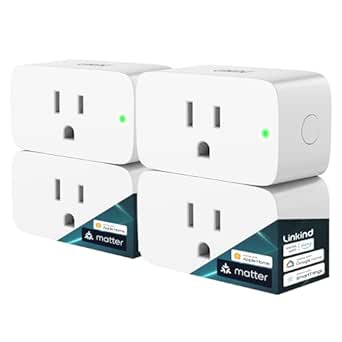
Linkind Matter Smart Plug – Works with Apple Home, Alexa, Siri, and Google Home
- ✔ Connectivity standard: Matter over 2.4 GHz Wi-Fi
- ✔ Power rating: 15 A, 1800 W
- ✔ Plug type: Type A

Echo Show 5 (newest model) – Smart display, 2× bass, clearer sound, Cloud Blue
- ✔ Display: 5.5-inch touchscreen
- ✔ Camera: 2 MP with built-in shutter
- ✔ Audio: Full-range 1.75-inch speaker
At a Glance
| Criteria | Amazon Alexa | Google Home | Winner |
|---|---|---|---|
| Device compatibility | Broad support across many smart home brands and product types; check specific device compatibility before buying. | Supports many popular brands, though particular devices and functions can differ from Alexa support. | A |
| Voice control | Strong for direct commands and widely used voice features; capabilities vary by device and region. | Often handles conversational requests and Google service queries naturally; exact features depend on device and region. | B |
| Routines and automation | Flexible routines, with many trigger and action options; some features require compatible hardware or services. | Supports common household routines, with automation options shaped by compatible devices and the Home app. | A |
| Google and Amazon services | Strong integration with Amazon services and Alexa-enabled products. | Strong fit for Google services, including compatible devices and accounts. | Depends |
| Smart home setup | Large selection of Echo speakers and displays at multiple price points. | Nest speakers and displays offer a straightforward route into the platform. | A |
| Privacy and controls | Controls vary by device and account settings; review microphone, recording and camera options. | Controls vary by device and account settings; review microphone, recording and camera options. | Tie |
| Value | Often an affordable way to add voice control, with a broad range of speaker prices. | Good value if you already use Google services or choose an entry-level compatible speaker. | Depends |
Kasa Smart Plug HS103P4 – Wi-Fi Outlet with Touch Actuator, Works with Alexa & Google Home, 15 A, UL Certified, 4-Pack, White
For buyers ready to automate more than one lamp or appliance, the Kasa HS103P4 four-pack is the most immediately useful starting point in this group. Each plug connects over 2.4 GHz Wi-Fi, so there is no separate hub to set up, and the Kasa app adds schedules, timers, and countdowns. Alexa and Google Assistant support also makes it easy to operate devices by voice within either ecosystem. Compared with the single Linkind Matter plug, the advantage here is practical scale: we can outfit several outlets from one pack without first building a Matter setup.The tradeoff is flexibility across ecosystems. Kasa lists Alexa and Google Home compatibility, while Linkind’s Matter support spans Apple Home, Alexa, Google Home, SmartThings, and AiDot, subject to controller requirements. Kasa also needs a 2.4 GHz network, and its physical size can block an adjacent outlet. Its 15 A, 1800 W rating and UL certification suit a wider range of compatible loads than a low-capacity plug, but buyers still need to check the appliance’s requirements and use the plug within its rating. Choose this pack when several outlets need simple scheduling; skip it if a compact fit or Matter-based platform sharing matters most.
Pros:
- Four plugs make it practical to automate multiple outlets at once.
- Works with Alexa and Google Assistant, with no hub required.
- Kasa app supports schedules, timers, and countdowns.
- UL certified and rated up to 15 A and 1800 W.
Cons:
- Requires a 2.4 GHz Wi-Fi network and does not support 5 GHz.
- The plug’s size may block an adjacent outlet.
- Its listed platform support is narrower than Linkind’s Matter compatibility.
Best for: Households that want to automate several compatible lamps or appliances in Alexa or Google Home using one straightforward Wi-Fi setup.
Not ideal for: Buyers who need 5 GHz Wi-Fi support, compact plugs that preserve neighboring outlets, or broad Matter-based platform integration.
Bottom line: We recommend the Kasa four-pack for buyers who want simple, multi-outlet automation with Alexa or Google Home and can accommodate its size and Wi-Fi requirements.
“We recommend the Kasa four-pack for buyers who want simple, multi-outlet automation with Alexa or Google Home and can accommodate its size and Wi-Fi requirements.”
Linkind Matter Smart Plug – Works with Apple Home, Alexa, Siri, and Google Home
The Linkind Matter Smart Plug is the stronger fit when we want one plug to work across a wider mix of smart-home platforms. Its stated compatibility includes Apple Home, Alexa, Siri, Google Home, SmartThings, and AiDot, giving it a broader ecosystem role than the Kasa plug. Matter is especially relevant for homes where people use different platforms or may change their preferred control app over time. Linkind also supports offline LAN control, so local operation can continue without internet access, alongside remote scheduling, timers, and voice commands.That flexibility comes with a setup condition: many platform integrations require a Matter-certified hub or controller. Buyers should check what their existing system supports before choosing Linkind; Kasa is simpler if Alexa or Google Home is all that is needed and no hub is wanted. This plug is also limited to 2.4 GHz Wi-Fi, like Kasa, and its supplied specifications do not identify a multipack. Its compact design is a useful fit consideration, while its stated 15 A and 1800 W capacity supports compatible higher-load appliances within the rating. Linkind makes sense for a mixed-platform home that values local control, but it adds little over Kasa for a buyer seeking only basic scheduled switching.
Pros:
- Matter support spans several major smart-home platforms.
- Offline LAN control can keep local functions available without internet.
- Supports voice commands, remote scheduling, and timer functions.
- Compact design and 15 A, 1800 W rating for compatible devices.
Cons:
- Requires 2.4 GHz Wi-Fi and does not support 5 GHz.
- Many platform integrations require a Matter-certified hub or controller.
- A single plug is less convenient for outfitting several outlets than Kasa’s four-pack.
Best for: People building a Matter-compatible home across Apple Home, Alexa, Google Home, or SmartThings who value platform flexibility and local control.
Not ideal for: Buyers without a Matter-certified controller where their chosen integration requires one, or anyone whose Wi-Fi setup only provides 5 GHz.
Bottom line: Choose Linkind when cross-platform Matter compatibility and local control matter more than hub-free setup or buying several plugs together.
“Choose Linkind when cross-platform Matter compatibility and local control matter more than hub-free setup or buying several plugs together.”
Echo Show 5 (newest model) – Smart display, 2× bass, clearer sound, Cloud Blue
The Echo Show 5 is the only product here that gives us a screen for smart-home control. Its 5.5-inch touchscreen can put weather, news, media, and video calls in view, while Alexa provides voice control for compatible smart-home devices. That makes it a natural bedside or kitchen counter option for someone who wants a visible Alexa hub in a small footprint. Compared with either smart plug, it is a more complete room device; compared with a dedicated smart display, its compact screen limits how much information can be comfortably shown at once.Its built-in 2 MP camera enables video calls and home monitoring, and the physical privacy shutter gives us a direct way to cover the camera. Audio is described as having deeper bass and clearer vocals than the previous model, with a full-range 1.75-inch speaker. But the camera’s resolution may not satisfy buyers who prioritize detailed video, and the listed Bluetooth voice-control limitation for Mac OS X matters in some setups. This device doesn’t automate several appliances by itself in the same direct way as the Kasa pack, and it lacks Linkind’s broad Matter positioning. Pick it for compact Alexa interaction and glanceable information; skip it if outlet scheduling or platform-neutral control is the goal.
Pros:
- 5.5-inch touchscreen combines visual information with Alexa controls.
- Compact footprint suits a bedside table or counter.
- Built-in camera supports calls and home monitoring, with a privacy shutter.
- Recycled polyester yarn and aluminum construction with recyclable packaging.
Cons:
- The 2 MP camera may be limited for detailed video calls.
- Alexa-focused controls are less suitable for buyers seeking Matter-centered flexibility.
- Mac OS X devices do not support hands-free Bluetooth voice control.
Best for: Alexa users who want a small countertop or bedside display for glanceable information, voice controls, media, and video calls.
Not ideal for: People primarily seeking multi-outlet automation, a large screen, higher-resolution camera calls, or broad Matter compatibility.
Bottom line: The Echo Show 5 is the best fit when a compact Alexa screen is the priority, but it complements rather than replaces the outlet automation offered by the two plugs.
“The Echo Show 5 is the best fit when a compact Alexa screen is the priority, but it complements rather than replaces the outlet automation offered by the two plugs.”
As an Amazon Associate we earn from qualifying purchases.
Key Differences
The biggest practical difference is breadth versus ecosystem fit. Alexa has wide compatibility across smart home brands and gives users many options for building routines. That can matter when a home already contains devices from several manufacturers or when you want to add products gradually. Google Home also supports many common devices, but buyers should check that the exact functions they need work with their chosen platform. A product that connects may not expose every setting or automation in both apps.
Voice control and services can tip the decision the other way. Google Home is appealing to households that use Google services and prefer conversational requests, while Alexa offers a wide range of Echo hardware and ties naturally into Amazon’s ecosystem. Neither platform is automatically better for every voice command: results can vary by speaker, account, region and software updates. For a home built around both companies, the sensible choice is often the platform that supports the devices and daily tasks you care about most.
Price alone does not settle the comparison. Both offer entry-level ways to add voice control, and spending more usually buys different hardware features, such as a screen or better audio, rather than a guaranteed improvement in every smart home task. Choose the platform that fits your current devices and desired routines first; then pay extra only for hardware features you will use.
Detailed Comparison
Device compatibility (Amazon Alexa wins — moderate)
Alexa has the edge for homes combining products from multiple smart home brands. Its broad support makes it easier to find compatible lights, plugs and sensors, though buyers should still check model-specific support. Google Home handles many mainstream products, but its supported functions may differ. This is a moderate advantage for Alexa: it can reduce friction when expanding a varied setup.
Voice control (Google Home wins — moderate)
Google Home is often the more natural choice for conversational requests and queries connected to Google services. Alexa remains capable with direct commands and has a large device ecosystem of its own. The difference is moderate rather than universal because performance depends on the device, language, region and request. Choose Google if its voice and service integration match your habits; try the specific device if voice recognition is your deciding factor.
Routines and automation (Amazon Alexa wins — moderate)
Alexa offers flexible routines and a wide range of ways to connect compatible devices and actions. Google Home covers common household automations, but the available triggers and controls depend on the devices and app features in your setup. Alexa wins by a moderate margin for users who want to tailor multi-step routines. For simple schedules or commands, either platform may be enough.
Services and ecosystem (major difference)
Google Home fits households that already rely on Google services and compatible Nest products; Alexa fits those using Amazon services and Echo devices. There is no general winner here. The practical difference can be large if one ecosystem already handles your accounts, media or household devices, because familiar services can make everyday use simpler.
Hardware selection (Amazon Alexa wins — minor)
Amazon offers a broad range of Echo speakers and displays across different price levels, giving Alexa shoppers more choice in device format and cost. Google’s Nest speakers and displays cover common needs, but the lineup is narrower. Alexa wins by a minor margin for hardware variety. That matters if you want to match different rooms or budgets, but it does not make the platform better if a suitable Google device already meets your needs.
Privacy controls (moderate difference)
Both platforms involve microphones, accounts and, for some devices, cameras or recorded interactions. Available controls vary by product and settings, so neither has a universal advantage. Treat this as a tie: check the specific device’s mute controls, recording options and account settings before placing it in a sensitive room.
Value (moderate difference)
Both platforms can be entered through relatively affordable speakers, and either may offer strong value when it supports the devices already in your home. Alexa’s broader hardware selection can help shoppers find a suitable price and format. Google Home can be the better value when its services are already central to your household. The winner depends on your existing setup and whether you would use premium speaker or display features.
Amazon Alexa: Pros and Cons
Pros:
- Broad compatibility across many smart home brands
- Flexible routines and automation options
- Wide Echo hardware selection at different price levels
Cons:
- Amazon ecosystem may be less convenient for households centered on Google services
- Device support and routine features still vary by model and region
- Privacy settings require attention across devices and accounts
Google Home: Pros and Cons
Pros:
- Natural conversational requests and Google service integration
- A straightforward fit for households using Google accounts and Nest products
- Can be good value when it complements devices already in use
Cons:
- Compatibility and supported functions should be checked for each product
- Hardware selection is narrower than Amazon’s Echo range
- Advanced automation options may not suit users seeking extensive customization
Who Should Choose What
Choose Amazon Alexa if:
- You have or plan to buy smart home devices from several brands.
- You want flexible routines and a broad range of speaker or display choices.
- You already use Echo devices or Amazon services throughout the home.
Choose Google Home if:
- Your household relies on Google services and compatible Nest devices.
- Conversational voice requests are a priority for your daily use.
- Your existing smart home products work well with Google Home and you do not need Alexa’s wider device selection.
Skip both if: Skip both as a default choice if your most important devices do not support either platform well, or if you do not want always-listening voice devices in your home. Check device compatibility and local controls before choosing a hub.
Value for Money
Paying more is worthwhile when a higher-priced speaker or display gives you features you will use, such as a screen for viewing compatible camera feeds or stronger audio for a main room. It is not worthwhile simply to get the Alexa or Google Home label: an inexpensive compatible speaker may handle lights, plugs and basic commands just as well for your needs. Alexa often offers more hardware price points, while Google Home may deliver better value for households already invested in Google services. The best value is the platform that supports your devices without making you replace working equipment.
Final Verdict
For most people building a smart home from products across different brands, Amazon Alexa is the safer starting point because of its broad compatibility, flexible routines and larger Echo selection. Choose Google Home if Google services already shape your household’s daily use or if its voice interaction suits you better. The biggest deciding factor is whether your exact devices and routines are supported; check those before buying a speaker. Pay more only for hardware features you will use, and choose neither platform if your key devices do not work reliably with it.
Frequently Asked Questions
Can Alexa and Google Home control the same smart home devices?
Many popular devices support both, but compatibility and available functions can vary by model. Check the manufacturer’s listing for the exact product and feature you need before buying.
Which platform is better for a smart home with devices from different brands?
Alexa is generally the stronger starting point because it supports a broad range of brands and offers flexible routines. Confirm compatibility for your specific devices, since support is not identical across every model.
Is Google Home better if I use Google services?
Often, yes. Google Home can be a natural fit if your household already uses Google accounts and compatible Nest products. Compare the features you rely on, since service and device support can vary.
Do I need an expensive speaker for smart home control?
No. A lower-priced compatible speaker can handle common voice commands and device control. Pay more for features such as a display or upgraded audio only if you expect to use them.