
TL;DR

Get movie nights delivered free with Prime
- Fast, free delivery on millions of items
- Prime Video, Amazon Music and more included
- Member-only deals all year
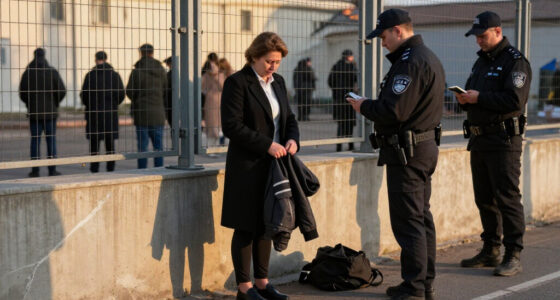
Schools in Azerbaijan have barred girls wearing hijabs from classes during inspections following new uniform rules that do not explicitly mention hijabs. Protests spread to Baku and other cities; the Interior Ministry said 37 people were detained in Baku on October 12. Officials have not explained the policy or confirmed reports that TikTok and Instagram were restricted.
Schools in Azerbaijan have barred girls wearing hijabs from attending classes during inspections tied to new uniform rules, prompting protests in Baku and other cities. The Interior Ministry said 37 people were detained in Baku on October 12; it has not said whether any detainees are minors, according to reporting by Meduza.
Azerbaijan’s Cabinet of Ministers approved the uniform rules in a September 21 decree. It bars clothing that disrupts the uniformity of the prescribed school uniform and items inconsistent with secularism in general education. The decree does not explicitly name hijabs, and Meduza reported that it does not authorize excluding students from class for wearing them.
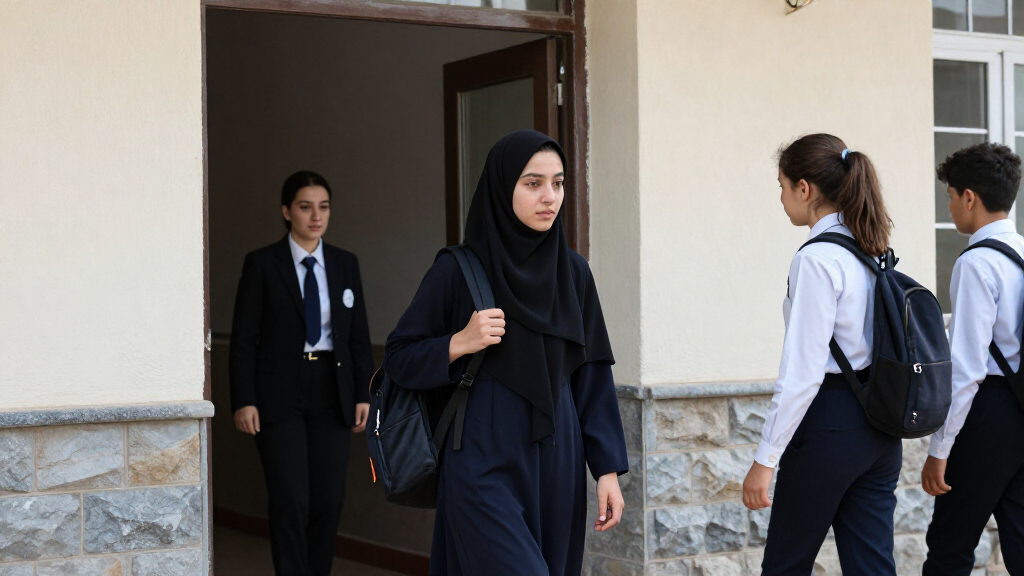
Inspections began on October 9. Girls with covered heads were turned away from classes, while female teachers were also reportedly told to remove headscarves, according to Jam News. A source at a Baku school told the BBC that upper-grade boys were required to shave their beards, although beards are not mentioned in the decree.
Protests followed in Baku and other cities. Some boys reportedly refused to attend school in solidarity with girls wearing hijabs. In a village in Baku’s Sabunchu district, students held a sign reading, “A hijab does not stand in the way of an education.” The Interior Ministry said the October 12 detainees had taken part in actions that “grossly” violated public order, including a conflict with school staff over the dress code and damage to schools. Authorities opened a criminal investigation into alleged organization of acts disrupting public order, an offense punishable by up to three years in prison.
Access to Classes Under Dispute
The dispute concerns whether students can attend school while wearing religious clothing, and how broadly authorities can enforce a dress code whose text does not specifically mention hijabs. Exclusion from class directly affects students’ access to education, while the reported solidarity actions show that the enforcement has become a wider school-community issue.
The detentions and criminal investigation add legal stakes to the protests. The authorities have described alleged public-order violations, while protesters have called for students’ right to education to be respected. The available reporting does not establish the full circumstances of the incidents or whether all accounts of damage are independently verified.
As an affiliate, we earn on qualifying purchases.
A Decree Without a Hijab Clause
The September decree prohibits clothing that disrupts school uniformity and clothing inconsistent with secularism, but does not name headscarves. Meduza reported that the distinction has become central to criticism of the school inspections: the rules set a general standard, while the reported enforcement has specifically barred girls wearing hijabs.
Azerbaijan has seen opposition to restrictions on hijabs before. Jam News reported that a similar protest took place outside the Education Ministry in May 2011 and led to a criminal investigation. That year, activist Abgul Suleymanov, known for participating in protests against a hijab ban, was detained and later sentenced to 11 years in prison on charges he denied, according to the source report.
“A hijab does not stand in the way of an education.”
— Students protesting in Sabunchu district, as quoted on their sign
As an affiliate, we earn on qualifying purchases.
Policy Rationale and Detention Details
The Cabinet of Ministers and Education Ministry have not publicly explained why the rule is being enforced against hijabs, and the source report said they did not respond to journalists’ inquiries. The decree itself does not explicitly prohibit hijabs, leaving the legal and administrative basis for excluding students unclear.
The Interior Ministry has not provided further details about the 37 detentions, including whether minors were among those held or what evidence supports each allegation. Videos circulated online, including footage of students trying to break school windows, and a Telegram channel reported that a school principal’s car was set on fire in Garadag district; the available account does not independently establish responsibility for those events.
Users also reported difficulty accessing TikTok and Instagram, which the source describes as Azerbaijan’s two most popular social networks. Some said they could reach the platforms only through a VPN. Authorities have not confirmed that the platforms were blocked, and a connection between the reported disruption and the protests remains unverified.
As an affiliate, we earn on qualifying purchases.
Official Clarifications and Investigation
The immediate developments to watch are whether the Cabinet or Education Ministry explains how the secularism clause applies to headscarves, and whether schools continue to exclude students during inspections. Authorities’ handling of the criminal investigation may clarify the allegations behind the October 12 detentions, including whether any students were detained.
There is no confirmed announcement in the source report of a policy review, a change to the uniform rules, or a restoration of access to social media platforms. Further information from officials, schools, detained people or their families could establish the scope of enforcement and the status of the investigation.
As an affiliate, we earn on qualifying purchases.
Key Questions
What do Azerbaijan’s new school uniform rules say?
The September 21 decree bars clothing that disrupts the prescribed school uniform and clothing inconsistent with secularism in general education. It does not explicitly mention hijabs.
Why were girls wearing hijabs kept out of class?
Schools reportedly barred them during inspections that began October 9, applying the decree’s secularism and uniformity rules. The Cabinet and Education Ministry have not explained the policy, so the official rationale remains unclear.
How many people were detained?
The Interior Ministry said 37 people were detained in Baku on October 12 for actions it described as grossly violating public order. It has not said whether minors were among them.
Were TikTok and Instagram blocked?
Users reported trouble accessing both platforms, and some said they needed a VPN. Azerbaijani authorities have not confirmed a block, and the cause of the reported disruption is not established.
What happens next?
Officials may clarify how the decree applies to religious headwear, while the criminal investigation could provide more information about the detentions. No policy change or confirmed decision about platform access has been reported in the source material.
Source: rss
Halloween Picks
halloween
As an affiliate, we earn on qualifying purchases.