
TL;DR
Ilya Malanin’s film “Battle of the Motors,” released in Russian theaters on October 8, dramatizes the Russo-Balt team’s entry in the 1912 Monte Carlo Rally. The real drivers were Andrey Nagel and Vadim Mikhailov, who traveled roughly 3,200 kilometers from St. Petersburg to Monaco in winter; the film changes Mikhailov’s role and takes other artistic liberties.
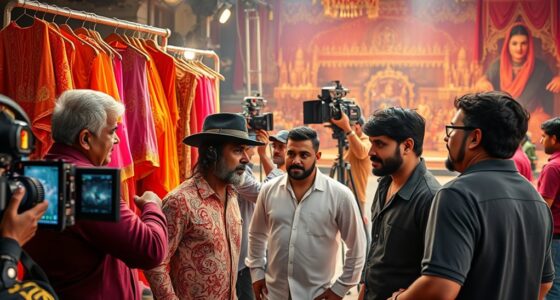
Ilya Malanin’s “Battle of the Motors”, which opened in Russian theaters on October 8, retells the story of Imperial Russia’s entry in the 1912 Monte Carlo Rally in a Russo-Balt automobile. The historical adventure film is based on real events, but its creators take artistic liberties: the actual driver Andrey Nagel’s teammate was Avtomobil employee Vadim Mikhailov, not the mechanic Dmitry Bondarev portrayed as his partner in the movie.

Get movie nights delivered free with Prime
- Fast, free delivery on millions of items
- Prime Video, Amazon Music and more included
- Member-only deals all year
The film stars Yura Borisov and Ivan Yankovsky, who plays Nagel, a racing driver and publisher of the magazine Avtomobil. Its plot follows Nagel’s effort to persuade the Russian-Baltic Wagon Works to build a domestic car, then use the Monte Carlo Rally to demonstrate the Russo-Balt’s capabilities. In the movie, Nagel and Bondarev face setbacks as they try to finish the journey.
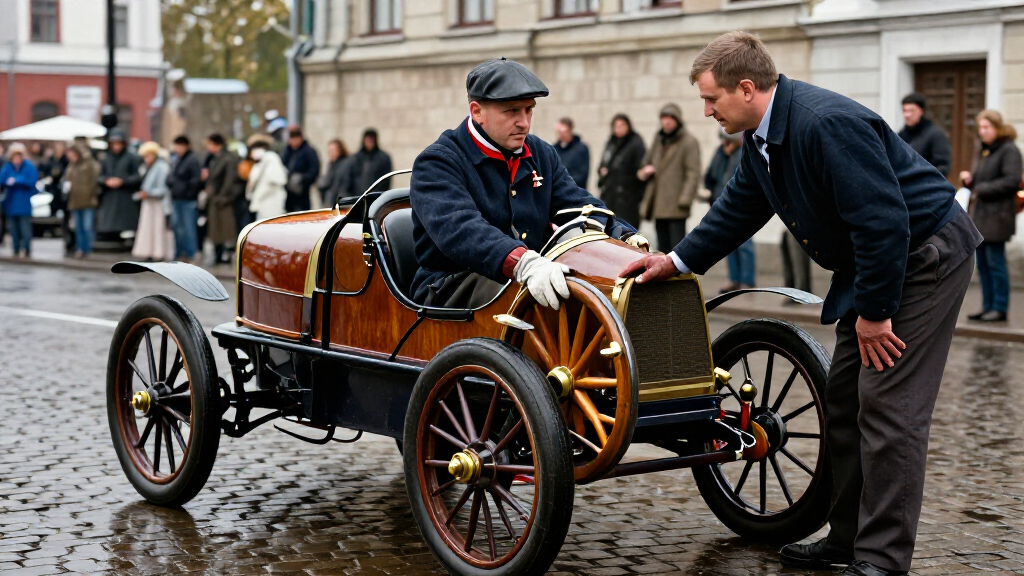
In the historical account described by Meduza, Nagel and Mikhailov set off from St. Petersburg for Monaco in winter, covering about 3,200 kilometers (1,990 miles). Their route was the rally’s longest. The open car had no windshield, and the team traveled without detailed road maps. The source identifies their participation as the first appearance of a Russian team in the event and calls the result a major achievement for Russian motorsport.
The rally shown in the film is not the same competition as today’s Monte Carlo Rally, now a round of the World Rally Championship. In 1912, the event’s rules and aims were different. The movie devotes much of its opening to the effort to build the car, with the race itself occupying its final 30 to 40 minutes, according to the source material. Several cars for filming were built using authentic blueprints, while the story’s character relationships and conflicts are dramatized.
A Test for Russian Car Building
The 1912 drive mattered as a public test of whether a car built in the Russian Empire could compete on a demanding international route. At the time, the Russo-Balt was the country’s only domestically manufactured car make, according to the source material, and its producer in Riga made vehicles on a small scale alongside its main railroad-car business. The rally put the car and its crew before an international audience, making the journey a point of national and industrial pride.
That history also places the film’s story against the limits of early motoring. A standard Russo-Balt Model C cost about 8,000 rubles, while an average worker earned roughly 20 rubles a month. Cars were expensive status symbols or purchases for technology enthusiasts, not everyday transport for most people. The rally’s significance was therefore not simply about speed: it was a demonstration involving a costly, uncommon machine at a time when Russia’s automobile industry was still small.
Popular right now

Dyson V8 Cyclone Cordless Vacuum

Roborock RockNeo Q110H Wire-Free Robot Lawn Mower

Samsung 65-Inch M70H Series 4K Mini LED Smart TV (2026)
As an affiliate, we earn on qualifying purchases.
The Russo-Balt Before the Rally
The Russian-Baltic Wagon Works in Riga began assembling Russo-Balt cars in 1909. The company’s main business was railroad equipment, and automobile production remained a sideline. Board chairman Mikhail Shidlovsky oversaw the car operation; in 1908, he had recruited a chief designer from Switzerland. The source describes the rally car as the most technologically advanced and fastest car built in the Russian Empire at the time.
Cars were visible in cities across the empire, but urban travel still relied chiefly on streetcars, horse-drawn cabs and walking. St. Petersburg had about 300 taxis and Moscow roughly 80, according to the source. Roads posed practical hazards for cars: horseshoe nails punctured tires, and some places used electromagnet-equipped vehicles to collect nails. Another Russian manufacturer, Ivan Puzyrev, began building cars in St. Petersburg in 1912, but produced only about 40 before World War I, the source says.
The movie also shifts the real team’s membership. Its central partnership between Nagel and mechanic Bondarev is a dramatic construction; Vadim Mikhailov was Nagel’s actual teammate. The film’s depiction of foreign rivals plotting against the Russian project and Emperor Nicholas II as a helpful figure belongs to its narrative, not to the confirmed details of the rally provided here.
“The creators emphasize that the film takes plenty of artistic liberties.”
— Meduza’s account of the film and its historical basis
Where Film Meets the Record
The available source material does not give a full account of the rally’s rules, the team’s precise results or the specific incidents shown in the film. It also does not identify which other scenes depart from the historical record beyond the change from Mikhailov to Bondarev and the broader dramatic framing. The source says the filmmakers acknowledge artistic liberties, but the extent of those changes is not detailed here.
The route is described as roughly 3,200 kilometers (1,990 miles), while the film’s plot summary refers to a 3,000-kilometer race. Those figures appear in different descriptions in the source material; no further explanation for the variation is provided. The source also gives the departure year as 1911 in one passage while describing the rally as the 1912 event. The exact timing of the team’s departure is therefore not consistently stated in the supplied account.
The Film’s Theater Run
“Battle of the Motors” opened in Russian theaters on October 8, 2026. The supplied report does not specify its planned release beyond theaters, box-office performance or any forthcoming production statements about the historical changes. For now, the film’s release has renewed attention to Nagel and Mikhailov’s rally journey, while the distinction between the movie’s invented drama and the documented team remains central to understanding the story.
Key Questions
When was “Battle of the Motors” released?
The film opened in Russian theaters on October 8, 2026, according to the source material.
Who actually drove the Russo-Balt in the 1912 rally?
The historical team consisted of Andrey Nagel and Vadim Mikhailov. The film replaces Mikhailov with the mechanic Dmitry Bondarev as Nagel’s teammate.
How far did the team travel?
The source describes the St. Petersburg-to-Monaco route as about 3,200 kilometers (1,990 miles) and the longest route in the rally. Another passage gives a rounded 3,000-kilometer figure for the race.
What made the Russo-Balt journey notable?
The team represented the first Russian entry in the Monte Carlo Rally, traveling in winter in an open car without a windshield or detailed road maps. The trip became a major achievement for Russian motorsport, according to the historical account.
Is the movie a fully accurate account?
No. The film is based on real events, but its creators acknowledge artistic liberties. The changed teammate is one documented example; the supplied material does not catalog every alteration.
Source: rss