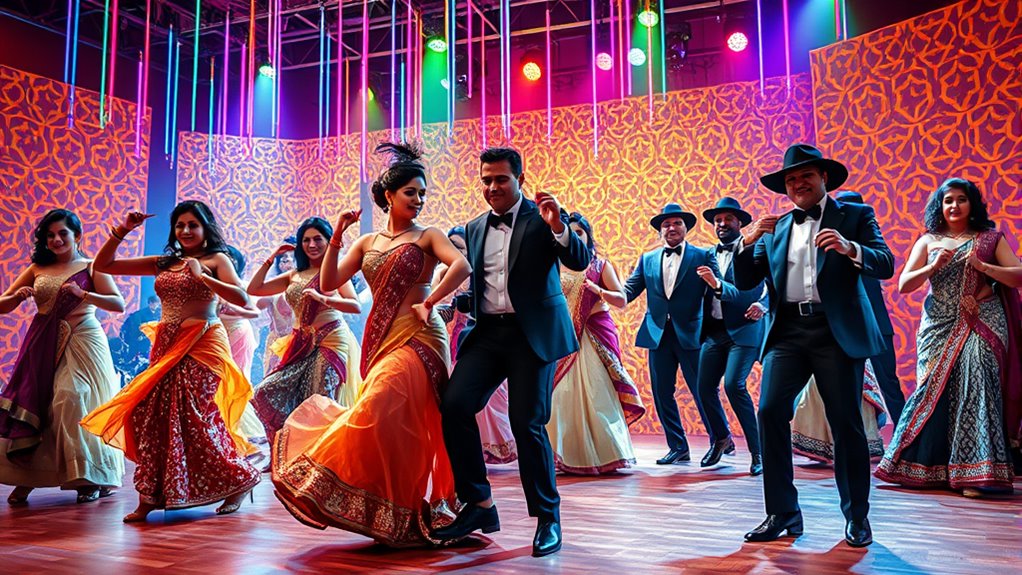

Western influences have markedly shaped Bollywood music and dance by blending global styles with traditional Indian elements. You’ll notice jazz instrumentation, such as saxophones and basslines, combined with Indian rhythms like tabla. Dance performances fuse classical Indian forms like Bharatanatyam with modern, energetic moves, creating vibrant visuals. This mix broadens storytelling and appeals to wider audiences. If you’re curious, exploring how these fusion elements elevate Bollywood’s unique cultural identity and international appeal is fascinating.
Key Takeaways
- Western jazz elements like saxophones and basslines are integrated into Bollywood music for a modern sound.
- Fusion choreography combines traditional Indian dance with contemporary and street-inspired moves.
- Colorful costumes and set designs blend traditional and modern visual aesthetics to enhance performances.
- Western dance and music styles increase Bollywood’s global appeal and audience engagement.
- Fusion of East and West reflects cultural openness, experimentation, and elevates Bollywood’s artistic expression.

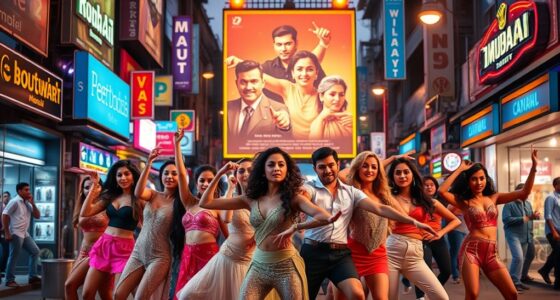
Western influence has profoundly shaped Bollywood music and dance over the past few decades, blending global styles with traditional Indian elements. As you watch a modern Bollywood film, you’ll notice how seamlessly these influences intertwine, creating vibrant, dynamic performances that appeal worldwide. Fusion choreography plays a significant role here, combining traditional Indian dance forms like Bharatanatyam or Kathak with contemporary dance styles such as hip-hop or jazz. You’ll see dancers moving with precision, smoothly shifting from classical gestures to energetic, street-inspired moves. This blend not only enhances visual appeal but also broadens the narrative scope, allowing stories to be expressed through a richer palette of movement. The use of colorful costumes and set designs further emphasizes this cultural blend, making performances visually captivating. Jazz instrumentation is another key element in this cultural fusion. Indian composers and musicians incorporate jazz influences into film scores, giving Bollywood music a fresh, modern edge. You might hear a soulful saxophone solo layered over a traditional tabla rhythm or a funky bassline underpinning a romantic duet. These jazz elements add complexity and sophistication, making the sound more globally appealing. As you listen, you’ll notice how jazz instrumentation elevates the emotional depth of songs, creating a unique blend that resonates across diverse audiences. This approach reflects a broader trend of experimentation, where Indian musicians adapt Western musical techniques to enhance their storytelling.
Frequently Asked Questions
How Has Western Fashion Impacted Bollywood Dance Costumes?
Western fashion has substantially impacted Bollywood dance costumes by inspiring fusion fashion that blends traditional and modern styles. You’ll notice a costume evolution where vibrant, Western-influenced designs incorporate elements like sequins, leather, and contemporary cuts, making performances more glamorous and trendy. This fusion fashion allows dancers to express global trends while maintaining cultural roots, creating a dynamic and eye-catching spectacle that resonates with diverse audiences worldwide.
What Are Some Specific Western Instruments Used in Bollywood Music?
You’ll notice western instruments like the piano, guitar, and drum set often feature in Bollywood music, creating fusion genres that blend traditional and modern sounds. This instrumental integration allows for diverse arrangements, giving songs a Western pop or rock vibe while maintaining Indian melodies. Such use of western instruments enhances the musical richness and appeals to global audiences, reflecting how Bollywood continues to evolve through cross-cultural influences.
How Do Western Dance Styles Influence Bollywood Choreography?
You might not realize it, but western dance styles dramatically shape Bollywood choreography. Hip hop choreography injects energy and attitude, while ballroom dance styles add elegance and sophistication. These influences create a mesmerizing fusion, keeping audiences on the edge of their seats. As you watch, notice how choreographers blend these styles seamlessly, transforming traditional Bollywood dance into a dynamic spectacle that keeps evolving with each new film.
When Did Western Music First Start Blending With Bollywood?
You’ll find that Western music first started blending with Bollywood in the 1950s and 1960s, sparking a rich cultural exchange. This period marked the beginning of musical fusion, where Western instruments and styles melded with traditional Indian sounds. As a result, Bollywood’s music evolved, incorporating jazz, rock, and pop influences, creating a unique fusion that continues to shape its vibrant, dynamic sound today.
Are There Cultural Concerns About Western Influence on Bollywood?
Concerns about Western influence on Bollywood concern many because they believe it threatens traditional values and cultural identity. You might worry that Western styles overshadow authentic Indian artistry, diluting rich traditions. Critics contend that blending Western beats with Bollywood dance can erode cultural integrity. While some see it as progress, others fear it compromises cherished customs, prompting ongoing debates about preserving cultural identity amid global influences.
Conclusion
You might believe Bollywood’s dance and music are purely traditional, but Western influence runs deep. It’s possible that this blend isn’t just a modern trend but a natural evolution driven by cultural exchange. As you see more fusion styles, consider how Western rhythms and dance moves have subtly shaped Bollywood’s vibrant scenes. Embracing this hybrid approach isn’t diluting tradition; it’s creating a dynamic new identity that keeps Bollywood fresh and globally relevant.