Before buying a bright projector for daylight use, understand that you’ll need at least 2,500 lumens for moderately lit rooms. Brightness alone isn’t enough—consider the contrast ratio and black levels for vibrant images. Managing ambient light with blinds or turning off lights can help, and choosing the right screen type boosts picture quality. If you keep exploring, you’ll discover how to truly optimize your setup for clear, vivid daytime viewing.

Get movie nights delivered free with Prime
- Fast, free delivery on millions of items
- Prime Video, Amazon Music and more included
- Member-only deals all year
Key Takeaways
- Choose a projector with at least 2,500 lumens for clear daytime viewing in moderately lit rooms.
- Use high-gain screens to enhance brightness and contrast, but be mindful of glare issues.
- Manage ambient light by closing blinds and turning off unnecessary lights to improve image clarity.
- Prioritize high contrast ratios and black level performance for vibrant, detailed daytime images.
- Consider advanced projector technology for better brightness uniformity and image processing in bright environments.

If you’re contemplating a bright projector for daytime viewing, it’s vital to understand how ambient light affects image quality. The key to a clear, vibrant picture during the day hinges on the projector’s screen brightness and how well it can combat ambient lighting conditions. When you’re in a room with lots of natural or artificial light, even the best projectors can struggle if they don’t have enough lumens to offset the brightness of your environment. The brightness of the projector, measured in lumens, directly impacts how visible and sharp your image appears. If you choose a projector with insufficient screen brightness, your picture will look washed out, dull, and hard to see, especially in well-lit spaces.
Ambient lighting is another critical factor. It includes everything from sunlight streaming through windows to overhead lights or lamps that brighten the room. The more ambient lighting you have, the more demanding it becomes for a projector to produce a clear image. To get around this, you should look for a projector with a high lumen count, typically above 2,500 lumens for daytime use in moderately lit rooms, and even higher if the environment is very bright. Keep in mind that the projector’s ability to handle ambient lighting isn’t just about raw brightness; it also involves contrast ratio and black level performance. If your projector can produce a high contrast ratio, it will display darker blacks and brighter whites, making images pop even in bright conditions.
High contrast ratio and black levels enhance image clarity in bright environments.
You’ll also want to think about your screen setup and placement. A high-gain screen can reflect more light toward your eyes, improving brightness and contrast, but it can also introduce glare or hot spots. Conversely, a matte screen may reduce glare and provide a more uniform image, but it might lower overall brightness. Combining the right screen with a projector that offers enough screen brightness ensures your content remains sharp and vivid during the day. Remember, no matter how powerful your projector is, managing ambient lighting as much as possible—like closing blinds or turning off unnecessary lights—can make a significant difference in image clarity. Additionally, understanding the importance of contrast ratio can help you choose a projector that performs well even in challenging lighting conditions. Implementing ambient light control techniques can further enhance daytime viewing experiences.
Furthermore, choosing a projector with advanced technology can significantly improve daytime visibility by enhancing image processing and brightness uniformity. To maximize daytime image quality, it’s also beneficial to consider screen type and how it interacts with your projector’s brightness capabilities.
In essence, if you want a projector that performs well in daylight, prioritize models with high lumens, a good contrast ratio, and think about your screen type and room lighting. Balancing these factors will help you enjoy bright, crisp images regardless of the time of day.
Popular right now

Dyson Cyclone V10 Origin Cordless Vacuum

Ninja Double Oven Pro XL Countertop Oven and Air Fryer, 12-in-1, Onyx, DCT801BK

Breville Barista Pro Espresso Machine with Built-In Grinder, Brushed Stainless Steel
As an affiliate, we earn on qualifying purchases.
Frequently Asked Questions
How Long Do Bright Projectors Typically Last?
Bright projectors typically last around 4,000 to 10,000 hours, depending on the model and usage. The lamp lifespan varies, and over time, brightness degradation occurs, making the image less vivid. If you use your projector daily, expect the brightness and lamp life to decrease faster. To maximize lifespan, follow manufacturer guidelines for proper maintenance and consider replacing lamps when brightness diminishes considerably.
Are There Portable Bright Projectors Suitable for Outdoor Use?
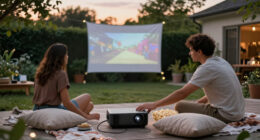
Yes, there are portable bright projectors designed for outdoor use. When choosing, look for options with high lumens for daylight visibility and sturdy outdoor durability features like water resistance and robust construction. These portable options often come with rechargeable batteries, making them easy to carry and set up outside. Make sure you select a model that balances brightness and durability to enjoy outdoor movies or presentations without worry.
What Maintenance Is Required for High-Lumen Projectors?
Think of high-lumen projectors as delicate engines that need regular tune-ups. You’ll need to perform lamp replacements when brightness dims and clean filters to prevent dust buildup. Regular maintenance keeps the projector humming smoothly, ensuring vibrant images and extended lifespan. Neglecting these tasks can cause overheating or image quality issues, so schedule routine checks and address issues promptly—think of it as nurturing your projector to shine its brightest every time you use it.
Can Bright Projectors Connect Wirelessly to Multiple Devices?
Yes, bright projectors often support wireless connectivity, allowing you to connect multiple devices seamlessly. With features like Wi-Fi and Bluetooth, you can easily stream content from smartphones, tablets, or laptops without needing cables. Many models offer multiple device compatibility, so everyone can share their content effortlessly. Just make sure your projector’s wireless features are compatible with your devices, and you’ll enjoy quick, hassle-free connections for presentations or entertainment.
How Do Ambient Light Conditions Affect Projector Image Quality?
Ambient light considerably impacts projector image quality; in fact, high ambient interference can reduce contrast by up to 50%. Your projector’s light sensitivity determines how well it performs under these conditions. Bright environments with lots of ambient light wash out images, making them harder to see. To get the best picture, choose a projector with high brightness and consider controlling ambient interference by dimming lights or using blackout curtains.
Conclusion
Now that you know what to look for, the decision isn’t just about brightness—it’s about how your projector will perform when the lights are on. But here’s the catch: even the brightest projector might not be enough if you overlook other essential factors. The real challenge lies ahead—will your new device truly deliver in every daylight situation? Stay tuned, because the next step could change everything you thought you knew about projecting in bright environments.