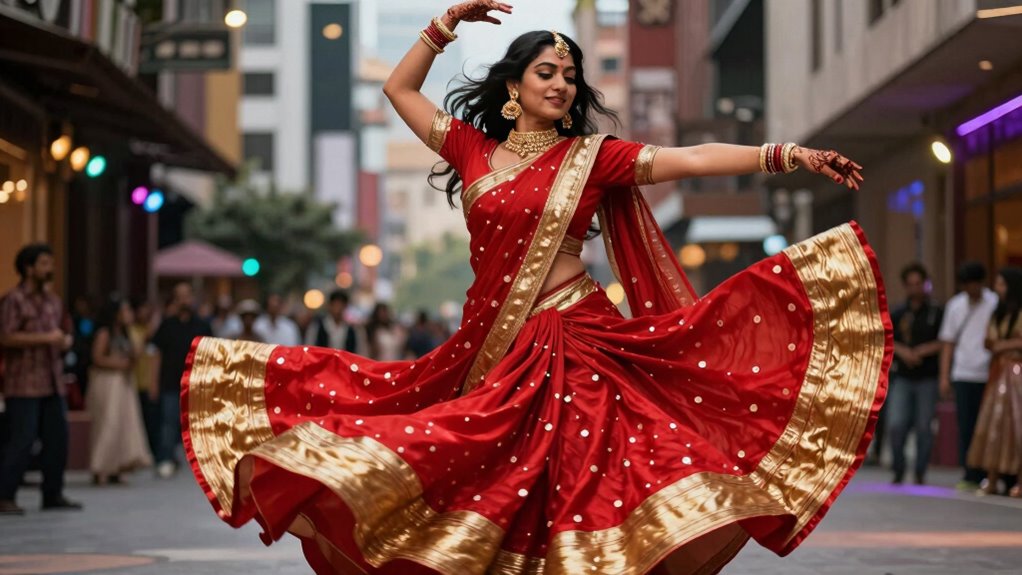

Bollywood dance now blends traditional Indian moves with jazz, salsa, and hip-hop, creating a lively, modern style. Jazz adds syncopated rhythms and improvisation, while salsa introduces sensual spins and lively turns. Hip-hop contributes sharp gestures and grounded stances, all influenced by classical forms like Bharatanatyam and Kathak. This fusion celebrates cultural exchange and keeps Bollywood dance fresh and exciting for global audiences. Stick around if you want to explore how these styles continue to shape contemporary performances.
Get ready for Prime Big Deal Days — try Prime free
Exclusive member deals on October 6–7, plus fast free delivery. Cancel anytime.
As an affiliate, we earn on qualifying purchases.
Key Takeaways
- Bollywood dance blends jazz, salsa, and hip-hop to create a contemporary, hybrid movement style reflecting cultural exchange and modernization.
- Jazz influences introduce syncopation and improvisation, enriching Bollywood’s rhythmic complexity.
- Salsa adds sensual hip movements and lively spins, enhancing the dance’s energetic appeal.
- Hip-hop contributes sharp gestures and grounded stances, infusing Bollywood with urban, edgy elements.
- The fusion of traditional Indian dance with these styles fosters global appeal and cultural dialogue.
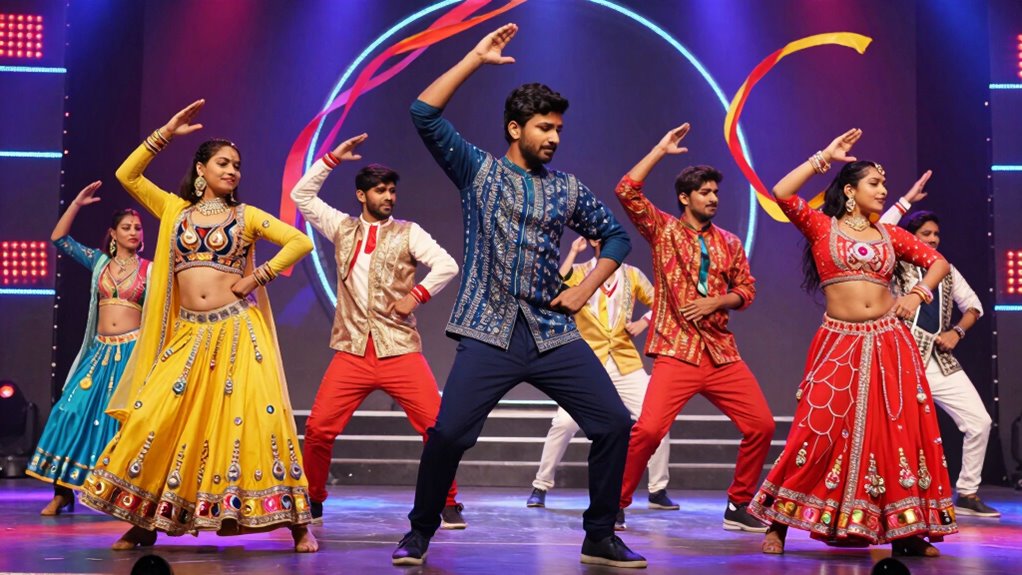
Bollywood dance, known for its vibrant energy and expressive movements, has evolved considerably by incorporating elements from jazz, salsa, and hip-hop. This fusion reflects a broader cultural exchange, transforming traditional Indian dance into a dynamic, contemporary art form. As you observe this dance evolution, you notice how different styles blend seamlessly, creating a unique language of movement that appeals to diverse audiences. The incorporation of jazz’s syncopated rhythms, salsa’s sensual hip movements, and hip-hop’s sharp, powerful gestures injects fresh energy into Bollywood routines. This cultural fusion not only modernizes the dance but also bridges gaps between different cultural backgrounds, making Bollywood a truly global phenomenon.
When you explore further, you see how this dance evolution is driven by a desire to innovate while honoring tradition. Traditional Indian dance forms like Bharatanatyam and Kathak influence the foundational footwork and storytelling elements, but they now coexist with contemporary styles. The result is a vibrant tapestry of movement where classical gestures are infused with jazz improvisation, salsa’s lively spins, or hip-hop’s grounded stances. This blend creates a mesmerizing spectacle that resonates with audiences worldwide, fostering a sense of shared cultural identity and curiosity. It’s a proof to how dance continually adapts, allowing performers to express new stories and emotions through a hybridized style.
As you watch a Bollywood dance performance today, it’s clear how essential this cultural fusion has become in shaping its modern identity. The dance evolution reflects a broader societal shift towards inclusivity and experimentation. You might notice dancers executing intricate footwork while seamlessly integrating hip-hop’s sharp isolation or salsa’s fluid turns. This approach keeps the dance fresh and relevant, appealing to younger generations who crave innovation without losing sight of the traditional roots. The blending of genres also encourages collaboration among artists from different backgrounds, fostering a global community where dance becomes a universal language. Additionally, this fusion demonstrates how cultural exchange actively influences artistic development, enriching the dance form further. Such exchanges are vital for understanding how artistic styles evolve and adapt across different cultures.
Ultimately, the influence of jazz, salsa, and hip-hop on Bollywood dance exemplifies how cultural fusion fuels dance evolution. It’s not just about movement but about connecting cultures, telling stories, and pushing artistic boundaries. As you continue to follow this vibrant dance form, you see how its continuous growth reflects a world that’s increasingly interconnected, where traditional and contemporary styles coexist and inspire each other. It’s a compelling reminder that dance is a living, breathing art that evolves with the times, embracing diversity and innovation at every step.
As an affiliate, we earn on qualifying purchases.
Frequently Asked Questions
How Has Bollywood Dance Evolved Over the Past Decade?
Over the past decade, Bollywood dance has evolved through fusion techniques and modern interpretations. You’ll notice more blending of traditional movements with influences from jazz, salsa, and hip-hop, creating vibrant, innovative styles. Dancers and choreographers experiment boldly, incorporating contemporary music and technology. This evolution keeps Bollywood dance fresh, dynamic, and accessible worldwide, reflecting a globalized culture that embraces diverse dance elements while celebrating its roots.
What Are the Key Differences Between Bollywood and Traditional Indian Dance Forms?
You see, “Old is gold,” and traditional Indian dance forms, rooted in classical origins like Bharatanatyam and Kathak, emphasize precise movements and storytelling. Bollywood dance, however, is a modern fusion, blending these classical roots with contemporary styles, energetic expressions, and theatrical flair. While traditional dances focus on spiritual and cultural narratives, Bollywood prioritizes entertainment and spectacle, making it vibrant, accessible, and ever-evolving in today’s global dance scene.
Which Bollywood Choreographers Are Most Influential Today?
You should definitely check out contemporary choreographers like Farah Khan and Remo D’Souza, as they’re shaping today’s Bollywood dance scene. They blend traditional Indian moves with fusion dance styles inspired by jazz, salsa, and hip-hop, creating fresh, energetic routines. Their innovative choreography influences new dancers worldwide and keeps Bollywood dance vibrant and evolving, making them some of the most influential figures in modern Bollywood choreography today.
How Do Dance Competitions Influence Bollywood Dance Styles?
Dance competitions act like a mirror, reflecting evolving styles and pushing boundaries. You see fusion techniques blending traditional Bollywood with jazz, salsa, and hip-hop, shaping new trends. These contests also influence costume aesthetics, encouraging brighter, more innovative looks that catch judges’ and audiences’ eyes. As a result, dancers continuously refine their skills, making Bollywood dance more dynamic and versatile, driven by the competitive spirit to stand out and set new standards.
What Are Common Training Requirements for Aspiring Bollywood Dancers?
To become a skilled Bollywood dancer, you need to focus on mastering basic technique and rhythm training. You should practice regularly to develop flexibility, strength, and precision in your movements. Learning to stay in sync with the beat is essential, so dedicate time to rhythm exercises. Additionally, taking dance classes, studying choreography, and practicing different styles help you improve your overall performance and adapt to diverse dance routines.
dance studio jazz salsa hip-hop shoes
As an affiliate, we earn on qualifying purchases.
As an affiliate, we earn on qualifying purchases.
Conclusion
So, next time you watch Bollywood dance, ask yourself—are you feeling the rhythm of jazz, salsa, or hip-hop? These styles blend seamlessly to create something vibrant and unique, just like Bollywood itself. By embracing these influences, you’re not just watching a performance; you’re experiencing a global dance fusion that invites everyone to move and celebrate culture. Isn’t it amazing how dance can connect us all across borders and traditions?
Indian dance costume for Bollywood
As an affiliate, we earn on qualifying purchases.
As an affiliate, we earn on qualifying purchases.
As an affiliate, we earn on qualifying purchases.
Fall yard work Picks
leaf blowers
As an affiliate, we earn on qualifying purchases.