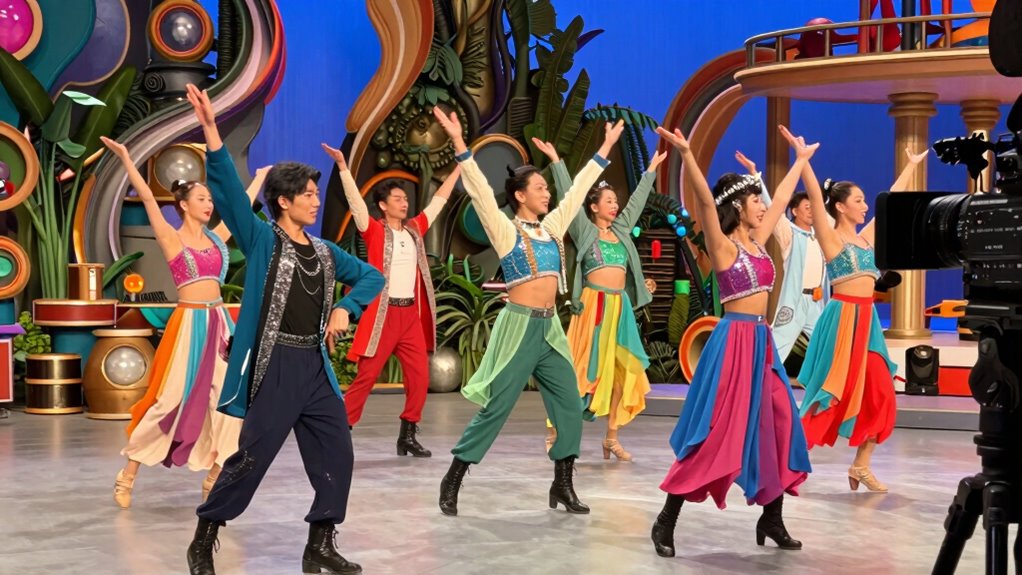

In the film industry, background dancers are essential for creating lively, authentic scenes that boost a production’s visual appeal. You’ll need strong skills, professionalism, and the ability to sync perfectly with choreography and camera work. Success often hinges on continuous improvement, industry connections, and recognition for your craft. Understanding this business helps you navigate opportunities and grow your career. Keep exploring, and you’ll discover how these dancers shape unforgettable cinematic moments and industry dynamics.
Key Takeaways
- Background dancers are considered essential for creating lively, immersive scenes, often working as part of a structured industry ecosystem.
- They typically navigate a competitive industry with opportunities driven by talent, professionalism, and industry reputation.
- Payment structures vary, including daily rates, union contracts, and residuals, influencing their earning potential.
- Career advancement can involve transitioning from background roles to featured parts, choreography, or industry recognition.
- Staying current with industry trends and continuous skill development are crucial for long-term success and employability.
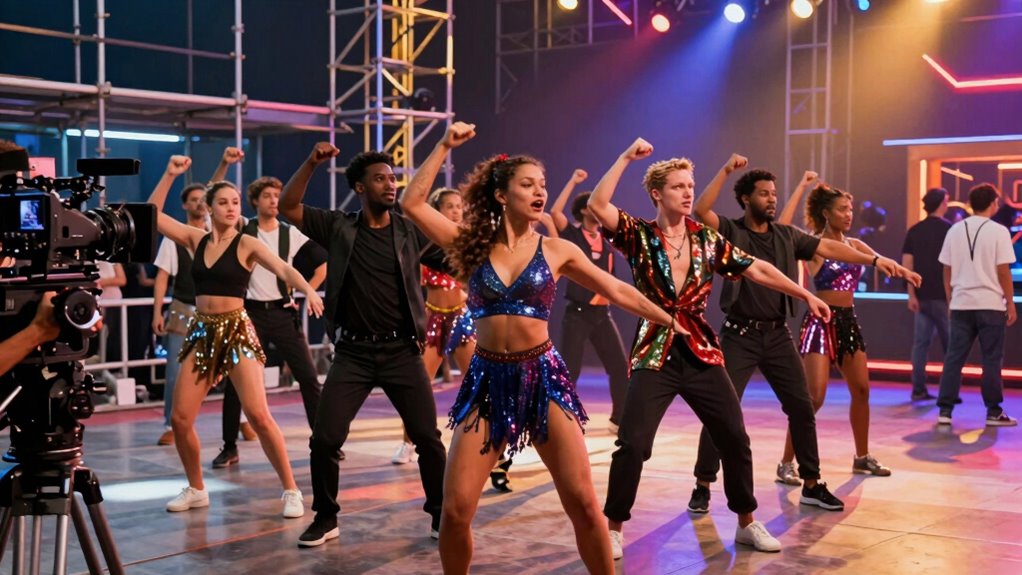
Have you ever wondered how those dazzling dance scenes come together on screen? Behind every perfectly synchronized move and eye-catching routine, there’s a lot of work that often goes unnoticed—particularly from the background dancers. These performers play a crucial role in creating the magic, and their craft requires more than just moving to the beat. It involves precise dance choreography that aligns with the director’s vision, the music, and the overall aesthetic of the scene. When you see a lively crowd or a dynamic group of dancers filling the background, know that each person has spent hours mastering their routines to seamlessly blend into the scene. Their ability to perform complex choreography convincingly on camera demands dedication, skill, and a keen understanding of timing and spatial awareness.
For background dancers, their work isn’t just about filling space; it’s about contributing to the storytelling and atmosphere of the scene. The best ones anticipate the lead performers’ moves, stay in sync with the camera angles, and adapt quickly to the choreographer’s instructions. This level of professionalism often earns industry recognition, although it might not always be visible to the audience. Many background dancers aspire to elevate their craft, and some even evolve into more prominent roles, thanks to their exceptional dance choreography skills and work ethic. When their talent is recognized by casting directors or choreographers, it can open doors to new opportunities and career growth. Industry recognition, whether through awards, credits, or reputation, helps background dancers gain respect and validate their contributions to a production’s success.
However, breaking into this field requires more than just natural talent. You need to continually hone your dance choreography skills, stay current with industry trends, and build a network within the entertainment world. Many background dancers dedicate years to perfecting their techniques, often working tirelessly for small roles before making a bigger mark. The path may be competitive, but your commitment to excellence and adaptability can lead to recognition, bigger roles, and even choreography opportunities of your own. Developing color accuracy in their routines can also help dancers better interpret lighting cues and scene mood, making their performances more visually compelling. Additionally, understanding industry trends and staying adaptable are vital for long-term success in this dynamic field. Moreover, staying aware of free floating elements in choreography can enhance a dancer’s ability to improvise and adapt during live filming or spontaneous scene changes. Ultimately, the business of background dancers in the film industry is about more than just blending into the crowd; it’s about embracing the artistry behind every dance routine and understanding how essential their work is to creating memorable cinematic moments.

Linodes Leather Jazz Shoe Slip-on for Women Men Dance Shoes Black 8.5M
- Premium Leather Upper: High-quality leather construction
- Arch Insert Design: Enhanced arch support for comfort
- Split EVA Sole: Flexible split sole with EVA patch
As an affiliate, we earn on qualifying purchases.
As an affiliate, we earn on qualifying purchases.
Frequently Asked Questions
How Do Background Dancers Audition for Major Films?
You audition for major films by attending choreography auditions organized by casting agencies. These auditions often involve performing dance routines that showcase your skills and versatility. Casting agencies then select dancers based on their talent, look, and experience. Make sure to prepare a strong dance reel, stay updated on casting calls, and maintain a professional attitude. Your goal is to stand out and demonstrate you can seamlessly blend into the film’s choreography.
What Are the Typical Wages for Background Dancers?
Think of background dancers as the heartbeat of a scene—your stage presence can make or break the shot. Typically, wages range from $150 to $300 per day, depending on the production and union status. Your costume design and ability to blend seamlessly into the scene influence pay, with union gigs offering higher rates. Ultimately, your skills and professionalism keep the rhythm flowing, earning you steady work and recognition.
Do Background Dancers Receive Health Benefits?
Yes, many background dancers receive health benefits through union membership, such as with SAG-AFTRA. If you’re part of the union, you may qualify for health insurance, which can cover medical, dental, and vision needs. However, not all background dancers are union members, so benefits vary. Being part of a union increases your chances of accessing all-encompassing health insurance and other support networks in the industry.
How Do Background Dancers Transition to Lead Roles?
Ever wonder how background dancers step into the spotlight? You can move to lead roles through strategic career advancement and continuous skill development. You need to network with industry professionals, showcase your talents, and seize opportunities to prove your versatility. Building a strong portfolio and gaining experience helps you stand out. Are you ready to take the leap, hone your craft, and turn your dance dreams into a leading role?
What Training Is Required for Aspiring Background Dancers?
To become a background dancer, you need solid dance technique and strong performance stamina. You should take classes in various styles like jazz, hip-hop, or ballet to build versatility. Practice regularly to improve your skills and endurance, and work on your stage presence. Participating in workshops and gaining experience through auditions will also help you develop the necessary training and resilience to succeed in the industry.

ZUMBA Incredible Results Weight-Loss Dance Workout DVDs and Guides Value Pack
- Number of DVDs: 4 dance exercise DVDs
- Workout Focus: Cardio, core, abs routines
- Workout Options: Various durations and intensities
As an affiliate, we earn on qualifying purchases.
As an affiliate, we earn on qualifying purchases.
Conclusion
So, next time you see a background dancer on screen, remember they’re more than just extras—they’re essential to the magic of filmmaking. Their hard work and dedication often go unnoticed, but without them, those iconic scenes wouldn’t come to life. Isn’t it time we gave these performers the recognition they deserve? After all, every movement they make adds to the story’s rhythm, making the entire production shine brighter.

VEVOR Dance Floor 6.6×11.8ft, Portable Dance Floor Roll 0.06in Thick PVC Vinyl Dance Mat Black/Grey Reversible Marley Dance Practice Floor, Non-Slip Dance Flooring for Ballet Jazz Pop Lyrical Style
- Material: PVC, water-proof, scratch-proof, lightweight
- Size: 6.6×11.8 ft, 77.5 sq ft coverage
- Thickness: 0.06 inches (1.5 mm)
As an affiliate, we earn on qualifying purchases.
As an affiliate, we earn on qualifying purchases.

As an affiliate, we earn on qualifying purchases.