
Classical dance gurus help film stars achieve authenticity by combining rigorous repetition, detailed gesture analysis, and emotional immersion. They teach you to connect deeply with the cultural and emotional significance of the dance, ensuring your movements feel genuine. By focusing on facial expressions, subtle body language, and improvisation, they guide you to convey complex emotions naturally. Keep exploring to discover more techniques that help create performances full of sincerity and cultural depth.
Key Takeaways
- Gurus emphasize cultural and emotional understanding to help stars embody the dance’s authentic spirit.
- They incorporate rigorous repetition and gesture analysis to develop muscle memory and technical proficiency.
- Training includes facial expressions and subtle body language to convey genuine emotions convincingly.
- Visualization exercises and improvisation help stars internalize movements and enhance spontaneity.
- Gurus focus on connecting performers emotionally to ensure performances are sincere and culturally true.

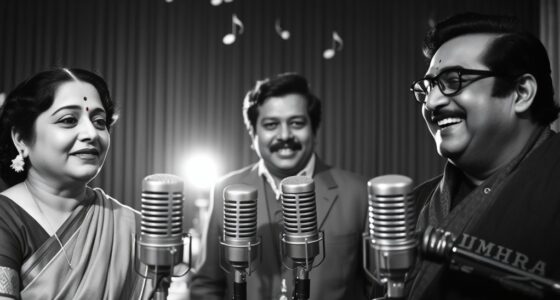
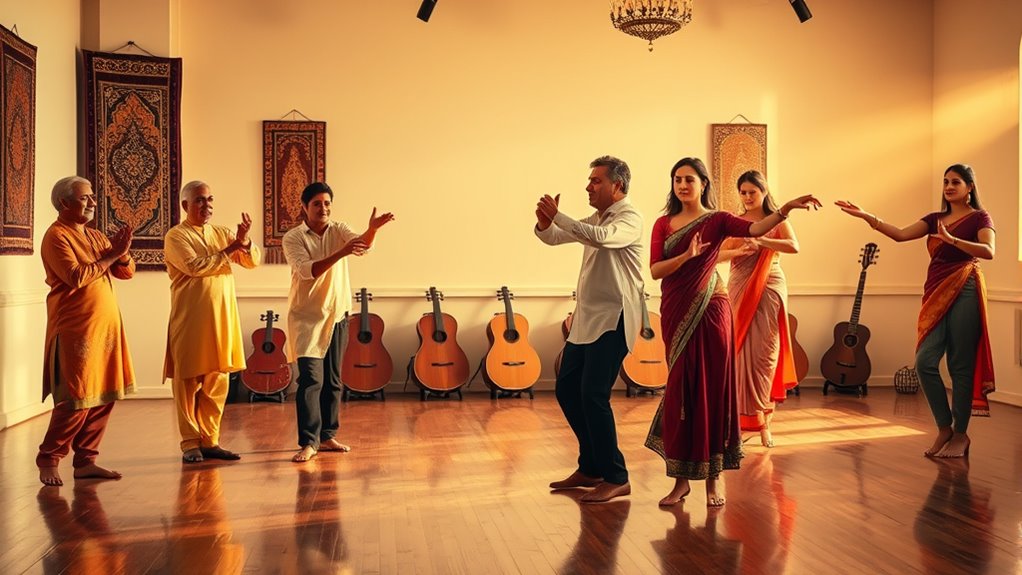
In recent years, classical dance gurus have become sought-after trainers for film stars aiming to enhance their on-screen performances. These experts understand that mastering the intricate movements and expressions of traditional dance forms isn’t just about technical skill; it’s about capturing the soul of the performance. When you work with a guru, you’re introduced to specialized training techniques designed to deepen your understanding of the dance’s cultural and emotional context. They don’t just teach steps—they teach you how to embody the dance’s essence, which is essential for achieving performance authenticity on screen. These techniques often involve rigorous repetition, detailed analysis of gestures, and a focus on facial expressions that convey emotion. Your guru might use visualization exercises, helping you internalize movements so they appear natural and effortless, rather than staged or mechanical. Additionally, understanding the health benefits of consistent practice can motivate you to stay committed and improve your physical endurance, flexibility, and overall well-being throughout training. You’ll learn that performance authenticity isn’t something you can fake. It requires immersing yourself fully into the dance’s history, symbolism, and rhythm. Your trainer guides you through this process, encouraging you to connect emotionally with each movement. They emphasize the importance of precision combined with spontaneity, so your gestures seem genuine and alive. As you progress, you’ll discover that authenticity also involves understanding the cultural significance behind each posture or step. This knowledge allows you to perform not just technically correct movements but ones infused with meaning, which resonates with audiences and critics alike. The training techniques your guru employs often include detailed drills to develop muscle memory, ensuring that each movement becomes second nature. This repetition helps you perform with confidence and fluidity, crucial for capturing the dance’s authenticity on camera. Your guru also emphasizes body language and facial expressions, teaching you how to use subtle gestures and eye movements to convey complex emotions. The goal is for your performance to transcend mere imitation—you want viewers to believe in your character’s experience. To achieve this, your trainer might incorporate improvisation exercises, encouraging you to interpret movements freely, making your performance more dynamic and believable. Ultimately, the combination of specialized training techniques and a deep focus on cultural context prepares you to perform with genuine sincerity. The result is a portrayal that feels real, emotionally compelling, and rooted in tradition. When you step onto the set, you’ll do so with the confidence that your movements are not just technically proficient but emotionally truthful—an essential ingredient for making your dance performance truly engrossing and believable.

Body Groove Delicious Dance DVD Collection
As an affiliate, we earn on qualifying purchases.
As an affiliate, we earn on qualifying purchases.
Frequently Asked Questions
How Long Does It Typically Take for Film Stars to Master Classical Dance?
When you ask how long it takes film stars to master classical dance, it’s crucial to take into account duration expectations and skill development timelines. Typically, it can take several months to years, depending on your dedication and prior experience. With consistent practice, you’ll see progress faster, but mastery requires patience. Remember, everyone’s journey is unique, so stay committed, and you’ll develop authentic skills that shine on camera over time.
Do Classical Dance Techniques Vary Significantly Between Different Indian Dance Forms?
You’ll notice that classical dance techniques vary markedly between Indian dance forms, especially in dance posture and movements. Each style emphasizes unique gestures, footwork, and expressions. Costume design also differs, reflecting regional traditions and stories. These variations help performers authentically portray their cultural narratives. As a student, understanding these differences deepens your appreciation and allows you to adapt your technique to suit each dance form’s distinct character.
Are There Specific Physical Requirements for Film Stars Learning Classical Dance?
When you learn classical dance, you’ll find that specific physical requirements, like maintaining proper dance posture, are essential for authenticity. You’ll also need to meet costume requirements that enhance your movements and portray the dance’s traditional essence. These elements help you embody the art form convincingly, ensuring your performance feels genuine. Focus on mastering your posture and costume details, and you’ll develop the discipline necessary for an authentic classical dance presentation.
How Do Dance Gurus Tailor Training for Actors With No Prior Dance Experience?
When training actors with no prior dance experience, dance gurus start with an initial assessment to understand your strengths and limitations. They then provide personalized coaching, breaking down complex movements into simple steps. You focus on mastering foundational techniques first, building confidence and muscle memory. The tailored approach ensures you develop authenticity and expressiveness, even as a beginner, making your performance both believable and enthralling.
What Common Challenges Do Film Stars Face When Learning Classical Dance?
When learning classical dance, you often face muscle fatigue and struggle with rhythm synchronization. These challenges can make it hard to stay consistent and confident. You might find your muscles tire quickly, affecting precision, and syncing movements with the beat can feel overwhelming. To overcome this, you need patience and targeted practice. With time, your stamina improves and rhythm becomes second nature, helping you perform more authentically and gracefully.

Dance Band Reading and Interpretation
As an affiliate, we earn on qualifying purchases.
As an affiliate, we earn on qualifying purchases.
Conclusion
As you step into the world of classical dance training, you realize it’s like planting a seed that blossoms into genuine artistry. The gurus’ dedication helps film stars embody tradition with the grace of a flowing river, transforming mere performers into vessels of culture. Their mentorship guarantees every move echoes authenticity, making the dance a living story. In this dance journey, you discover that true mastery isn’t just learned, it’s woven into your very soul.
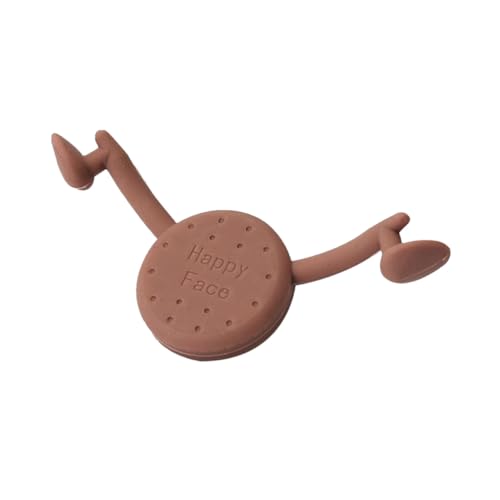
FESTFENDS Facial Muscle Exerciser Mouth Piece for Expression Training and Facial Skin Lift, Portable and Sturdy Tool for Bright Smile and Expression Improvement
Smile Enhancement Solution Facial Exerciser Mouth Piece addresses dull or expressionless smiles by mouth muscle stretch and lifting…
As an affiliate, we earn on qualifying purchases.
As an affiliate, we earn on qualifying purchases.

Vieyomn Belly Dance Jewelry Set for Women Sequins Head Chain Coins Necklace Bracelet Tassel Anklet Chain Hand Ring Drop Earrings Gypsy Jewelry Accessories
BELLY DANCE JEWELRY SET: One set consists of 9 pcs belly dancing accessories, including 1 pcs golden sequins…
As an affiliate, we earn on qualifying purchases.
As an affiliate, we earn on qualifying purchases.