Choosing the perfect MacBook Pro for data science and AI work in 2026 requires balancing raw performance, portability, and budget. For heavy-duty AI tasks, the Apple MacBook Pro with M5 Max stands out with its extreme processing power and massive RAM. Meanwhile, the Apple 2026 MacBook Pro with M5 Pro Chip offers a compelling mix of speed, display quality, and portability for demanding professionals. For those seeking a more affordable yet capable option, the 2021 MacBook Pro with M1 Pro provides excellent performance with a lightweight design. Each choice involves different tradeoffs, whether it’s price, size, or ecosystem compatibility.

Get movie nights delivered free with Prime
- Fast, free delivery on millions of items
- Prime Video, Amazon Music and more included
- Member-only deals all year
Key Takeaways
- The M5 Max-powered MacBook Pro offers unmatched performance but comes at a high cost and reduced portability.
- The M5 Pro models strike a balance between power and portability, suitable for most AI and data science tasks.
- The 2021 M1 Pro MacBook Pro remains a solid choice for those prioritizing lightweight design and long battery life.
- Display quality and RAM are critical for data-heavy workflows, making Liquid Retina XDR displays and large memory configurations essential.
- Price and size vary significantly; consider your mobility needs and budget when choosing the best fit.


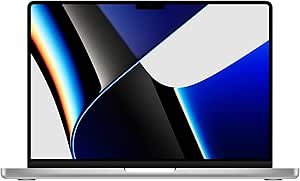


| macbook pro for data science and ai | Processor | Display | Memory | Storage |
|---|---|---|---|---|
| Apple 2026 MacBook Pro Laptop | Apple M5 Pro chip with 15-core CPU and 16-core GPU | 14.2-inch Liquid Retina XDR | 24GB Unified Memory | 1TB SSD |
| Apple MacBook Pro Laptop with | M5 Max, 18-core CPU | 16.2-inch Liquid Retina XDR | 128GB Unified Memory | 2TB SSD |
| Apple MacBook Pro | M1 Pro with 10-core CPU and 16-core GPU | 14-inch Liquid Retina XDR | 16GB RAM | 1TB SSD |
| Apple 2026 MacBook Pro Laptop | Apple M5 Pro, 18-core CPU | 16.2-inch Liquid Retina XDR | 48GB Unified Memory | 1TB SSD |
| MacBook Pro | — | — | — | — |
More Details on Our Top Picks
Apple 2026 MacBook Pro Laptop with M5 Pro Chip, 14.2-inch Liquid Retina XDR Display, 24GB RAM, 1TB SSD, Wi-Fi 7, Silver
This model stands out due to its powerful M5 Pro chip that handles AI workloads with ease, thanks to its 15-core CPU and 16-core GPU. Its 14.2-inch Liquid Retina XDR display offers high brightness and contrast, ideal for data visualization. With 24GB of RAM and 1TB SSD, it balances performance and storage for most data science tasks. The all-day battery life and seamless Apple ecosystem integration make it a versatile choice. However, its premium price might be a barrier for some, and its ecosystem lock-in limits compatibility with non-Apple hardware.
Pros:- High-end M5 Pro chip optimized for AI workloads
- Stunning Liquid Retina XDR display
- Ample RAM and storage for intensive tasks
- Excellent battery life and seamless Apple integration
Cons:- Premium price point
- Limited compatibility outside Apple ecosystem
Best for: Professional data scientists and AI developers needing a portable yet powerful machine
Not ideal for: Users on a strict budget or those who prefer non-Apple ecosystems
- Processor:Apple M5 Pro chip with 15-core CPU and 16-core GPU
- Display:14.2-inch Liquid Retina XDR
- Memory:24GB Unified Memory
- Storage:1TB SSD
- Battery Life:All-day
- Connectivity:Wi-Fi 7, Bluetooth 6
- Ports:Three Thunderbolt 5, MagSafe 3, SDXC, HDMI, headphone jack
Our verdict“The best choice for professionals who need a powerful, portable MacBook Pro with top-tier AI performance.”
Apple MacBook Pro Laptop with M5 Max, 16.2-inch Display, 128GB Memory, 2TB Storage, Space Black
This MacBook Pro is designed for those who require maximum processing power and large memory capacity. Its M5 Max chip with 18-core CPU and 40-core GPU excels at running complex models and large datasets. The 16.2-inch Liquid Retina XDR display provides immersive visualization, crucial for data analysis. With 128GB of RAM and 2TB SSD, it can handle multiple large projects simultaneously. Its battery life remains impressive, even under heavy workloads. The main tradeoffs are its high price and significant weight, which reduces portability.
Pros:- Exceptional processing power with M5 Max chip
- Massive RAM and storage capacity
- Large, high-quality display for visualization
- Excellent battery life for intensive computing
Cons:- High cost
- Heavy and less portable
Best for: AI researchers and data scientists managing extensive datasets and complex models
Not ideal for: Those who need a lightweight or budget-friendly option
- Processor:M5 Max, 18-core CPU
- GPU:40-core GPU
- Display:16.2-inch Liquid Retina XDR
- Memory:128GB Unified Memory
- Storage:2TB SSD
- Battery Life:All-day
- Ports:Three Thunderbolt 5, MagSafe 3, SDXC, HDMI, headphone jack
Our verdict“The definitive machine for demanding AI workloads where maximum performance outweighs portability concerns.”
Apple MacBook Pro (14-inch, M1 Pro, 16GB RAM, 1TB SSD, Silver)
This 2021 model remains relevant for users who need solid AI and data science performance in a lightweight package. Its M1 Pro chip with 10-core CPU and 16-core GPU offers substantial power for most workflows. The 14-inch Liquid Retina XDR display provides excellent clarity for data visualization. With 16GB RAM and 1TB SSD, it handles large datasets comfortably, and its battery life can reach up to 17 hours. Its portability and lower price point compared to the latest models make it attractive, but it doesn’t match the raw processing power of the newer M5 Max or M5 Pro chips.
Pros:- Powerful M1 Pro chip
- Long battery life
- Lightweight and portable
- Excellent display quality
Cons:- Less raw power than newer M5 models
- Limited to 512TB SSD in some configurations
Best for: Data scientists and AI engineers seeking a portable, cost-effective solution
Not ideal for: Power users running extremely large models or heavy multitasking
- Processor:M1 Pro with 10-core CPU and 16-core GPU
- Display:14-inch Liquid Retina XDR
- Memory:16GB RAM
- Storage:1TB SSD
- Battery Life:Up to 17 hours
- Ports:Three Thunderbolt 4, HDMI, SDXC, headphone jack
Our verdict“A well-balanced choice for professionals who prioritize portability without sacrificing significant processing power.”
Apple 2026 MacBook Pro Laptop with M5 Pro Chip, 16.2-inch Liquid Retina XDR Display, 48GB RAM, 1TB SSD, Wi-Fi 7, Space Black
This model is tailored for users needing massive memory and processing power. Its M5 Pro chip with 18-core CPU and 20-core GPU handles complex AI models and large data pipelines effortlessly. The 48GB RAM ensures smooth multitasking, while the 1TB SSD supports swift data access. The expansive 16.2-inch display aids in detailed data analysis. Its connectivity options, including Wi-Fi 7 and multiple ports, make it suitable for professional environments. The tradeoff is its weight and premium price, which may limit portability for some users.
Pros:- Unmatched processing power with M5 Pro chip
- Large RAM for multitasking
- High-resolution display
- Versatile connectivity options
Cons:- Heavy and bulky
- Very high price
Best for: AI researchers and data scientists with heavy workloads needing maximum hardware capabilities
Not ideal for: Travelers or users with tight budgets
- Processor:Apple M5 Pro, 18-core CPU
- GPU:20-core GPU
- Display:16.2-inch Liquid Retina XDR
- Memory:48GB Unified Memory
- Storage:1TB SSD
- Connectivity:Wi-Fi 7, Bluetooth 6
- Ports:Three Thunderbolt 5, MagSafe 3, SDXC, HDMI
Our verdict“The most powerful MacBook Pro tailored for intensive AI research and large-scale data science projects.”
MacBook Pro (with M1 Chip) User Guide: A Complete Step-by-Step Manual for Beginners, Professionals, and Seniors on Using the Apple MacBook Pro with M1 Chip & macOS Big Sur with Tips & Tricks
This guide offers an accessible introduction for newcomers to the MacBook Pro ecosystem. While it doesn’t offer hardware or performance specs, it provides detailed instructions and tips to maximize your experience with the M1 chip and macOS Big Sur. It is ideal for users who are new to MacBooks, seniors, or those transitioning from other platforms. For advanced data science and AI work, this guide is helpful but requires pairing with a capable MacBook model, such as the M1 Pro or newer.
Pros:- Detailed, easy-to-follow instructions
- Useful tips for maximizing MacBook features
- Suitable for users of all skill levels
Cons:- Lacks hardware or technical specifications
- Does not cover updates beyond macOS Big Sur
Best for: Beginners, seniors, and professionals new to MacBook Pro
Not ideal for: Experienced users seeking hardware insights or the latest performance features
Our verdict“A helpful resource for new MacBook users to quickly familiarize themselves with basic features and workflows.”

How We Picked
Our selection process focused on models explicitly built for demanding workloads in data science and AI, emphasizing processing power, memory capacity, and display quality. We compared the latest Apple Silicon chips, especially the M5 series, for CPU and GPU performance. Portability and battery life were also key, as many data scientists work on the go. We included options ranging from the most powerful to more budget-friendly to cover different user needs. Compatibility with AI frameworks and overall ecosystem integration were additional considerations, ensuring choices fit professional workflows.
| macbook pro for data science and ai | Processor | Battery Life | Ports |
|---|---|---|---|
| Apple 2026 MacBook Pro Laptop | Apple M5 Pro chip with 15-core CPU and 16-core GPU | All-day | Three Thunderbolt 5, MagSafe 3, SDXC, HDMI, headphone jack |
| Apple MacBook Pro Laptop with | M5 Max, 18-core CPU | All-day | Three Thunderbolt 5, MagSafe 3, SDXC, HDMI, headphone jack |
| Apple MacBook Pro | M1 Pro with 10-core CPU and 16-core GPU | Up to 17 hours | Three Thunderbolt 4, HDMI, SDXC, headphone jack |
| Apple 2026 MacBook Pro Laptop | Apple M5 Pro, 18-core CPU | — | Three Thunderbolt 5, MagSafe 3, SDXC, HDMI |
| MacBook Pro | — | — | — |
Factors to Consider When Choosing Macbook Pro For Data Science And Ai
When selecting a MacBook Pro for data science and AI work, the key factors include processing power, display quality, memory capacity, and portability. High-performance chips like the M5 Max and M5 Pro deliver the computational speed needed for complex models. Large, high-resolution displays facilitate detailed data visualization, while ample RAM ensures smooth multitasking. Portability matters if you work on the move, but weight and size increase with hardware power. Compatibility with AI frameworks and your workflow ecosystem are also important considerations to maximize productivity.
Processor Power and GPU
For data science and AI, processing speed is paramount. The latest M5 Max chips with high core counts offer unparalleled performance for training models and running simulations. The M5 Pro still provides excellent power at a slightly lower cost and size, making it suitable for most professional workloads. Consider whether your tasks demand the absolute maximum or if a more balanced chip like the M1 Pro suffices.
Memory and Storage
RAM and storage are critical for handling large datasets and complex models. For intensive AI workflows, 48GB or more of RAM can prevent bottlenecks, especially when multitasking or working with huge datasets. Storage should also match your data needs; 1TB is often the minimum for professional use, but larger SSDs improve data access speeds and future-proof your setup.
Display and Portability
A high-quality Liquid Retina XDR display enhances data visualization, making analysis more precise and comfortable. Size impacts portability—14-inch models are easier to carry, whereas 16-inch displays provide more screen real estate at the expense of weight. Balance your need for on-the-go flexibility against workspace requirements when choosing size.
Ecosystem and Compatibility
Apple’s ecosystem offers seamless integration with other devices, which can boost productivity. However, this also means limited compatibility with non-Apple hardware and software, especially crucial for AI frameworks that might have specific environment requirements. Evaluate whether staying within the Apple ecosystem aligns with your workflow or if cross-platform flexibility is necessary.
Frequently Asked Questions
Is the new M5 Max chip worth it for data science?
The M5 Max chip provides significant performance gains, especially for training large AI models or processing big data. If your work involves complex computations that strain lower-tier chips, investing in the M5 Max can reduce training times and improve efficiency. For more routine tasks, the M5 Pro or M1 Pro still offers excellent performance at a lower cost.
How important is RAM for AI workloads on a MacBook Pro?
RAM plays a vital role in handling large datasets and multitasking in AI projects. At least 16GB is necessary for basic workflows, but 48GB or more ensures smooth operation with extensive models or simultaneous tasks. Insufficient RAM can lead to slowdowns, especially when working with large datasets or multiple applications.
Should I prioritize display size or portability?
If mobility is essential, a 14-inch MacBook Pro offers a good balance of performance and portability. Larger screens, like the 16.2-inch models, provide more workspace, which benefits data visualization and multitasking but at the cost of increased weight. Consider your typical working environment and travel needs when weighing these factors.
Can I use a MacBook Pro for AI development outside of macOS?
While macOS supports many AI frameworks, some tools and libraries are optimized for Linux or Windows. Cross-platform compatibility can be a concern, especially for specialized software. Using virtualization or dual-boot setups can mitigate this, but native support is limited compared to other OS options. If your workflow depends heavily on non-Apple environments, consider this factor carefully.
Is the 2021 MacBook Pro with M1 Pro still a good choice?
Yes, the 2021 MacBook Pro with M1 Pro remains a capable machine for many data science and AI tasks, especially if portability and battery life are priorities. While it doesn’t match the raw power of the newer M5 models, it offers a significant performance boost over previous Intel-based Macs, making it a reliable mid-range option for professionals.
Conclusion
For users who need the highest processing power and are working on large-scale AI models or datasets, the MacBook Pro with M5 Max is the best fit, despite its weight and cost. Professionals seeking a balanced mix of portability, performance, and display quality should consider the M5 Pro models. Those prioritizing portability and long battery life but still requiring solid performance will find the 2021 M1 Pro MacBook Pro to be a suitable choice. Budget-conscious users or beginners can explore the user guide to get started with the MacBook ecosystem, but more advanced users should focus on the hardware options that match their workload demands.
Halloween Picks

Kalolary 12ft Halloween Witch Haunted House Inflatable Archway

Haunted Hill Farm 4.6‑Ft Head‑Spinning Beatrix Halloween Animatronic Prop

11.2-Foot Halloween Inflatable Pumpkin with LED Lights
As an affiliate, we earn on qualifying purchases.