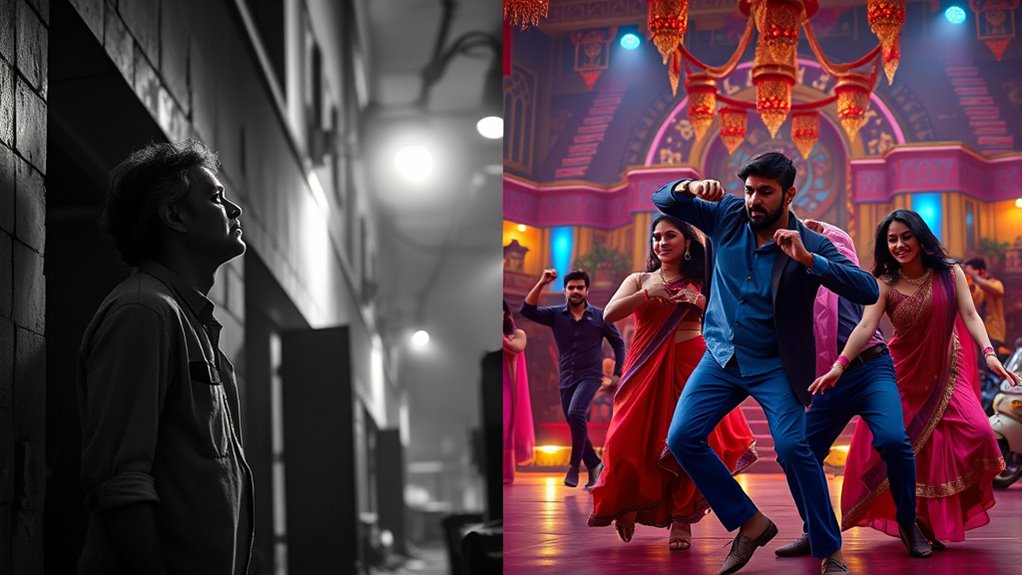

Parallel cinema in India contrasts sharply with mainstream Bollywood by focusing on realistic storytelling, social issues, and cultural nuances instead of commercial appeal. While Bollywood films often prioritize glitz and formulaic plots, parallel cinema offers authentic performances, organic narratives, and artistic freedom, appealing to viewers seeking meaningful content. Its emphasis on social critique and honest portrayals fosters a deeper connection. To discover how these approaches shape Indian cinema, explore further insights below.

Get movie nights delivered free with Prime
- Fast, free delivery on millions of items
- Prime Video, Amazon Music and more included
- Member-only deals all year
Key Takeaways
- Parallel Cinema focuses on realistic, socially conscious storytelling, whereas mainstream Bollywood prioritizes entertainment and commercial appeal.
- Parallel films operate with lower budgets and creative freedom, contrasting with the high-production, glossy nature of Bollywood blockbusters.
- Parallel Cinema targets niche audiences seeking meaningful, authentic narratives; mainstream Bollywood appeals to mass, glamorous audiences.
- Parallel filmmakers emphasize social issues, organic performances, and experimental techniques; Bollywood often relies on formulaic plots and star power.
- Parallel Cinema is driven by artistic integrity and social critique; mainstream Bollywood aims for box office success and widespread popularity.
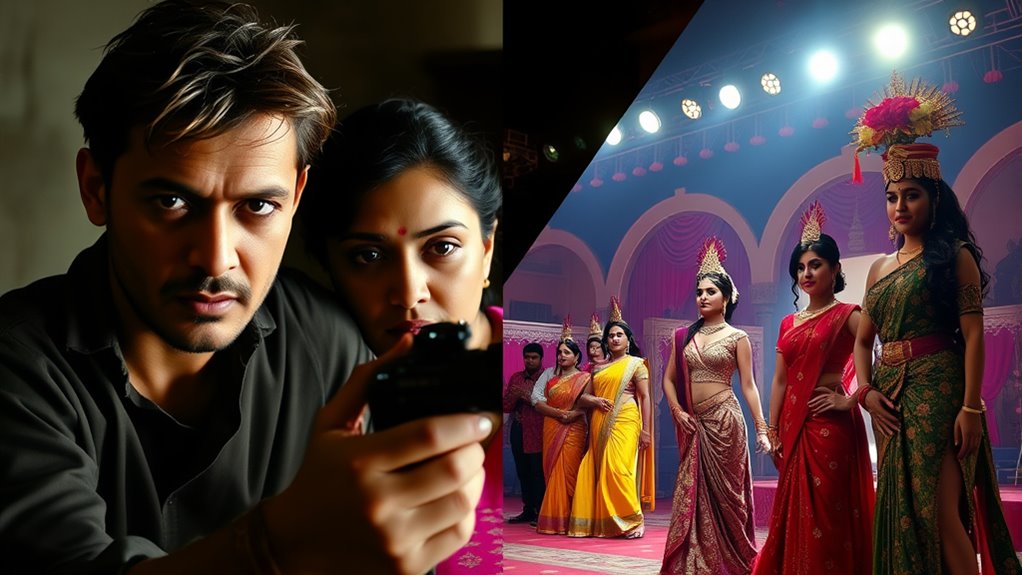
Parallel cinema, also known as art or indie cinema, emerged as a counterpoint to mainstream Bollywood films, offering a more realistic and socially conscious approach to storytelling. This movement was born out of a desire to break away from formulaic Bollywood tropes and create films that reflect the complexities of everyday life. As someone interested in cinema, you’ll notice that independent filmmaking in this space often operates with lower budgets, more creative freedom, and a focus on authentic narratives. Unlike commercial Bollywood, which aims to entertain large audiences with song-and-dance routines and star power, parallel cinema seeks to engage viewers on a deeper level by exploring social issues, human relationships, and cultural nuances.
Parallel cinema offers realistic, socially conscious stories that challenge mainstream Bollywood’s glamorous narratives.
Audience reception plays a vital role in shaping this movement. While mainstream films typically attract mass audiences and rely on commercial success, independent filmmakers in the parallel cinema sphere often target a niche, more discerning viewer. You might find that these films aren’t as flashy or widely promoted, but they resonate with viewers who crave meaningful stories and artistic integrity. The audience for parallel cinema tends to appreciate the nuanced performances, realistic dialogue, and thought-provoking themes, even if the films don’t always enjoy widespread commercial success. This reception often leads to a loyal, cult following that values the authenticity and social commentary embedded in these films.
As you explore this contrast, you’ll see that independent filmmaking in parallel cinema is driven by a desire to tell stories that matter, rather than just make money. Filmmakers often work with limited resources but prioritize artistic expression and social relevance. This can lead to innovative storytelling techniques, more organic performances, and a focus on issues like poverty, inequality, and political unrest. Additionally, the rise of independent filmmaking has expanded the scope of storytelling, allowing filmmakers to experiment with new formats and narrative styles. The audience’s reception, in turn, is driven by their appreciation for these honest portrayals, which challenge the glamorized narratives of mainstream Bollywood.
Ultimately, the relationship between parallel cinema and its audience is rooted in a shared desire for authenticity and social consciousness. You might find yourself more engaged with films that reflect real lives and societal struggles, rather than escapist entertainment. This movement’s success isn’t measured solely by box office numbers but by its ability to provoke thought and inspire change. It’s a reminder that cinema can be a powerful tool for reflection, social critique, and artistic expression—values that resonate strongly with those seeking more than just escapism from their films.
Popular right now

Sony WH-1000XM6 Wireless Noise-Canceling Over-Ear Headphones, Blue, Bundle

Samsung 48-Inch S90H OLED 4K Smart TV (2026)

Shark Rocket Pet Plus Corded Stick Vacuum, Bordeaux, HV322
As an affiliate, we earn on qualifying purchases.
Frequently Asked Questions
How Do Parallel Films Influence Bollywood’s Commercial Success?
Parallel films influence Bollywood’s commercial success by pushing independent storytelling that appeals to niche audiences. You notice that these films challenge traditional narratives, which can attract viewers seeking meaningful content. By doing so, they foster audience engagement beyond mainstream formulas, inspiring mainstream filmmakers to experiment with new themes and styles. This blending of art and commerce ultimately broadens the industry’s reach, creating more diverse and appealing cinematic experiences for a wider audience.
What Are the Key Visual Differences Between Parallel and Mainstream Films?
Imagine a canvas bursting with color and movement—that’s mainstream Bollywood’s cinematic style—vibrant, glossy, with dynamic visuals and dramatic flair. Parallel films, however, favor muted tones, natural lighting, and minimalist visuals that emphasize raw emotion. Their visual storytelling is subtle yet profound, often using long shots and real settings. These key differences shape how each style visually communicates its narrative, making each uniquely compelling in its own way.
Which Directors Are Most Associated With the Art Film Movement?
You should look at directors like Satyajit Ray, Mrinal Sen, and Shyam Benegal, who are most associated with the art film movement. They bring a strong artistic vision to their work, often acting as auteur directors who shape the entire film’s aesthetic and message. Their films challenge mainstream conventions, emphasizing realism and social issues, making them essential figures in the parallel cinema movement.
How Has Parallel Cinema Evolved Over Recent Decades?
You’ve seen how parallel cinema has evolved through cinema evolution, embracing artistic experimentation and tackling diverse themes. Over recent decades, filmmakers have pushed boundaries, blending traditional storytelling with innovative techniques. This movement remains committed to realism and social commentary, even as it adapts to new technologies and audience preferences. Your appreciation for this genre grows as it continues to challenge conventions and reflect contemporary issues with depth and authenticity.
Can Parallel Cinema Achieve Global Recognition and Awards?
You can see parallel cinema gaining international acclaim, and its award prospects look promising. While it faces stiff competition from mainstream films, its unique storytelling and artistic depth resonate globally. With more festivals and critics recognizing its value, parallel cinema has a real shot at reaching a wider audience. If filmmakers continue to push boundaries, achieving global recognition and prestigious awards becomes not just a pipe dream but an attainable goal.
Conclusion
As you explore Bollywood’s vibrant landscape, you see parallel cinema and mainstream films shine in their own ways. Both challenge and entertain, both provoke thought and evoke emotion. You realize that whether you prefer the raw authenticity of art films or the glossy spectacle of blockbusters, each offers a unique window into Indian society. Embrace both, appreciate their differences, and celebrate the rich diversity that makes Bollywood’s film world truly exceptional.