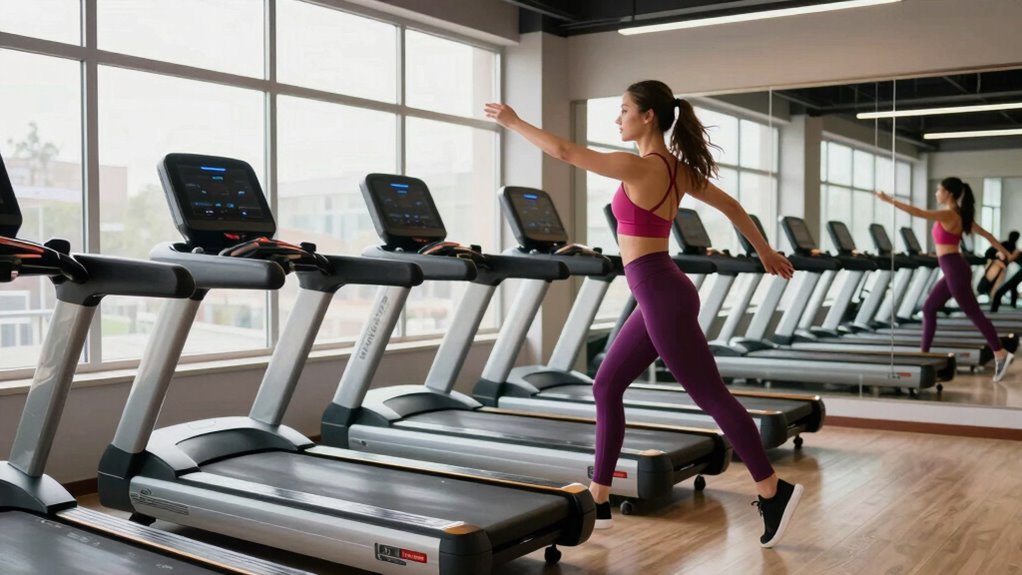

Treadmills benefit dancers beyond cardio by helping improve technique with a controlled environment, reducing distractions and allowing precise movement refinement. They also strengthen key muscles through interval training and mimic dance actions for better strength and stability. Plus, treadmills aid injury prevention by offering low-impact workouts and gradual intensity increases. You can monitor progress closely to see improvements over time. Keep exploring to discover how treadmill training can elevate your dance performance even further.
Key Takeaways
- Treadmills enable precise technique refinement by providing a controlled environment with consistent pace and minimal external distractions.
- They help develop strength and stability in muscles critical for dance, such as calves, quads, and core muscles.
- Treadmill training reduces impact stress, lowering injury risk and supporting safer, gradual progression in dance conditioning.
- They allow detailed monitoring of performance metrics, aiding targeted training and tracking progress over time.
- Treadmills facilitate recovery and cardiovascular endurance, enhancing overall dance performance and injury prevention.
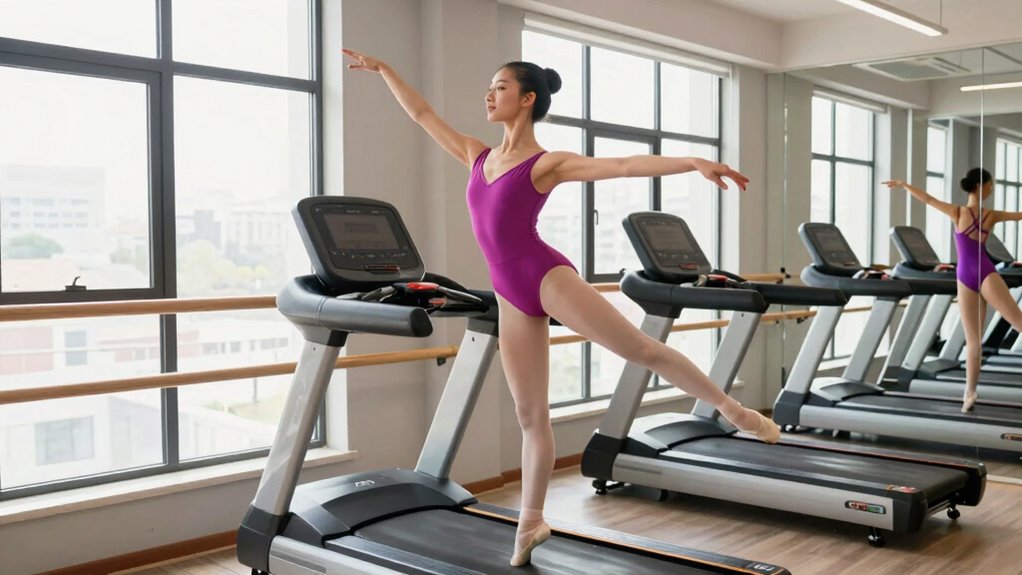
Many dancers turn to treadmills not just for cardio workouts but also to improve their technique, strength, and injury prevention. Treadmills are versatile tools that can complement your training in multiple ways. When used correctly, they help you build strength and endurance, essential for maintaining the stamina needed during long performances or intense rehearsals. They also provide a controlled environment where you can focus on your movements without external distractions, allowing you to fine-tune your technique.
Dancers use treadmills to enhance technique, strength, and injury prevention in a controlled, distraction-free environment.
One of the key benefits of treadmill training is injury prevention. Running or walking on a treadmill reduces the impact stress on your joints compared to outdoor surfaces like concrete or uneven terrain. This lower-impact environment minimizes the risk of common dance injuries such as stress fractures, shin splints, or knee pain. Additionally, the ability to control speed and incline means you can gradually increase intensity, preventing overexertion and enabling your body to adapt safely to higher workloads. Strength training on a treadmill often involves incorporating intervals, resistance, or balance exercises that target specific muscles used in dance, like the calves, quads, and core. Strengthening these muscles helps stabilize your joints and improves overall control, which is essential for executing precise movements and reducing strain during performances.
Using a treadmill for strength training isn’t just about walking or running; it’s about engaging your muscles in ways that mimic dance movements. For example, you can perform walking lunges or high knees on the treadmill to strengthen your legs and hips, boosting your power and stability. These exercises help you develop the muscular endurance needed for demanding routines, ultimately making your body more resilient against injury. Additionally, treadmill workouts allow you to monitor your progress closely—tracking speed, incline, and duration—so you can set measurable goals and see how your strength improves over time. Incorporating proper form and technique during treadmill exercises is crucial to maximize benefits and prevent strain or injury.
Incorporating treadmill sessions into your routine also supports your recovery process. Low-impact walking can aid in circulation and reduce muscle soreness after intense dance rehearsals. Plus, the ability to customize workouts means you can focus on areas that need extra attention, whether it’s building strength or improving your cardiovascular capacity. Optimal training techniques are essential to make the most of your treadmill exercises and prevent potential setbacks. Ultimately, the treadmill becomes a valuable part of your training arsenal, helping you stay healthy and perform at your best. It’s not just about getting your heart rate up; it’s about using it as a tool to enhance your technique, increase strength, and prevent injuries that could sideline your dancing career.
dance treadmill for technique improvement
As an affiliate, we earn on qualifying purchases.
As an affiliate, we earn on qualifying purchases.
Frequently Asked Questions
How Do Treadmills Improve a Dancer’s Balance and Coordination?
You improve your balance and coordination on a treadmill by engaging core muscles and practicing controlled movements. The consistent rhythm helps build muscle endurance, which supports stability during dance routines. As you stay focused on your pace and posture, your mental focus sharpens, translating to better coordination. Over time, this combination enhances your overall dance skills, making your movements more precise, fluid, and balanced—key elements for any dancer.
Can Treadmill Training Prevent Common Dance Injuries?
Yes, treadmill training can help prevent common dance injuries. By incorporating injury rehabilitation exercises on the treadmill, you strengthen vulnerable muscles and joints, reducing injury risk. Additionally, it aids in endurance building, ensuring you’re better prepared for long practice sessions and performances. Regular treadmill workouts improve overall stability and muscle balance, which are essential for injury prevention, helping you stay healthier and more resilient as a dancer.
What Specific Treadmill Exercises Benefit Flexibility?
Imagine your muscles elongating as you stride gently on the treadmill, engaging in targeted stretching routines. Incorporate flexibility drills like leg lifts or hip openers while walking at a slow pace, feeling your limbs loosen with each step. These exercises help improve your range of motion and prevent injury. Consistently practicing treadmill-based flexibility routines enhances your dance performance, making your movements more fluid and effortless.
Are There Treadmill Routines Tailored for Different Dance Styles?
Yes, there are treadmill routines tailored for different dance styles. You can adjust your speed and incline to match the dance floor’s energy and the musical tempo of your style, whether it’s ballet, jazz, or hip-hop. For example, ballet-inspired routines focus on controlled movements, while jazz and hip-hop routines incorporate faster paces. Customizing your treadmill workout helps you improve style-specific endurance and timing.
How Often Should Dancers Incorporate Treadmill Workouts Into Their Training?
You should incorporate treadmill workouts into your training 2-3 times a week. Ironically, while they seem just for cardio, they boost cross training benefits and mental stamina, essential for dance endurance. Regular use helps improve your strength, focus, and resilience, making you a better dancer overall. Just don’t forget to balance treadmill days with other training to prevent overuse injuries.
low-impact treadmill for injury prevention
As an affiliate, we earn on qualifying purchases.
As an affiliate, we earn on qualifying purchases.
Conclusion
Remember, a journey of a thousand miles begins with a single step. Treadmills aren’t just for cardio; they build strength, endurance, and resilience—key qualities for any dancer. By incorporating treadmill workouts into your routine, you’re not only improving your physical endurance but also sharpening your mental focus. So, step onto the treadmill with confidence, knowing that every stride brings you closer to your best performance yet. Keep moving forward—your future self will thank you.
treadmill with performance monitoring
As an affiliate, we earn on qualifying purchases.
As an affiliate, we earn on qualifying purchases.
As an affiliate, we earn on qualifying purchases.