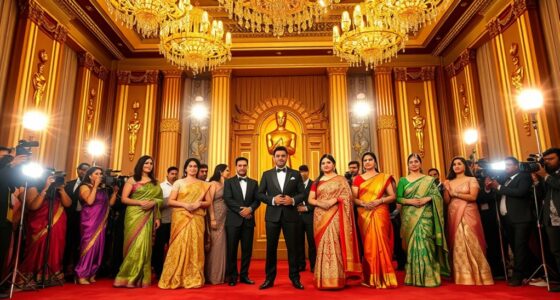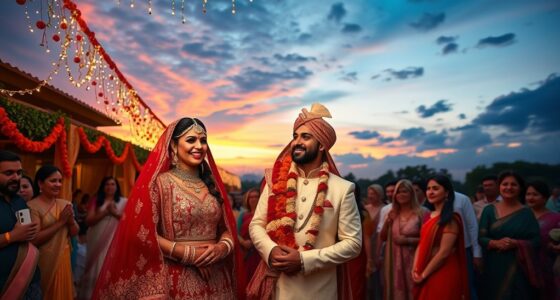
Regional dance forms in Hindi films celebrate India’s rich cultural diversity, showcasing local traditions, costumes, and music. They help you connect emotionally with authentic storytelling while highlighting regional pride and history. From lively Bhangra to graceful Bharatanatyam, each dance reflects unique customs and artistry. These performances not only entertain but also preserve heritage, giving you a glimpse of community life across India. Stay tuned to discover more about how these dances shape Indian cinema’s vibrant cultural tapestry.
Key Takeaways
- Regional dances in Hindi films showcase local culture, traditions, and festivals, enriching storytelling and audience engagement.
- Unique choreography styles reflect the cultural roots and historical significance of each regional dance form.
- Dance performances preserve and promote traditional art forms, fostering cultural pride and heritage awareness.
- Incorporating regional dances highlights diversity, adding authenticity and emotional depth to cinematic narratives.
- These dance sequences deepen audience connection by illustrating community life, customs, and regional identity.
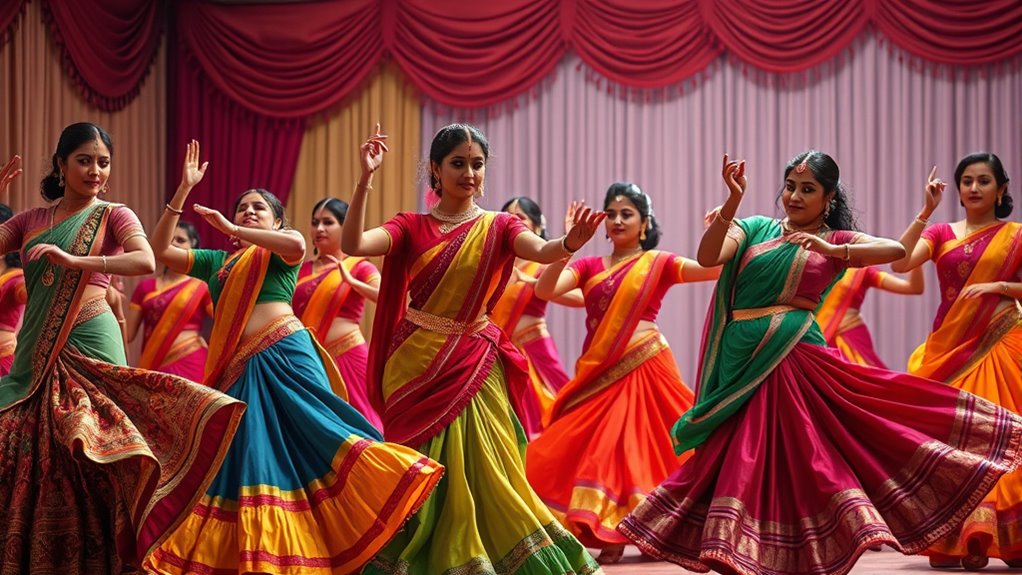
Regional dance forms have long played a essential role in Hindi films, bringing local culture and traditions to the big screen. When you watch a song that showcases a specific regional style, you’re not just entertained—you’re immersed in the cultural significance that these dances carry. They serve as a visual storytelling tool, highlighting the unique customs, festivals, and history of a particular area. By incorporating these dance forms, filmmakers preserve and celebrate regional identities, making them accessible to a national audience. The authenticity of these dances often adds depth and richness to the narrative, allowing you to connect emotionally with the characters and their backgrounds.
You’ll notice that each regional dance form brings its own distinct choreography styles, which are essential to understanding their cultural essence. For example, the lively and energetic steps of Bhangra from Punjab convey exuberance and celebration, while the intricate hand movements of Bharatanatyam from Tamil Nadu exude grace and spiritual devotion. These choreography styles are not just about movement; they are expressions of history, values, and social customs. When a director chooses to feature a particular dance form, they’re intentionally highlighting its cultural significance, making it a storytelling device that resonates beyond mere entertainment. The way dancers execute these steps reflects centuries of tradition, often passed down through generations, maintaining a link between past and present. The choreography in regional dance sequences also varies in complexity, from simple, rhythmic movements to intricate, synchronized steps that require years of training. This diversity in choreography styles allows each dance to stand out, showcasing regional artistry and craftsmanship. Additionally, the preservation of cultural heritage**** through these dance forms helps keep traditional art forms alive in modern media.
As a viewer, you’ll find that these dances often serve as a celebration of regional pride, reinforcing local identity within the larger Hindi film industry. The costumes, music, and movements all work together to create a vibrant tapestry of cultural expression. When you see a dance rooted in tradition, you get a glimpse into the community’s way of life, their festivals, and their social fabric. Filmmakers often use these dance forms to evoke specific emotions or to mark important moments in the story, making each performance memorable and meaningful. Ultimately, regional dance forms in Hindi films do more than entertain; they preserve cultural heritage, showcase diverse choreography styles, and foster a deeper understanding of India’s rich and varied traditions.

Bharatnatyam Dance Dress Elegant and Traditional Costume for Girls and Women, Suitable for Ages 4 to Adult (Red, 24 (4-6 Years))
Authentic Bharatanatyam Design – Traditional South Indian classical dance costume inspired by temple-style attire, enhancing stage presence and…
As an affiliate, we earn on qualifying purchases.
As an affiliate, we earn on qualifying purchases.
Frequently Asked Questions
How Do Regional Dance Forms Influence Bollywood Choreography?
Regional dance forms greatly influence Bollywood choreography by introducing fusion techniques that blend traditional moves with contemporary styles. You’ll notice how these dance elements enhance storytelling, making scenes more vibrant and authentic. When you incorporate regional rhythms and gestures, it adds depth and cultural richness, enthralling audiences. This seamless integration helps create memorable performances that celebrate diversity, making Bollywood dances more dynamic and relatable to viewers from different backgrounds.
Which Regional Dance Form Is Most Popular in Hindi Films?
You’ll find Bhangra is the most popular regional dance form in Hindi films. Its lively folk traditions energize many song sequences, reflecting the dance evolution from rural celebrations to Bollywood blockbusters. You often see Bhangra’s vibrant beats and spirited movements blending seamlessly with modern choreography, making it a favorite among audiences. Its popularity stems from its infectious rhythm and cultural richness, capturing the essence of Punjabi folk traditions on the big screen.
Are Regional Dance Forms Adapted for Modern Bollywood Songs?
Yes, regional dance forms are often adapted for modern Bollywood songs using fusion techniques and costume adaptations. You’ll notice choreographers blending traditional steps with contemporary moves, creating a vibrant mix that appeals to diverse audiences. Costumes also get a modern twist while respecting regional elements, making the dance performances visually stunning and culturally rich. This approach keeps regional dances relevant and exciting in today’s Bollywood scene.
How Do Regional Dances Contribute to Cultural Representation?
Think of regional dances as vibrant threads woven into Bollywood’s grand tapestry, highlighting cultural authenticity and regional identity. By showcasing these dance forms, you help preserve unique traditions and celebrate diversity. Their energetic movements and colorful costumes serve as living stories, connecting audiences to local histories. You become a bridge, fostering understanding and respect for different cultures, making regional dances not just entertainment but essential symbols of cultural pride.
Are Regional Dances Used in Both Traditional and Contemporary Films?
Yes, regional dances are used in both traditional and contemporary films. You’ll notice filmmakers blending these dance forms with modern styles, reflecting fusion trends. This approach keeps cultural authenticity alive while appealing to diverse audiences. By integrating regional dances into contemporary cinema, filmmakers celebrate cultural diversity and create dynamic visuals. So, whether in classic or modern movies, regional dance forms remain a essential part of storytelling, enriching the cinematic experience.

THANU'S CRAFT Bridal False Hair Choti Poola Jada Billalu Hair Ornaments Set Full Moon Shape Temple jewellery Ready Jada Billalu Bharatanatyam Kuchipudi Classical Dance Jewelry for women
✓ This piece of jewelry can be used for Bharatanatyam and Kuchipudi dance performances and it is the…
As an affiliate, we earn on qualifying purchases.
As an affiliate, we earn on qualifying purchases.
Conclusion
As you watch Hindi films, you’re like a traveler exploring a vibrant tapestry woven from regional dance forms. Remember how “Lagaan” brought Punjab’s Bhangra to life on the big screen, making you feel the heartbeat of its culture? These dances are the colorful threads that connect stories and regions, turning movies into a celebration of India’s diverse rhythm. Embrace this dance of diversity, and let it inspire your appreciation for every unique step.
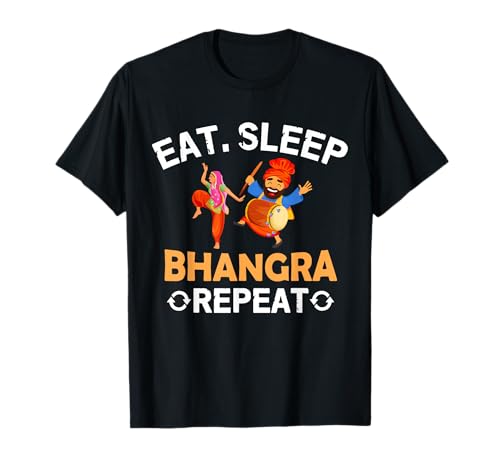
Bhangra Punjabi T-Shirt
This Bhangra T Shirt makes the perfect Gift for anyone who loves Bhangra or Bagaa Dancing
As an affiliate, we earn on qualifying purchases.
As an affiliate, we earn on qualifying purchases.

The Sculpted Blossom: Classical Indian Dance – Belly Dance Fusion with Irina Akulenko
belly dance and Indian dance mix
As an affiliate, we earn on qualifying purchases.
As an affiliate, we earn on qualifying purchases.