Selecting the right MacBook Pro for software development requires balancing raw processing power against thermal constraints and memory capacity. The Apple MacBook Pro 16.2-inch with M5 Pro stands out as the best overall choice for most professional developers, offering an ideal mix of CPU cores and GPU performance for compiling large codebases and running local containers. For those needing extreme memory bandwidth for virtual machines or AI workloads, the MacBook Pro 16-inch with M5 Max provides unmatched headroom, while the 14-inch M5 Pro offers a more portable alternative without sacrificing significant compute power. The main tradeoff lies in choosing between the portability of the 14-inch chassis and the sustained performance of the 16-inch’s larger cooling system. This guide breaks down each model’s specific strengths to help you match the hardware to your development environment.

Get movie nights delivered free with Prime
- Fast, free delivery on millions of items
- Prime Video, Amazon Music and more included
- Member-only deals all year
Key Takeaways
- The M5 Pro chip offers the best price-to-performance ratio for general full-stack development, handling multiple Docker containers and IDEs without bottlenecking.
- Developers running heavy virtualization or local LLMs should prioritize the M5 Max models, as the unified memory architecture becomes the limiting factor before the CPU does.
- Renewed models with M1 Max or M4 Max chips provide significant value, but buyers must verify battery health and warranty terms, as older generations lack Wi-Fi 7 and newer media engine features.
- The 14-inch form factor is superior for developers who travel frequently or work in tight spaces, though it may throttle under sustained all-core loads compared to the 16-inch.
- 16GB of unified memory is the new baseline for comfortable development, but 24GB or 48GB is strongly recommended for anyone using Xcode, Android Studio, or multiple browser instances alongside their IDE.
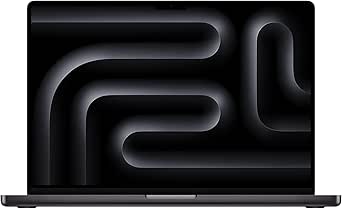


| macbook pro for software development | Display | Storage | Processor | Memory |
|---|---|---|---|---|
| Apple MacBook Pro 16.2-inch wi | 16.2-inch Liquid Retina XDR | 1TB SSD | Apple M5 Pro with 18-core CPU | 24GB unified memory |
| 2021 Apple MacBook Pro with M1 | 16-inch | 1TB SSD | 3.2GHz M1 Max | — |
| Apple 2024 MacBook Pro 16-inch | 16-inch Liquid Retina XDR | 1TB SSD | Apple M4 Max chip | 48GB unified memory |
| Apple MacBook Pro 14.2-inch wi | 14.2-inch Liquid Retina XDR | 1TB SSD | Apple M5 Pro with 15-core CPU | 24GB unified memory |
| Apple 14.2-inch MacBook Pro wi | 14.2-inch Liquid Retina XDR, up to 1600 nits peak brightness | 1TB SSD | Apple M5 chip with 10-core CPU | 16GB unified memory |
| Apple 16.2-inch MacBook Pro wi | 16.2-inch Liquid Retina XDR | 1TB SSD | — | — |
| Apple 14.2-inch MacBook Pro wi | 14.2-inch Liquid Retina XDR | 1TB SSD | — | — |
| Apple 13.6-inch MacBook Air wi | 13.6-inch Liquid Retina | 512GB SSD | — | — |
| Apple 16-Inch MacBook Pro Lapt | 16-inch Retina display | 2TB SSD | M5 Max, 18-core CPU | 128GB Unified Memory |
| Apple MacBook Pro 14-inch with | 14-inch Liquid Retina XDR | 512GB SSD | — | 16GB |
More Details on Our Top Picks
Apple MacBook Pro 16.2-inch with M5 Pro, 18-core CPU, 20-core GPU, 24GB Memory, 1TB SSD, Wi-Fi 7, Space Black
For developers who want a large workspace without stepping up to an older or renewed machine, this 16.2-inch M5 Pro is the strongest all-round fit here. Its 18-core CPU, 24GB of unified memory, and 1TB SSD give demanding IDEs, local services, and multitasking room to run together; the larger Liquid Retina XDR display also makes side-by-side code and documentation easier to manage. Compared with the 14.2-inch M5 Pro, this version has a stronger listed CPU and GPU configuration and more screen area, but it weighs 4.71 pounds versus 3.52. The 2024 M4 Max renewed model has more memory at 48GB, which may suit unusually large projects, but its renewed condition adds uncertainty. Choose this model for a current, well-connected development workstation; skip it if daily portability matters more than screen space.
Pros:- 18-core CPU and 20-core GPU suit demanding development and parallel workloads.
- 24GB unified memory supports a busy IDE, browser, and local tools at once.
- Large 16.2-inch Liquid Retina XDR display gives code and documentation more room.
- Thunderbolt 5, HDMI, SDXC, and Wi-Fi 7 provide flexible wired and wireless connections.
Cons:- At 4.71 pounds, it is considerably less convenient to carry than the 14.2-inch M5 Pro.
- Its 24GB memory is below the 48GB in the renewed M4 Max option, a limitation for very large workloads.
- The supplied battery details do not state a runtime, making endurance harder to compare.
Best for: Developers who keep multiple code windows open, build substantial projects, and want a large screen with current-generation connectivity.
Not ideal for: Commuting developers who carry their laptop all day or anyone whose workload needs more than 24GB of memory.
- Processor:Apple M5 Pro with 18-core CPU
- Graphics:20-core GPU
- Display:16.2-inch Liquid Retina XDR
- Memory:24GB unified memory
- Storage:1TB SSD
- Wireless:Wi-Fi 7, Bluetooth 6
- Ports:Three Thunderbolt 5, MagSafe 3, SDXC card slot, HDMI, headphone jack
- Weight:4.71 pounds
Our verdict“Choose this 16-inch M5 Pro for a capable, current development machine with ample screen space, provided its weight and 24GB memory fit your workflow.”
2021 Apple MacBook Pro with M1 Max, 16-inch, 64GB RAM, 1TB SSD, Silver (Renewed)
The main reason to choose this renewed 2021 model is its unusual combination of 64GB RAM and a 1TB SSD. That memory can help when a development setup holds large projects, virtual machines, containers, or several heavyweight tools at once. It has far more listed RAM than either M5 Pro model in this group, though its M1 Max processor is an older generation than the M5 chips. Compared with the 2024 renewed M4 Max, this option offers more memory on paper, while the newer M4 Max brings a later chip and a more recent model year. Renewed condition is the central tradeoff: it is not Apple certified, includes compatible rather than original accessories, and its battery capacity is specified only as above 80%. I’d shortlist it for memory-hungry work only if the condition and support terms suit you.
Pros:- 64GB RAM exceeds the memory in the new M5 Pro models listed here.
- M1 Max and 16-inch display provide a substantial setup for demanding work.
- 1TB SSD gives room for source trees, development tools, and local assets.
- Battery capacity is specified as exceeding 80%.
Cons:- The M1 Max is an older processor generation than the M4 Max and M5 options in this roundup.
- Renewed condition is not Apple certified, and the listing does not specify exact battery runtime.
- Compatible accessories and generic packaging may not suit buyers seeking an original new-device package.
Best for: Developers running memory-heavy virtual machines, containers, or large local projects who are comfortable buying a renewed laptop.
Not ideal for: Buyers who want a new machine, Apple-certified condition, original accessories, or the newest processor generation.
- Processor:3.2GHz M1 Max
- Display:16-inch
- RAM:64GB
- Storage:1TB SSD
- Color:Silver
- Condition:Renewed
- Battery condition:Capacity exceeds 80%
Our verdict“Pick this renewed M1 Max when 64GB of memory matters more than a newer chip and you accept the condition tradeoffs.”
Apple 2024 MacBook Pro 16-inch with M4 Max Chip, 48GB RAM, 1TB SSD – Space Black (Renewed)
This renewed 16-inch MacBook Pro is the performance-focused choice for developers who can use both its M4 Max chip and 48GB of unified memory. That memory headroom is a meaningful step above the 24GB in the new M5 Pro models, particularly for large codebases, multiple containers, or resource-intensive local tools. Compared with the renewed M1 Max, it has a newer chip generation but 16GB less listed memory; the M1 Max may suit workflows that prioritize maximum capacity instead. The XDR display and built-in HDMI, SDXC, and Thunderbolt connections also make it easier to work across a desk setup without relying entirely on adapters. The cost of this capability is a large, heavy design and renewed-product uncertainty, including a potentially limited warranty. I’d choose it over the M5 Pro options only when its extra memory and Max-tier chip match the workload.
Pros:- M4 Max chip targets demanding technical and creative workloads.
- 48GB unified memory provides more headroom than the new M5 Pro models listed here.
- 16-inch Liquid Retina XDR display gives a spacious workspace.
- MagSafe, HDMI, SDXC, and Thunderbolt ports support varied desk and peripheral setups.
Cons:- Renewed condition may come with limited warranty coverage.
- Its large 16-inch form factor is less portable than either 14.2-inch M5 option.
- The 48GB configuration has less memory than the renewed M1 Max model’s 64GB.
Best for: Experienced developers working with large builds, multiple containers, or demanding local workloads who need more than 24GB of memory.
Not ideal for: Mobile developers seeking a light daily carry, or buyers who require a new product and clearly stated warranty coverage.
- Processor:Apple M4 Max chip
- Display:16-inch Liquid Retina XDR
- Memory:48GB unified memory
- Storage:1TB SSD
- Keyboard:QWERTY English Magic Keyboard with Touch ID
- Connectivity:MagSafe, HDMI, SDXC card slot, Thunderbolt ports
- Condition:Renewed
Our verdict“Choose this renewed M4 Max for demanding development that benefits from 48GB of memory, but favor a new M5 Pro if condition certainty matters more.”
Apple MacBook Pro 14.2-inch with M5 Pro, 15-core CPU, 16-core GPU, 24GB Memory, 1TB SSD, Wi-Fi 7, Space Black
This 14.2-inch M5 Pro keeps the key development strengths of the larger M5 Pro model while trimming weight to 3.52 pounds. Its 15-core CPU, 16-core GPU, 24GB of memory, and 1TB SSD suit professional coding work, and the smaller chassis is easier to carry between office, home, and class. Compared with the 16.2-inch M5 Pro, it gives up screen area and some listed CPU and GPU cores, so long coding sessions may feel more constrained if you rely on multiple windows. In return, it is more portable without dropping the Thunderbolt 5 ports, HDMI, SDXC slot, or Wi-Fi 7. The 16GB M5 model is a lighter-duty alternative, but this Pro configuration offers more memory for heavier projects. Pick it when portability and sustained workload capability matter together.
Pros:- M5 Pro with a 15-core CPU and 16-core GPU is suited to demanding development work.
- 24GB unified memory and 1TB SSD support substantial projects and multitasking.
- At 3.52 pounds, it is easier to carry than the 16.2-inch M5 Pro.
- Thunderbolt 5, HDMI, SDXC, MagSafe 3, and Wi-Fi 7 offer flexible connectivity.
Cons:- The 14.2-inch display provides less room for code and documentation than the 16.2-inch model.
- Its listed CPU and GPU core counts are lower than those of the 16.2-inch M5 Pro.
- 24GB memory may constrain workloads that need very large local environments.
Best for: Developers who travel with their laptop but still run professional IDEs, local services, and multitasking workloads.
Not ideal for: Developers who want the largest built-in coding workspace or need more than 24GB of memory for local workloads.
- Processor:Apple M5 Pro with 15-core CPU
- Graphics:16-core GPU
- Display:14.2-inch Liquid Retina XDR
- Memory:24GB unified memory
- Storage:1TB SSD
- Wireless:Wi-Fi 7, Bluetooth 6
- Ports:Three Thunderbolt 5, MagSafe 3, SDXC card slot, HDMI, headphone jack
- Weight:3.52 pounds
Our verdict“Choose this 14-inch M5 Pro if you need a portable development machine with more memory and connectivity than the base M5 model.”
Apple 14.2-inch MacBook Pro with M5 chip, 10-core CPU and GPU, 16GB memory, 1TB SSD, Space Black
For web development, coursework, and general programming, this 14.2-inch MacBook Pro offers a sensible balance of current M5 performance and a portable build. Its 16GB of unified memory is below the 24GB in either M5 Pro model, so it leaves less room for large projects, several containers, or memory-heavy local tools. Still, the 1TB SSD gives developers space for applications and source files, while the XDR display and a useful spread of ports make it a capable daily machine. Compared with the 14.2-inch M5 Pro, this model has fewer CPU and GPU cores and Thunderbolt 4 rather than Thunderbolt 5; its fit is routine development rather than sustained, demanding workloads. Choose it if you value a smaller, simpler setup and do not need Pro-tier memory headroom.
Pros:- M5 chip with a 10-core CPU and GPU handles everyday coding and development tasks.
- 16GB unified memory is a practical fit for typical IDE and browser use.
- 1TB SSD provides substantial local storage for tools and projects.
- 14.2-inch XDR display and HDMI, SDXC, and Thunderbolt 4 ports suit desk or mobile setups.
Cons:- 16GB memory is less suitable for large projects and heavy parallel workloads than the M5 Pro models’ 24GB.
- Thunderbolt 4 is a generation behind the Thunderbolt 5 ports on the M5 Pro options.
- The listing does not provide a specific battery runtime.
Best for: Students and early-career developers building apps, websites, or smaller projects who want a portable MacBook Pro with 1TB of storage.
Not ideal for: Developers running several virtual machines, large container stacks, or memory-intensive builds who would benefit from 24GB or more.
- Processor:Apple M5 chip with 10-core CPU
- Graphics:10-core GPU
- Display:14.2-inch Liquid Retina XDR, up to 1600 nits peak brightness
- Memory:16GB unified memory
- Storage:1TB SSD
- Camera:12MP Center Stage
- Ports:Three Thunderbolt 4, MagSafe 3, SDXC card slot, HDMI, headphone jack
- Weight:3.41 pounds
Our verdict“Choose this M5 MacBook Pro for everyday coding and a portable 1TB setup, but step up to an M5 Pro for heavier local workloads.”
Apple 16.2-inch MacBook Pro with M5 Pro, 18-core CPU, 20-core GPU, 48GB Memory, and 1TB SSD (Space Black)
This model stands out for developers who juggle massive codebases, multiple virtual machines, and local AI models simultaneously. The 48GB of unified memory is a significant differentiator when compared to the 14.2-inch M5 Pro, which caps out at 24GB. If your workflow involves running Docker containers alongside heavy IDEs and browser instances, this headroom prevents swapping and keeps performance snappy. However, the 4.71-pound weight makes it less ideal for daily commuting than lighter options. The larger screen real estate aids in viewing extensive logs or side-by-side code comparisons, but it demands a dedicated workspace. This is a powerhouse for stationary development environments rather than a portable companion.Pros:- 48GB unified memory handles heavy multitasking and VMs without slowdowns
- 16.2-inch Liquid Retina XDR display offers ample space for code and logs
- M5 Pro chip delivers strong CPU and GPU performance for compilation
- Rich port selection includes Thunderbolt 5, HDMI, and SDXC
Cons:- Heavier at 4.71 pounds compared to 14-inch models
- Larger footprint requires a dedicated desk space
- Higher price point than the 14-inch M5 Pro variants
Best for: Senior engineers running complex local environments, AI developers, and users who prioritize screen real estate over portability.
Not ideal for: Developers who commute frequently or work in tight spaces, as the size and weight are cumbersome for lap use.
- Chip:Apple M5 Pro
- CPU Cores:18-core
- GPU Cores:20-core
- Unified Memory:48GB
- Storage:1TB SSD
- Display:16.2-inch Liquid Retina XDR
- Weight:4.71 pounds
- Ports:Three Thunderbolt 5, MagSafe 3, SDXC, HDMI, Headphone Jack
Our verdict“Choose this if you need substantial memory and screen space for heavy local development workloads.”
Apple 14.2-inch MacBook Pro with M5 Pro, 15-core CPU, 16-core GPU, 24GB Memory, 1TB SSD, Wi-Fi 7, Silver
This configuration hits the sweet spot for most professional developers who need power without the bulk of the 16-inch model. The 15-core CPU provides sufficient throughput for compiling large projects, while the 24GB of memory is adequate for standard web and mobile development stacks. Compared to the 16.2-inch M5 Pro with 48GB, this machine is significantly lighter at 3.52 pounds, making it far better for daily travel. The Liquid Retina XDR display remains a standout feature, offering excellent color accuracy and brightness. While it lacks the massive memory headroom of its larger sibling, it offers a more practical form factor for those who value mobility alongside performance.Pros:- Lightweight 3.52-pound design is easy to carry daily
- M5 Pro chip handles compilation and multitasking efficiently
- 24GB unified memory suits most professional development workflows
- Includes Thunderbolt 5 and HDMI for versatile connectivity
Cons:- 24GB memory may limit heavy virtualization or AI workloads
- Smaller screen than the 16-inch model reduces visible code context
- Silver color may show fingerprints more visibly than Space Black
Best for: Professional developers who commute daily and need a powerful, portable machine for standard coding tasks.
Not ideal for: Users running multiple heavy virtual machines or large local AI models, as 24GB memory may become a bottleneck.
- Chip:Apple M5 Pro
- CPU Cores:15-core
- GPU Cores:16-core
- Unified Memory:24GB
- Storage:1TB SSD
- Display:14.2-inch Liquid Retina XDR
- Weight:3.52 pounds
- Wireless:Wi-Fi 7, Bluetooth 6
Our verdict“This is the ideal choice for developers seeking a portable yet powerful daily driver.”
Apple 13.6-inch MacBook Air with M5 chip, 16GB memory, 512GB SSD, and 12MP Center Stage camera
This MacBook Air is designed for developers who prioritize extreme portability and battery life over raw compute power. At just 2.71 pounds, it is significantly lighter than any MacBook Pro in this lineup, including the 14.2-inch M5 Pro. The M5 chip handles light to medium coding tasks, such as web development or student projects, with ease. However, the 16GB of memory restricts heavy multitasking; running Docker or large IDEs alongside multiple browser tabs will likely cause performance dips. The lack of active cooling means sustained compilation tasks may throttle performance compared to the Pro models. This is a tool for code writing and light debugging, not heavy environment management.Pros:- Extremely lightweight at 2.71 pounds for easy travel
- Up to 18 hours of battery life supports full-day coding sessions
- Fanless design ensures silent operation in quiet environments
- M5 chip is efficient for everyday productivity and light coding
Cons:- 16GB memory limits multitasking and virtualization capabilities
- 512GB storage may require external drives for large projects
- No dedicated cooling system can lead to thermal throttling under load
Best for: Students, junior developers, or consultants who primarily code in lightweight environments and value portability.
Not ideal for: Backend developers, data scientists, or anyone running virtual machines or heavy local servers.
- Chip:Apple M5
- Unified Memory:16GB
- Storage:512GB SSD
- Display:13.6-inch Liquid Retina
- Weight:2.71 pounds
- Battery Life:Up to 18 hours
- Ports:Two Thunderbolt 4, MagSafe, Headphone Jack
- Wireless:Wi-Fi 7, Bluetooth 6
Our verdict“Pick this if you need a silent, ultra-portable machine for light development work.”
Apple 16-Inch MacBook Pro Laptop Early 2026 with M5 Max Chip, 18-Core CPU, 40-Core GPU, 128GB RAM, 2TB SSD, Silver
This machine is the ultimate workstation for developers working with massive datasets, complex simulations, or on-device AI training. The M5 Max chip combined with 128GB of unified memory dwarfs the capabilities of the 16.2-inch M5 Pro, which offers only 48GB. The 40-core GPU accelerates tasks that rely on parallel processing, such as rendering or machine learning inference. However, this power comes at a cost: the device is heavy, expensive, and overkill for standard web development. The 2TB SSD ensures you won’t run out of space for large repositories or datasets. This is strictly for users who have outgrown the Pro chip and need desktop-class performance in a laptop form factor.Pros:- 128GB unified memory handles extreme multitasking and large datasets
- M5 Max chip with 40-core GPU offers desktop-class performance
- 2TB SSD provides ample fast storage for large projects
- 16-inch display offers significant screen real estate for complex workflows
Cons:- Premium price point is prohibitive for most users
- Heavy and large form factor reduces portability
- Overkill for standard web or mobile development tasks
Best for: AI engineers, data scientists, and developers working with massive local datasets or complex simulations.
Not ideal for: Standard software developers or students, as the performance and price are unnecessary for typical coding tasks.
- Processor:M5 Max, 18-core CPU
- GPU:40-core
- Memory:128GB Unified Memory
- Storage:2TB SSD
- Display:16-inch Retina display
- Power Adapter:140W USB-C Power Adapter
- Color:Silver
- Model Year:Early 2026
Our verdict“Buy this only if you require maximum performance for AI or data-intensive professional work.”
Apple MacBook Pro 14-inch with M4 Chip (Renewed Premium, Space Black, 16GB RAM, 512GB SSD)
This renewed 14-inch MacBook Pro offers a compelling entry point for developers who want Pro-tier features without the newest price tag. The M4 Pro chip remains highly capable for most modern development workflows, rivaling the base M5 models in many tasks. Compared to the MacBook Air with M5, this machine offers better sustained performance due to active cooling and a superior Liquid Retina XDR display. However, being a renewed product, you must accept potential cosmetic imperfections and non-original accessories. The 16GB of RAM is a limitation compared to the 24GB found in newer M5 Pro models, potentially restricting heavy multitasking. It is a smart choice for budget-conscious developers who prioritize screen quality and build over having the absolute latest chip.Pros:- M4 Pro chip delivers strong performance for coding and compilation
- Liquid Retina XDR display offers superior color and contrast
- Active cooling system allows for sustained performance under load
- Lower cost than new M5 Pro models makes it accessible
Cons:- Renewed status means potential cosmetic wear and generic packaging
- 16GB RAM may bottleneck heavy multitasking or VM usage
- Battery health is guaranteed over 80%, not new condition
Best for: Budget-conscious developers or students who want a high-quality display and Pro performance at a lower cost.
Not ideal for: Users who require pristine condition devices or those who need more than 16GB of RAM for heavy virtualization.
- Chip:Apple M4 Pro
- GPU:10-core
- Memory:16GB
- Storage:512GB SSD
- Display:14-inch Liquid Retina XDR
- Resolution:3024×1964 pixels
- Condition:Renewed Premium
- OS:macOS 15.1
Our verdict“This is a solid value pick for developers who prioritize display quality and performance over having brand-new hardware.”

How We Picked
I evaluated these laptops based on three critical metrics for software engineers: single-core performance for IDE responsiveness, multi-core throughput for compilation and build times, and unified memory capacity for multitasking and virtualization. I also considered thermal management, as sustained performance matters more than peak benchmarks for long coding sessions. Portability was weighed against power consumption, acknowledging that a developer’s workflow often involves moving between office, home, and client sites.
The ranking prioritizes the M5 generation for new buyers due to significant architectural improvements in energy efficiency and neural engine capabilities, which are increasingly relevant for AI-assisted coding tools. Renewed models were included to offer value options, but they were ranked lower due to potential battery degradation and lack of support for the latest connectivity standards like Wi-Fi 7. I excluded models with less than 16GB of RAM, as they are insufficient for modern development environments in 2027.
| macbook pro for software development | Ports |
|---|---|
| Apple MacBook Pro 16.2-inch wi | Three Thunderbolt 5, MagSafe 3, SDXC card slot, HDMI, headphone jack |
| 2021 Apple MacBook Pro with M1 | — |
| Apple 2024 MacBook Pro 16-inch | — |
| Apple MacBook Pro 14.2-inch wi | Three Thunderbolt 5, MagSafe 3, SDXC card slot, HDMI, headphone jack |
| Apple 14.2-inch MacBook Pro wi | Three Thunderbolt 4, MagSafe 3, SDXC card slot, HDMI, headphone jack |
| Apple 16.2-inch MacBook Pro wi | Three Thunderbolt 5, MagSafe 3, SDXC, HDMI, Headphone Jack |
| Apple 14.2-inch MacBook Pro wi | — |
| Apple 13.6-inch MacBook Air wi | Two Thunderbolt 4, MagSafe, Headphone Jack |
| Apple 16-Inch MacBook Pro Lapt | — |
| Apple MacBook Pro 14-inch with | — |
Factors to Consider When Choosing Macbook Pro For Software Development
Choosing a development machine is less about brand loyalty and more about matching hardware specifications to your specific tech stack. A front-end developer has different needs than a backend engineer running Kubernetes clusters or a mobile developer compiling iOS apps. These factors will help you narrow down the options.
Memory Capacity and Unified Architecture
Apple’s unified memory architecture allows the CPU and GPU to access the same pool of RAM, which is efficient but means you cannot upgrade memory later. 16GB is the absolute minimum for running an IDE, a local server, and a few browser tabs, but it will feel cramped if you use Docker or virtual machines. 24GB or 32GB is the sweet spot for most full-stack developers, providing enough headroom for multiple containers and heavy IDE indexing. If you work with large datasets, run local LLMs, or use multiple VMs, you should aim for 48GB or more. Underestimating RAM is the most common and costly mistake, as you cannot add it later.
CPU Core Count vs. Single-Core Speed
Modern development tools like Xcode and IntelliJ rely heavily on multi-core performance for compiling code and indexing projects. More cores mean faster build times, which directly impacts your productivity flow. However, single-core speed determines how responsive your IDE feels when typing, auto-completing, or running single-threaded scripts. The M5 Pro and Max chips excel here by offering high core counts without sacrificing per-core efficiency. For web development, single-core speed matters more, while for mobile and backend development, multi-core throughput is the priority.
Thermal Throttling and Sustained Performance
Laptops with thinner chassis, like the 14-inch MacBook Pro, have less cooling capacity than the 16-inch models. During short bursts of work, the difference is negligible, but during long compilation tasks or heavy rendering, the 14-inch may throttle its performance to manage heat. If your workflow involves long, sustained loads, the 16-inch’s larger vapor chamber provides more consistent performance. For developers who mostly write code and run small tests, the 14-inch is perfectly adequate and far more portable.
Storage Speed and Capacity
SSD speed affects how quickly your IDE loads projects and how fast you can check out large repositories in Git. While all modern Macs use fast NVMe drives, 1TB is the recommended starting point for developers. Node modules, Docker images, and simulator data consume space rapidly. A 512GB drive is manageable only if you aggressively clean caches and use external storage, but this adds friction to your workflow. Consider the cost of external drives versus paying for internal storage upfront, as internal drives are significantly faster.
Portability vs. Screen Real Estate
A larger screen reduces the need for external monitors, allowing you to code comfortably on the go. The 16-inch display offers ample space for split-view coding, terminals, and documentation. However, it is heavier and harder to use on a plane or in a coffee shop. The 14-inch model is a compromise, offering a high-resolution display in a chassis that fits most backpacks. If you primarily work at a desk with external monitors, the 14-inch is often the better choice for its portability.
Frequently Asked Questions
Is 16GB of RAM enough for software development in 2027?
For basic web development using VS Code and a local browser, 16GB is sufficient. However, if you use Docker, run local databases, or use heavy IDEs like IntelliJ or Xcode, you will likely experience swapping, which slows down your workflow. 24GB is the safer bet for professional developers who multitask heavily. Since you cannot upgrade RAM on modern Macs, it is better to overbuy slightly to avoid bottlenecks two years down the line.
Should I buy a renewed MacBook Pro or a new one?
Renewed models offer excellent value, especially for older generations like the M1 Max or M4 Max, which still deliver strong performance. The primary risks are battery health and lack of warranty coverage. Ensure you buy from a reputable seller that offers at least a 90-day warranty. If you rely on your machine for critical work, the peace of mind of a new device with a full warranty and the latest connectivity features (like Wi-Fi 7) may justify the higher cost.
Do I need the M5 Max chip for coding?
Most developers do not need the M5 Max. The M5 Pro handles 95% of development tasks, including compiling large codebases and running multiple containers, with ease. The M5 Max is designed for specific high-demand scenarios, such as running local large language models, heavy video editing alongside coding, or managing complex multi-VM environments. Unless you have these specific needs, the money saved by choosing the Pro chip is better spent on more RAM or storage.
Is the 14-inch MacBook Pro good for long coding sessions?
Yes, the 14-inch MacBook Pro is excellent for long coding sessions. The keyboard is comfortable, and the display is sharp and easy on the eyes. The main limitation is thermal throttling during sustained heavy loads, but for typical coding tasks like writing, debugging, and light compiling, it performs nearly identically to the 16-inch. Its portability makes it easier to carry to meetings or workspaces, which can be a productivity advantage in itself.
How does the M5 chip compare to the M1 Max for development?
The M5 chip is newer and more energy-efficient, offering better single-core performance and improved media engines. However, the M1 Max still holds an advantage in multi-core workloads due to its higher core count and memory bandwidth. For general development, the M5 feels faster and runs cooler. But for tasks that saturate all cores, like massive parallel builds, the M1 Max may still edge out the base M5, though it consumes more power and runs hotter.
Conclusion
Choosing the right MacBook Pro for software development depends on your specific workflow and budget. For most professional developers, the Apple MacBook Pro 16.2-inch with M5 Pro is the best overall choice, balancing performance, screen size, and thermal management. If you need maximum power for AI or virtualization, the M5 Max 16-inch is the premium pick. For those who prioritize portability, the 14-inch M5 Pro is the best compact option. Budget-conscious buyers should look at renewed M4 Max or M1 Max models for significant savings, provided they accept the risks of older hardware. Beginners or light users can start with the 14-inch M5 base model, but should upgrade RAM if their needs grow.