
TL;DR

Get movie nights delivered free with Prime
- Fast, free delivery on millions of items
- Prime Video, Amazon Music and more included
- Member-only deals all year
Meduza’s Oct. 20 report revisits independent Moscow venues that shaped the city’s post-Soviet cultural life, including clubs, cafes and bookstores that have closed or left their former homes. The report links the losses to rising expenses and redevelopment, while some closures had venue-specific reasons and at least one reopening remains uncertain.
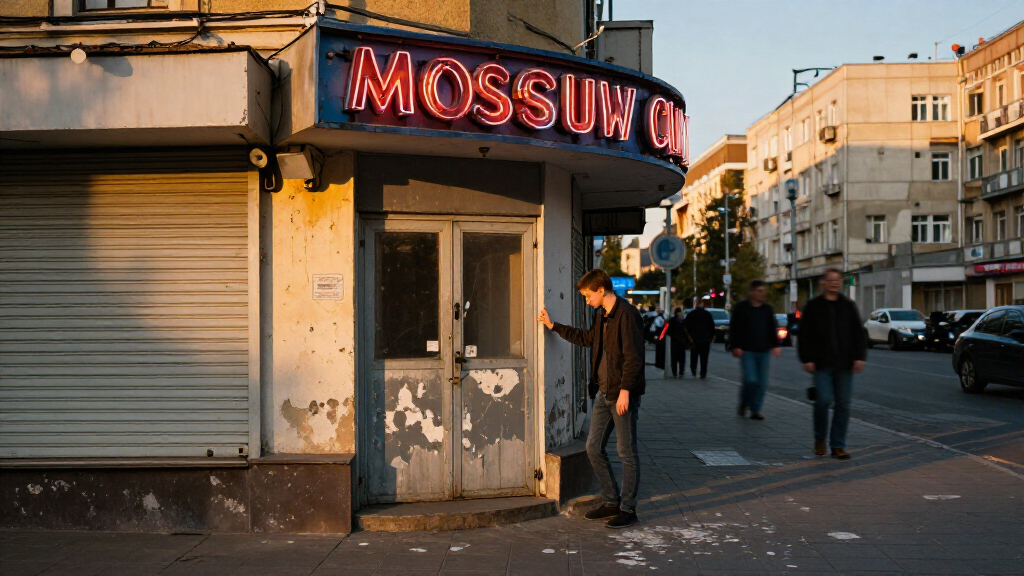
Meduza published a retrospective on Oct. 20 documenting the closure, relocation and uncertain future of Moscow clubs, bookstores, cafes and other independent venues that helped define the city’s post-Soviet cultural life. The report describes rising rents and other expenses, redevelopment and venue-specific pressures, charting how places familiar to generations of residents have disappeared or changed.
The report revisits landmarks ranging from Propaganda, founded in 1997, to newer venues such as the Powerhouse club and Entuziast motorcycle cafe. Propaganda closed in 2024 after 27 years; its operators gave no official explanation beyond saying “the story has come to an end.” The cafe Lyudi kak Lyudi, opened by the same team, closed on the same day. An employee said it had become unprofitable.
The Khokhlovka arts district, a cluster of small businesses and workshops in Kitay-Gorod, lost its remaining tenants at the end of 2025, according to sources cited by Meduza. A fence now surrounds the site. The report says a plan by Ginzburg Architects would turn it into a commercial quarter with cafes and galleries after construction. Bookstore Hyperion, which had rented space there for about a decade, left in 2022 and is now moving again.
Other closures have distinct explanations. Powerhouse held its farewell party on March 14, 2026, after struggling with debt; the club said it had been more or less breaking even since the pandemic. Khodasevich bookstore said renovations meant it could not return to its basement premises and was seeking a new space. Entuziast closed in 2025 for extensive renovations, though accounts also cited burnout among those involved. Meduza reported that the venue’s future was not clear.
The Cost of Losing Independent Venues
The venues in Meduza’s report were more than businesses: they provided spaces for live music, independent publishing, food and social life in a city undergoing repeated redevelopment. Their closures matter to former residents and current communities because they change where cultural activity can happen and what remains of a shared urban history.
The examples also show that there is no single cause behind every disappearance. Rising expenses and redevelopment form a broader pattern in the report, but individual accounts point to debt, unprofitability, renovation and exhaustion. That distinction matters: the report documents a pattern of loss without establishing that all venues closed for the same reason.
Moscow nightlife club lighting equipment
As an affiliate, we earn on qualifying purchases.
As an affiliate, we earn on qualifying purchases.
From Short Leases to Redevelopment
Meduza describes Moscow’s first generation of post-Soviet clubs and independent businesses as largely short-lived, with most closing within 15 years. Some that survived into the 2020s acquired cult status, becoming points of reference for people who later left the city. The retrospective revisits both long-running names and comparatively recent favorites, and its accompanying photographs were taken in early fall.
At Khokhlovka, cheap short-term rentals were possible while federal and local authorities disputed ownership of the properties in court. That arrangement supported small shops and workshops, but the remaining tenants later left ahead of redevelopment. The report also traces the history of Propaganda, where a cafe operated by day and a club by night, and Powerhouse, which opened in a restored Taganka mansion. The building that housed Powerhouse still has a live music venue, now called Mesto Zangezi.
“They’re closing our basement for major renovations, and they won’t let us back in.”
— Khodasevich bookstore, in an April 5, 2026, Telegram post
independent bookstore shelving units
As an affiliate, we earn on qualifying purchases.
As an affiliate, we earn on qualifying purchases.
Which Venues Could Return?
The report does not establish whether Entuziast will reopen after its renovation closure. Khodasevich said it was seeking a new premises, but the supplied account does not identify a confirmed new address or opening date. Hyperion is also moving again, with its next location and timeline unspecified in the report.
Some causes remain unconfirmed or differ by source. Propaganda gave no official reason for closing, while its DJ’s comment was a personal observation. For Khokhlovka, Meduza cites sources on the tenants’ departure and describes a redevelopment plan, but the supplied material does not give a construction schedule or completion date. It also does not establish that rising costs alone explain the wider pattern.
As an affiliate, we earn on qualifying purchases.
Relocations and Redevelopment Ahead
The near-term developments to watch are the planned redevelopment of Khokhlovka and whether displaced or temporarily closed businesses find new premises. Meduza’s account identifies a proposed commercial quarter for the site but supplies no timetable for construction or reopening.
Hyperion and Khodasevich are seeking or making moves, while Entuziast’s status remains uncertain. The former Powerhouse building continues to host live music under a new club name. No further announcements or confirmed dates are included in the report, so the future of several of these venues remains open.
As an affiliate, we earn on qualifying purchases.
Key Questions
What is Meduza’s report about?
It revisits Moscow clubs, bookstores, cafes and other independent venues that have closed, moved or face an uncertain future, and describes their place in the city’s post-Soviet cultural life.
Why are the venues closing or leaving?
The report points to rising rents and other expenses, redevelopment and individual pressures such as debt, unprofitability, renovation and burnout. It does not identify one cause that applies to every venue.
What is happening to the Khokhlovka arts district?
Its remaining tenants left at the end of 2025, according to sources cited by Meduza, and a fence now surrounds the site. A plan by Ginzburg Architects proposes a commercial quarter with cafes and galleries, but no construction timeline is provided.
Will Entuziast reopen?
The report says the cafe closed in 2025 for extensive renovations, while other accounts cited burnout. It remains unclear whether it will reopen.
Did Propaganda give a reason for closing?
No official reason was given. Its announcement said only that “the story has come to an end”; DJ Sergey Timoshov later said, “I guess it was time.”
Source: rss
Halloween Picks
halloween
As an affiliate, we earn on qualifying purchases.